
The 2026 Midterms: What just happened, and what do we do next?
Let's unpack this crystal-clear voter mandate for change, and explore how we can support the new majority in delivering it.
The political earthquake that swept America on Tuesday night has also rattled the ground here in Arizona. For the first time since 1965, both chambers of the Arizona State Legislature will be under Democratic control.

Leading both chambers for the first time in 60 years is a daunting task. Democrats will be expected to deliver if they want to stay in the majority for more than a single 2-year cycle.
The lay of the land
Due to space constraints, we won’t cover every race. If you want to read more about specific candidates, the Arizona Mirror has good coverage. But here are a few of our favorite highlights:
The state House is flipping to Democratic control, with a robust 37-23 split. Every single one of CEBV’s target districts (2, 4, 13, 16, 17, 23, 27) is changing hands, and we’re particularly happy about the candidates for whom the second time’s the charm. Accountant Karen Gresham in LD4, who ran against Matt Gress and booted him from his Madison Elementary school board seat in 2020, did the same with his legislative seat this year. And LD27's former Indivisible leader Deborah Howard is in first place over both Republican incumbents Lisa Fink and Tony Romero, with an impressive 5,918-vote lead. One of them will be her seatmate, but it's unclear which, as that's the only House seat yet uncalled; just 340 votes separate the two of them.
Also flipping are some seats most people didn’t even see as being on the map:
- In formerly ruby-red LD14, single-shot candidate Mary Rose is the top vote-getter. She has a 1,093-vote lead over newcomer Tyler Farnsworth, and is displacing current Rep. Laurin Hendrix.
- In LD29, former House Speaker Steve Montenegro is not just losing his gavel due to a change in party control — he is also losing his Republican seatmate, James Taylor. Single-shot candidate Christine Marie Scianna is sitting in first place with a 763-vote lead. (Parties "single shot" a candidate in order to align all their votes behind one candidate instead of two.) Yes, she’s beating Montenegro as well — but, because each district elects two House representatives, Montenegro gets to stay.

The Senate is flipping as well, and even more decisively. As of this writing, we are expecting a Democratic supermajority. That is nothing short of remarkable, and could have monumental impacts on our state for years, even decades to come.
“We will watch the Democrats dismantle everything we’ve done for the last 30 years,” Kavanagh said. (Arizona Republic)
The Senate's story is similar to that of the House. Democrats are flipping every target district, including CEBV-endorsed neuroscientist Amelia Gallitano’s seat in LD2, along with a few surprises. As of this writing, the Senate is a stunning 19-10, with just one seat remaining to be called.
- In LD27, Washington Elementary school board member Kyle Clayton is handily defeating Kevin Payne with a 4,214-vote lead.
- And in LD16, TJ Shope, the former President Pro Tempore and presumptive Senate President, is not only seeing the gavel he expected to receive snatched from reach, but appears to be losing his race as well. He's currently sitting 1,795 votes behind author and nonprofit board member Elaine Aldrete.

Just one unexpected battleground district remains still uncalled: In LD14, engineer and political newcomer Stephanie Walsh is beating "I don't know if females should be in office” candidate Mylie Biggs by 1,787 votes. Mylie is also failed gubernatorial candidate Andy Biggs’ daughter. Does this count as a double-Biggs smackdown? We think so.
What the results mean
Earlier, we mentioned a potential supermajority in the Senate. (Sadly, the House is three members short of its own supermajority.) We can't say it enough: that is HUGE. Yes, it makes things easier to have comfortable margins. But more significantly, decades of Republican legislative cuts have left Arizona in a fiscal stranglehold, lacking the revenue to fund major needs and without the ability to change that.
Our state is spending $2 billion every year on former Gov. Doug Ducey's tax cuts and $1.1 billion every year on an unaccountable universal ESA voucher program. The federal government has passed massive cuts to Medicaid and SNAP that leave our state holding the bag on hundreds of millions of dollars. And our “ongoing one-time expenses” (a sleight-of-hand accounting maneuver) dwarf our available revenue tenfold. As the Grand Canyon Institute says: “Arizona now has flat-line budgeting that limits the state’s ability to make significant investments that better people’s lives.”
Prop 108, passed by voters in 1992, acts as a manhole cover, blocking lawmakers from raising revenues (even when they are desperately needed) or removing tax carve-outs or credits (even when they are ineffective) without a high threshold of agreement that has been all but impossible to attain. Even identifying new revenue at the ballot, thanks to 2022’s voter-approved Prop 132, now requires a 60% supermajority vote.
But now it’s time to dream big. This is the time for structural fiscal reforms like repealing the flat tax and instituting a progressive tax structure that makes fair asks of the wealthy and corporations. Polls consistently show broad support for “billionaire taxes.” Eighty percent of Americans (that's four in five!) worry about the rise in economic inequality and believe the ultra-rich exercise too much political power. With $55 trillion in assets, the richest 1 percent owns almost one-third of the country’s wealth — about the same as the bottom 90 percent. This is a time of grotesque inequality and an extraordinary rise in political influence among corporations and the super-rich. Excuses like “it might fail, so we shouldn’t try” don’t meet the moment and are, frankly, unacceptable.

What else can they undo?
People keep asking us if a supermajority legislature could reverse the harmful propositions passed at the ballot, such as Prop 318, the anti-trans bathroom bill that appears set to handily pass. The short answer is no.
Arizona’s Voter Protection Act, approved at the ballot in 1998, bars the legislature from repealing any voter-approved law. It allows changes only with a 3/4 supermajority, and even then only if doing so would also further the purpose of the initiative. Even our new comfortable legislative margins fall well short of the 3/4 threshold required to undo the damage of Prop 318 — not to mention, doing so would hardly further the measure's purpose. Fixing this will mean going back to the voters and asking them again.
This is why CEBV warns voters to view all legislative referrals with skepticism, and to default to voting no unless there is a very compelling case to do otherwise. When we approve something at the ballot, our vote is effectively being carved into stone.
Holding our lawmakers accountable
If our state were a ship, it would be listing hard to starboard and taking on water fast. Republicans have been actively pushing us in the wrong direction for decades. It’s up to us to help plug the holes and right the ship. Fortunately, our elected Democrats know what to do: they have a backlog of unheard bills that spans literal decades.
Electing a pro-democracy, pro-public education, pro-climate, pro-people legislature was just our first step. Now, the real work begins: staying in communication with our elected officials to ensure they deliver on the priorities we elected them to accomplish.
Democrats must deliver. Voters are suffering, and they’re looking for bold action. We must support our Democrats in coming out of the gate fighting. It’s time for them to advance an ambitious, accelerated plan that involves quick motion on key policy priority bills; a prompt, transparent and organized budget; and punctual adjournment for the session, ideally by April 30 (the fabled 100-day timeline that hasn't materialized in years). Make sure your elected politicians know that these are your expectations.
We must work too. Mark your calendar for January 10, CEBV's first Legislative Happy Hour zoom call, and for the following day, January 11, when the First Regular Session of the 58th Legislature convenes. We must remain deeply engaged in the activities and progress of our state lawmakers. Being in charge is a lot of work, there’s a steep learning curve, and the distractions will be endless. It’s hard to overstate the impact our support and advocacy will have.
What else you can do. Make sure you are subscribed to the CEBV Weekly, and read our emails promptly, as we may have urgent calls to action. Watch your lawmakers to ensure they are working on and advancing the bills that matter to you. Attend your monthly legislative district meetings to hear from your legislators directly and speak to them personally. (The dates are currently in flux; we'll publish a list soon.) Support good bills when lawmakers introduce and advance them. Along with our usual trainings on Request to Speak, we’ll be offering Advocacy and Testimony trainings again this year, so stay tuned.
Help Keep CEBV Going!
CEBV doesn't have big donors. We rely on our community to sustain our work and keep our resources available for free to everyone. Please support us with a paid subscription!
CEBV's paying subscribers also get access to a member portal with recordings of all CEBV trainings and select Happy Hour conversations.
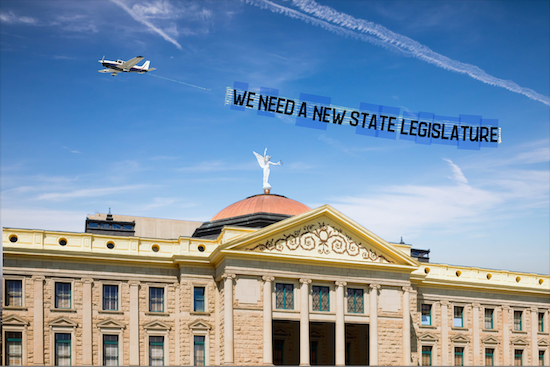
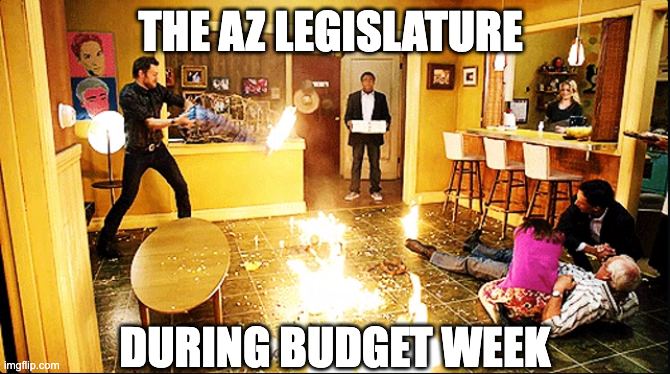
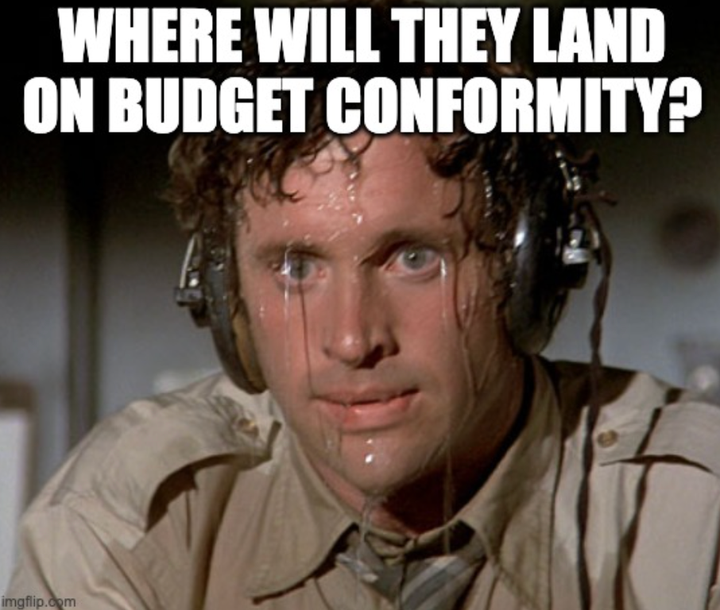
If you haven't seen the many, many amusing memes currently circulating about this election, here's a listicle (combination list/article) of over 80 contenders. This was one of our favorites:

Comments ()