
April 6, 2026
It can be confusing to watch #AZLeg this time of year, but we're here to demystify it. Peek behind the curtain with us, read about the worst of the worst, then help layer on the public pressure.
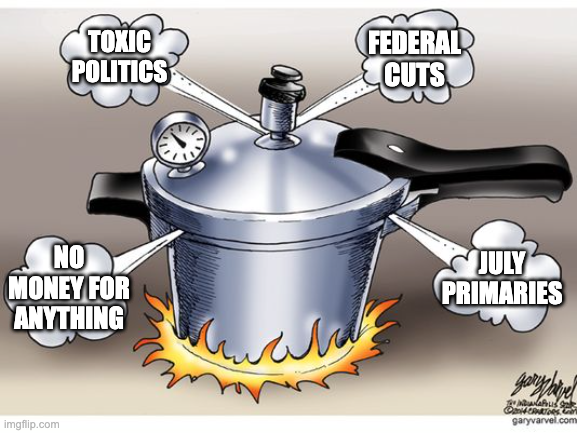


At this time of year, it gets tough to watch the legislature. What are they even doing, anyway? Does this just go on forever? What should we do?

Here are answers to the most common questions CEBV gets at this time of year.
What are they doing? The legislature is now most of the way through the 2026 session. Bills that are still alive have just a few hurdles left to clear before reaching the governor's desk for her signature or veto. Some bills just need a single vote before moving on. Others need floor debate, caucus discussion, rubber-stamp approval from the Rules committee, or all three. Any bills amended in the opposite chamber will also need to go back to their originating chamber for a "final read" vote. No matter what, though, because all these bills are through committees, any of them can motor through their remaining hurdles within days — faster than our weekly publication schedule.
Is that it? In addition to bills, lawmakers still have to take care of their one constitutionally mandated duty: passing a state budget. Negotiations typically happen behind closed doors, in small groups that aren’t subject to open meeting laws. (We'd hoped this would change under Gov. Hobbs, but unfortunately it hasn't, and we expect this year will be no different.) Once a deal is reached, it will likely be presented and voted on as swiftly as possible, with very little opportunity for public input. It’s also likely that some bills may end up being sucked into budget negotiations, with their passage being "horse traded" as the price of one or more lawmakers’ votes.
How long will all this take? There's no set date. A regular legislative session is intended to last 100 days (this year, that’s April 21), but it'll go until lawmakers pass a budget. To avoid a government shutdown, which is unprecedented on the state level, they must do this before midnight on June 30.
What's the roadblock? It may be possible from a calendaring standpoint for lawmakers to wrap all this up within a matter of days, but from a practical standpoint, that's basically asking the sun to rise in the west. The cumulative impacts from decades of bad fiscal decisions, like former Gov. Ducey’s tax cuts and wasteful ESA vouchers, have backed Arizona into a "subsistence budgeting" corner. Increasing costs and insufficient funds have left our state unable to pay its basic bills, and federal cuts are creating an additional looming funding cliff. The state's “rainy day fund” is nowhere near big enough to backfill all of these holes. Budgeting 101 means lawmakers must either increase revenues — politically impossible due to required two-thirds supermajority votes in both the House and Senate — or make cuts. The pressure-cooker implications of this "perfect storm" can't be overstated.
What should we expect next? Budget negotiations have been on hiatus for two weeks, after Gov. Hobbs halted talks until Republicans publicly release their budget plan. Republicans are putting together their own doomed partisan proposal, as we mentioned last week, but otherwise there's no real work or organized discussion taking place. Plus, ballots are dropping on June 24 — a week before lawmakers' budget deadline — for an earlier-than-usual July primary. Rumors have begun swirling that Republican legislative leaders will send the rank-and-file home on break for several weeks, so they can campaign, until a budget is ready to be voted on. While that can't be confirmed yet, both chambers are taking this coming Monday off. And, of course, it doesn't help that toxic politics at the Capitol are at a fever pitch and our current legislative majority is wildly unserious.
What should we do? It’s time to layer on phone calls, emails, and other forms of public pressure. This week, we're focusing our Spotlight on the worst of the worst, our top nine negative bills that are still alive. Pick one or more, and start making calls. See that section below for more.
What else can we do? Stay ready to contact the governor’s office. As bills head toward her desk for signature or veto, we’ll let you know which ones need your outreach most.
And then we'll be safe, right? As the saying goes, no one is safe while the legislature is in session — but our work doesn't stop once they adjourn. This year, for the first time in our 10-year history, CEBV plans to issue endorsements in some of Arizona's contested 2026 legislative primaries. In order to build a legislature that truly represents our needs and can meet this moment instead of upholding the status quo, it's critical we advance candidates who share our values and will work to achieve better results for Arizona families. The November midterms are coming, and helping people understand the huge effect our state government has on our lives is just beginning.

⏰ If you have 5 minutes: Have a conversation about an impactful bill or issue at the legislature (such as one in the Spotlight section) with someone you wouldn't normally talk to about that. Try a friend, neighbor, co-worker, etc. We predict you'll be pleasantly surprised at the results: despite our society's political polarization, many of these issues transcend partisan lines.
⏰⏰ If you have 15 minutes: Choose a bill from the Spotlight section to advocate against. Call your state representatives for Senate bills (which are going to the House floor), and your state senator for House bills (which are going to the Senate floor). You’ll likely get an assistant on the phone, not the legislator. State the bill number and topic, and one reason you oppose, then thank them and move on. You can also try leaving a voice mail after hours, or writing individual emails with the bill number and your opposition in the subject line. Be personal, polite and brief.
⏰⏰⏰ If you have 30 minutes: Also contact another majority lawmaker in the same chamber, such as someone in leadership or an Appropriations committee chair, about the bill you chose from Spotlight.
⏰⏰⏰⏰ If you have 45 minutes: Also contact Gov. Hobbs' office to request she veto the two bills on her desk by calling 602-542-4331 or emailing engage@az.gov. See "Veto Watch" below for more.
⏰⏰⏰⏰⏰ If you have 60 minutes: Join us on Zoom for our CEBV Happy Hour conversation, packed with political analysis, conversation and community. Happy Hour meets every Sunday at 4 PM through the end of legislative session. (Yes, we're meeting this Sunday, though we won't have a featured guest and the call will be a bit shorter.) We're looking forward to seeing you!

As promised, here are this session's bills we're most concerned about that remain alive. We'll call them the Nutty Nine.
You cannot use RTS on these bills; you must contact your lawmakers directly. Contact your state representatives for SCR bills, your state senator for HCR bills. On HB2133, contact both your state senator and the governor (602-542-4331 or engage@az.gov).
SCR1006, sponsored by John Kavanagh (R-3), is an anti-LGBTQ+, anti-student "bathroom ban" and "pronoun ban" that would go directly to our ballot. The bill would ban teachers from using a student’s chosen pronouns without written parental permission, and would ban trans kids from using the school bathrooms, changing facilities and “sleeping quarters” that fit their gender identities. Trans kids wouldn’t be able to use any school facilities at all without undue scrutiny of their bodies, which the bill calls a "reasonable accommodation." Anyone who “encounters” a trans person in a bathroom could file suit against a public school. These Republican-led bills are worsening LGBTQ+ Arizonans’ struggle to simply exist by creating discrimination, legal red tape, and mental and emotional distress. The governor has vetoed these concepts twice before, but this measure would evade her veto. OPPOSE.
HB2133, sponsored by Nick Kupper (R-25), is a Project 2025-inspired bill that would force everyone who uses social media to get the consent of people depicted in digitally created content before uploading it, if politicians decide the material is “harmful to children.” In other words, in order to post a cartoon or AI-generated video with a real person in it, you could need the person’s consent. The bill does not clarify what would be considered harmful, but the impact is to create politically motivated censorship: in committee, the sponsor said a South Park scene of President Trump in bed with Satan would require Trump's written consent before anyone could share the clip online. This strikes at the very heart of the First Amendment, which protects our right to criticize public elected officials. The bill would also demonize LGBTQ+ people in lockstep with Project 2025 by conflating “transgender ideology” with pornography. Gov. Hobbs is actively pushing to get the bill to her desk. OPPOSE.
It’s shocking how the motivation behind almost every single bad tech bill is about hating LGBTQ people and specifically trans people
— Taylor Lorenz (@taylorlorenz.bsky.social) 2026-03-25T18:31:14.787Z
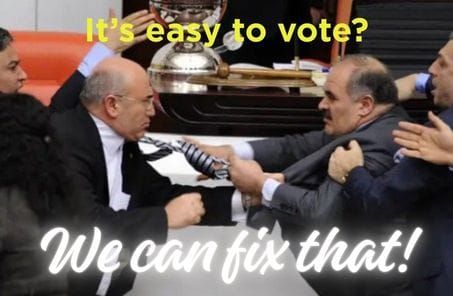
SCR1001, sponsored by Shawnna Bolick (R-2), and HCR2001, sponsored by Alex Kolodin (R-3), would ax the early voting system which Arizona pioneered and require all voters (even those voting mail ballots) to somehow "show valid government-issued proof of identity." Counties would be forced to immediately tabulate mail ballots onsite, but the bill doesn't provide on-site tabulation equipment or trained personnel. Worse, the measures now allow early and mail voting only if "reasonably connected to a legitimate state interest," which gives election deniers grounds to sue at significant public expense. Arizonans already rejected the legislature's push to toughen voter ID requirements in 2022 by voting down Prop 309, which means this is also an attack on voter will. If approved by voters, this measure would make it harder to vote by mail and harder to vote in general, which is the opposite of what Arizona should be doing. That's not an accident: the sponsor reportedly designed the bill to kill mail voting. OPPOSE.
HCR2003, sponsored by Selina Bliss (R-1), would ostracize the tiny minority of trans girls in Arizona by asking voters to ban them from youth sports, as well as banning trans youth from using the school bathrooms and changing facilities that align with their gender identities. Anti-trans hate creates a toxic environment for girls in sports, inviting harassment of girls who are “too good at the game” or have stocky builds, small breasts or short hair, and subjecting them to humiliation, verbal assault, physical attacks or even invasive genital exams meant to “prove” they are girls. The demand that female athletes conform to rigid gender norms or face the consequences is dangerous to all women, not just athletes. This measure is a close copy of a 2022 law courts have already blocked, which a federal district judge put on hold pending the outcome of a similar US Supreme Court case. OPPOSE.
HCR2007, sponsored by Matt Gress (R-4), and SCR1032, sponsored by Jake Hoffman (R-15), would defund public schools by asking voters to force public district (but not charter or private ESA voucher-funded) schools to spend at least 50% of their funding on teacher pay and 60% of their funding on “direct instructional expenses.” Schools that can’t do this would have the difference withheld from their state funding. Arizona schools are spending less on classroom instruction because of persistent legislative underfunding, spiraling costs, minuscule annual "inflation" increases, and the $1 billion drained every year into ESA vouchers. The problem these lawmakers have created is so desperate, many schools are being forced to close. This bill looks in the wrong places for waste and fraud: the average charter school spends 22% on administration, double what district schools do, and 20% of ESA voucher purchases are for disallowed items. OPPOSE.
HCR2040, sponsored by Justin Olson (R-10), aims to legislate away teacher's unions by creating a slew of new limits on how educators can collectively organize and bargain, something which creates better working conditions for teachers and better learning conditions for students. The measure would ban teachers from deducting their union dues directly through payroll (which only happens at teachers' requests) in a blatant attempt to shrink membership. It would also prohibit districts from using any public resources to support labor organizations, which means school facilities couldn’t be used to host union meetings — even when rented like other clubs or organizations — or even allow union members to have a presence at events like new teacher orientations. OPPOSE.
HCR2044, sponsored by Steve Montenegro (R-29), would ask voters to enshrine racism in the state Constitution. This culture-war-driven measure would prevent the state from giving BIPOC-owned businesses any preference in state contracts, block teachers from discussing accurate history, ban certain content from being taught in schools, and block trainings on how to support LGBTQ+ staff and students. It would also allow the legislature to "prescribe related practices or concepts" to ban — in other words, to tack on any conceivable open-ended, misguided notion. OPPOSE.

On the Governor's Desk
Even if we expect these bills to receive a veto, it remains important to contact the governor’s office to request one. This demonstrates that her actions have strong public support. Learn how to write a veto letter by reading our guide here.
HB2040, sponsored by Rachel Keshel (R-17), would require university campus health clinics to bring up adoption whenever a student asks for contraception or is tested or treated for an STI. This should happen at the discretion of a physician, not at the whim of an anti-abortion lawmaker. The bill also forces the discussion of adoption into school sex ed classes at district and charter (but not private or voucher-funded) schools. OPPOSE.
HB2903, sponsored by Steve Montenegro (R-29), would ban the state from requiring banks to consider social or environmental values when lending. This is something that Arizona is not requiring. The idea appears driven by a panic that society will hold extremists accountable for their actions or that "woke" investment policies will prevail. In fact, ESG plays a large role in corporate risk management, employee retainment, and long-term profitability. See our explainer on ESG. OPPOSE.
Do you appreciate the many hours of work it takes to produce a resource like this every week? Become a paid subscriber and help keep us going:

2026 Session Timeline
Tuesday 4/21: 100th Day of Session (the purported end goal; can be changed)
Tuesday 6/30: Constitutionally mandated deadline to pass a state budget
Committees & Contacts
Here's a handy list of lawmaker contact info, committee chairs and assignments.
CEBV Action Linktree
Want other ways to take action? Need to stay informed? Looking for our social media, inspiration, or self-care tips? Look no further than our Linktree.
Congratulations, you made it to the end! 🎉 Please enjoy this clip of Nathan Lane performing on "The Late Show with Stephen Colbert," singing an eerily relevant off-Broadway number from the late '90s. (If the clip doesn't display for you, click here to watch it directly.)
Comments ()