
March 23, 2026
The annual last-minute rush to take out the trash. A Project 2025-inspired bill in sheep's clothing. Way too many ballot referrals. Buckle up, this is a long one.
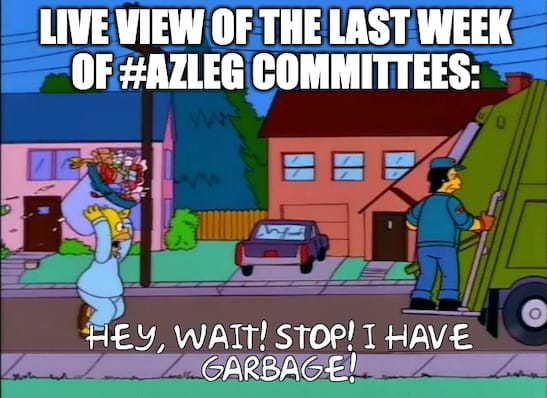


The last bill deadline. This week marks the final chance for bills to be heard in regular committees. Measures which don’t make it past this checkpoint are considered dead for the year — so naturally, this week's agendas are chock-full of long-stalled bad ideas, including way too many of the 38 ballot referrals we were hoping to see die. We’re toasting the tentative demise of about a dozen CEBV-opposed bills that hit the cutting-room floor, along with 8 referrals, but we’re still tracking hundreds of bills that remain alive.
New bills. As session wears on, CEBV has learned more about some bills and raised the alarm on them. For some other bills, lawmakers have amended them so thoroughly that they now require our attention. Either way, make sure you weigh in on the new bills in this week's report! Look for the blue arrow emoji (or search this Weekly for ➡️ ) to ensure your voice is heard.
The fog of secrecy. Next up is the “fog of secrecy” portion of legislative session, with no more Request to Speak or weekly committees, where nearly everything is negotiated in secret. Floor calendars, which are released daily, will mark the only public legislative action, and everything else will happen behind closed doors. The focus of this newsletter will shift too, with more rapid calls to action. We also suggest you regularly check our social media for the latest.
The impending budget. Arizona will stay mired in this fog until lawmakers announce a budget agreement, their only constitutionally mandated responsibility. Tempting as it is to wish they would all just go home, a budget is the only thing now pushing lawmakers toward compromise. This package of bills must both pass the Republican-run legislature and earn the Democratic governor's signature. Unfortunately, it's typically negotiated behind closed doors, then presented as a done deal and rammed through with as little public input as possible.
A stop to negotiations. This week, Gov. Hobbs announced she was pulling back on budget conversations with Republican legislative leaders, blasting them for "refusing to engage in serious negotiations" and challenging them to come to the table in good faith. We applaud her for playing hardball here, something we've long wished she'd do more of. Her move is well-calculated, especially given that lawmakers have a powerful motivation not to drag talks out as they have in past sessions: this year's primary is July 21, with early ballots dropping a week before the July 1 budget deadline, and many of the politicians in question have contested primaries.
Stay engaged. As always, the most important conversations happen primarily behind the scenes, so if you care about an issue, make it public. In addition to contacting your own House or Senate lawmakers directly, other great ways to make your voices heard include writing Letters to the Editor and talking with friends, family, neighbors and co-workers. Stay tuned to our social media (like Bluesky) for breaking news, and consider attending our weekly happy hour Zoom calls for tips on honing your civic engagement so you can continue to make a difference.

⏰ If you have 5 minutes: Contact Gov. Hobbs' office on Spotlight bill HB2133 by calling 602-542-4331 or emailing engage@az.gov.
⏰⏰ If you have 10 minutes: Also use My Bill Positions ("RTS 2.0") to OPPOSE Spotlight bill HB2133. (Watch this 14-second video to see how My Bill Positions works.) Then contact your state senator and ask them to OPPOSE HB2133.
⏰⏰⏰ If you have 25 minutes: Also use Request to Speak to weigh in on the fourteen (!) ballot referral measures being heard in committee this week (see "Ballot Referrals" below for more information, or view our full list).
⏰⏰⏰⏰ If you have 35 minutes: Also use Request to Speak to weigh in on the new bills being heard in committees this week, marked with ➡️. Refer to the information, links and talking points in our bill summaries to craft your own comments to lawmakers.
⏰⏰⏰⏰⏰ If you have 45 minutes: Also use Request to Speak to weigh in on the bills being heard in committees this week.
⏰⏰⏰⏰⏰⏰ If you have 50 minutes: Also contact our Hall of Shame lawmakers (see that section below) to tell them what you think.
⏰⏰⏰⏰⏰⏰⏰ If you have 60 minutes: Join us on Zoom for our CEBV Happy Hour conversation, packed with political analysis, conversation and community. This week we'll talk with Arizona Agenda reporter Hank Stephenson. Happy Hour meets every Sunday at 4 PM through the end of legislative session. We're looking forward to seeing you!

We're deeply unhappy to have to share this: For the second year in a row, it appears Gov. Hobbs is working to pass a bill with Project 2025-inspired goals alongside a far-right lawmaker who has a history of attacking free speech and LGBTQ+ rights.
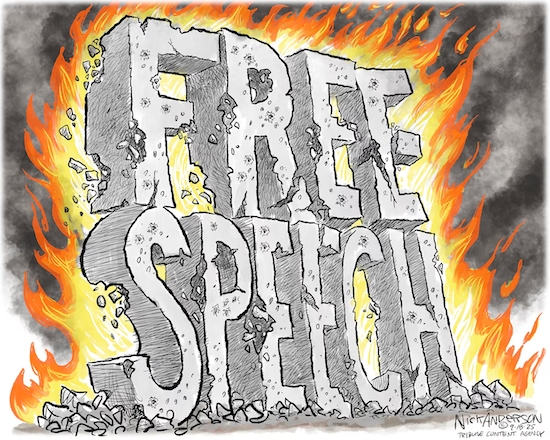
HB2133, sponsored by Nick Kupper (R-25), would force everyone who uses social media to get the consent of people depicted in digitally created content before uploading it, if politicians consider the material “harmful to children.” In other words, in order to post a cartoon or AI-generated video with a real person in it, you could need the person’s consent. The bill does not clarify what would be considered harmful, but it appears the sponsor is interested in creating politically motivated censorship. In committee, Kupper said that a South Park scene of President Trump in bed with Satan would require the president’s written consent if anyone were to upload the clip online. Watch him explain:
This strikes at the very heart of the First Amendment. There’s no denying that criticism of our politicians is integral to our right to free speech; the most recent season of South Park was laser-focused on mocking Trump and his authoritarian policies. Even when in poor taste or blatantly offensive (as South Park frequently is), courts have ruled again and again that the First Amendment protects our right to criticize public elected officials and demand government accountability.
Only dictatorships require their leaders to pre-approve the distribution of content that's critical of them. America is not a dictatorship — at least not yet.
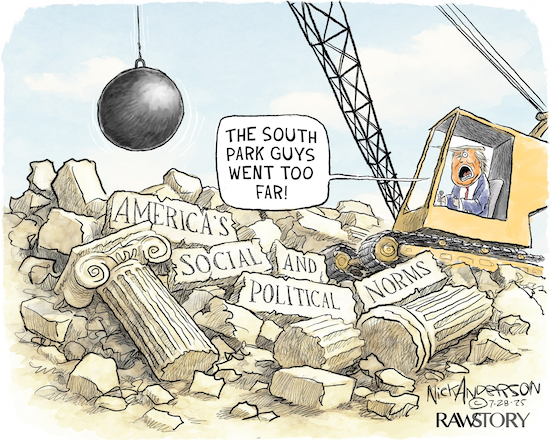
Sadly, this isn’t the first time Hobbs has backed a controversial censorship bill. Last year, she signed an "online pornography ban" from the same sponsor despite warnings that the broadly written measure could be weaponized to harm vulnerable groups by banning LGBTQ+ content and lifesaving domestic violence, HIV/AIDS and sex education materials. Hobbs' stated intent in supporting last year's bill was to protect kids from exposure to porn; the purported goal of this year's bill is to crack down on AI-generated revenge porn. And this time, journalists say she’s actively pushing for the bill: LOOKOUT reports "a lobbyist reached out and said they had been tapped by Gov. Katie Hobbs’ staff to work with Kupper in an attempt to get it over the finish line and to her desk."
We mentioned Project 2025 earlier; the connection is well documented. Project 2025 aims to demonize LGBTQ+ people and force them into the shadows by conflating them with pornographers as a first step. For example, the Project 2025 blueprint defines “pornography” as including “transgender ideology,” and calls for forcing teachers and librarians to register as sex offenders for merely stocking books (such as Virginia Woolf’s “Orlando”) which acknowledge that transgender people exist.
One of CEBV's central principles is that, when vulnerable groups warn of outsized harms a policy could inflict on them, we must heed their warnings and take action. This time that means pushing an ally to act differently. Despite promising in 2023 to “veto every bill that aims to attack and harm” trans youth, last year Hobbs was dismissive of their concerns. Unfortunately, we can’t count on her to recognize these harms on her own.
From time immemorial, satire has been used to criticize and mock politicians and public figures. It’s a part of our rough-and-tumble public discourse. Requiring a politician to agree to being mocked is a shocking, completely unacceptable step toward censorship and suppression of free speech. We urge you to contact Hobbs’ office at 602-542-4331 or engage@az.gov and ask her to drop her support of HB2133.
Do you appreciate the many hours of work it takes to produce a resource like this every week? Become a paid subscriber and help keep us going:

The schism between Republicans over how best to attack our free and fair voting system appears to be narrowing. Last week, Republican lawmakers advanced both HCR2001 and SCR1001 through committees with identical amendments that, rather than improving the measures, merely attack our right to vote in slightly different ways.
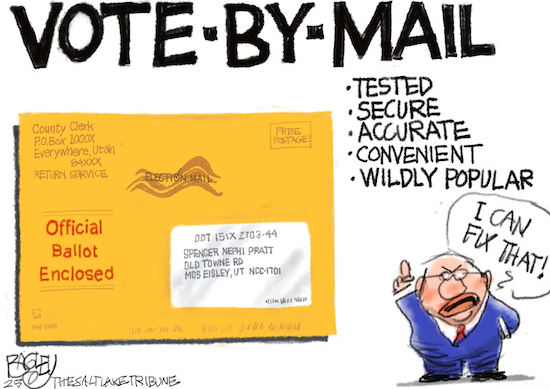
As amended in committees, HCR2001 and SCR1001 now:
- Require ID (somehow) for mail ballots. The measures require voters to "show valid government issued proof of identity before casting a ballot in each election, whether voting in person or by any other method, as prescribed by law." They still don't clearly state how or when early voters would provide this ID. Are we supposed to make a photocopy of our IDs and slip them in those yellow envelopes, violating ballot privacy? Are we supposed to show up and stand in endless lines with our ballots to show ID before dropping them off? We don't know — and these bills don't say.
- Force counties to tabulate mail ballots onsite. Instead of a ban on early voting by 7pm on Friday, HCR2001 and SCR1001 now force counties to immediately tabulate early ballots onsite for anyone who asks. Currently, only some counties offer this, and only on Election Day. While counting early ballots on-site can speed up results, it also requires infrastructure, such as on-site tabulation equipment and personnel trained to operate it. Simply ripping open a ballot and feeding it through a voting-day tabulator without signature verification or other process checks would violate the ballot chain of custody. Counties can't comply with this demand unless they get additional funding to make it happen, and there isn't any here.
- Insert sneaky attacks on our voting rights. Instead of blatantly stripping our right to vote early and by mail, the measures now green-light endless, purposeless lawsuits as roadblocks to that right. The amendments hamstring any improvements in our voting system by allowing voters and the legislature to enact early and mail voting only if "such laws are reasonably connected to a legitimate state interest." In other words, every time the people or a future legislature try to improve our state's elections, election deniers would have grounds to file a lawsuit demanding that advocates prove "a legitimate state interest," putting the new law on hold at significant public expense.
Now that both HCR2001 and SCR1001 are through committee, the official public comment period is closed. We encourage you to contact your senator and representatives (especially Republicans) to demand they drop this bonkers, conspiracy-driven, voter-suppression garbage. If you've done it already, do it again. Get loud!

One of our tasks is to hold our allies accountable. This section calls out those who support harmful bills. We ask them to heed and do better.
This week, we're disappointed in 👎 Kiana Sears (D-9) for voting YES on SB1457 on the Senate floor. This bill would expand Arizona's $2 million Advanced Air Mobility Fund (money the sponsor has been pushing to use toward the introduction of flying cars) and allow it to be used on border enforcement. Sears did not explain her vote. SB1457 now advances to the House and is being heard in committee this week. Contact her at ksears@azleg.gov or 602-926-3374.

Lawmakers are advancing these measures through committees this week with the ultimate goal of placing them on our November ballot. We are still tracking thirty-eight potential measures. (See the full list here.) For comparison, our 2024 ballots contained eleven legislative referrals, which was at that time the most in 20 years and forced election officials in Maricopa and Pima Counties to print our ballots across two sheets of paper.
All the below bills have already made it through one full chamber. Unlike regular bills, these referrals cannot be vetoed. Use RTS to weigh in; refer to the information, links and talking points here to craft your own comments to lawmakers.
 Wayne Schutsky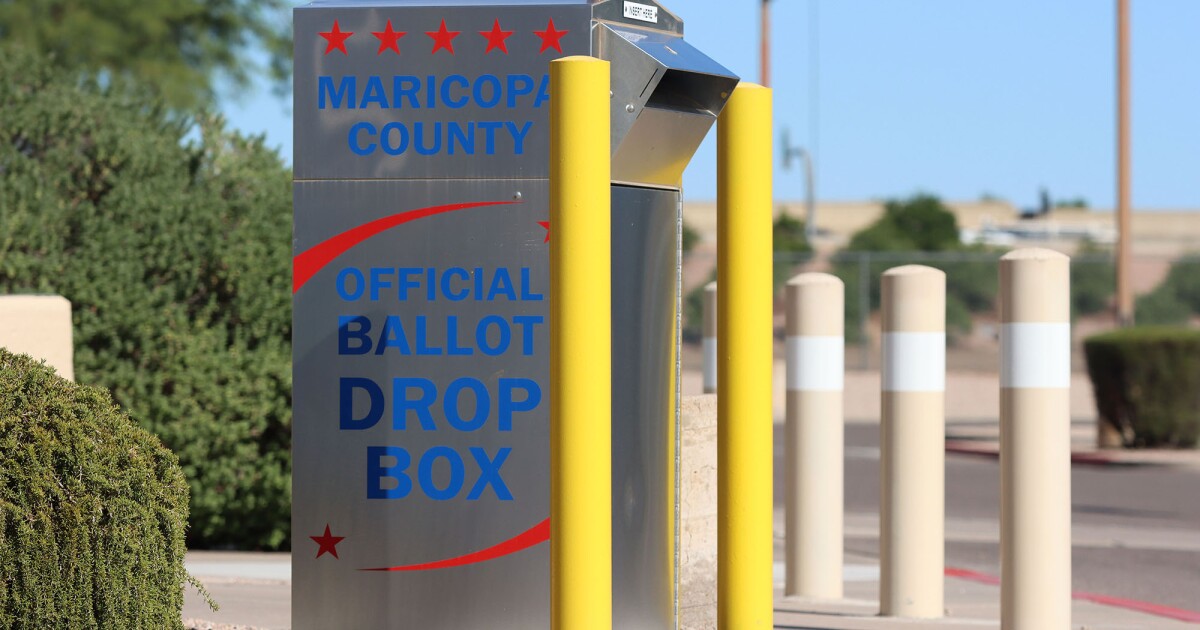
SCR1002, sponsored by John Kavanagh (R-3), would ask voters to let people who make a political contribution below $200 remain anonymous, rather than be named in campaign finance reports. (The current threshold is $100.) This would make money in Arizona politics less transparent. The sponsor's argument for the bill, that transparency has a "chilling effect" on donations and money equals protected speech, resembles the argument right-wing political operatives are making in their lawsuits to try to invalidate the Voters Right to Know Act, a dark-money disclosure law which voters overwhelmingly approved in 2022. The measure is similar to a vetoed bill from 2023. Scheduled for House Federalism, Military Affairs & Elections Committee, Wednesday. OPPOSE.
SCR1005, sponsored by Mark Finchem (R-1), would ask voters to ban ballot measures from accepting money or in-kind donations from "a foreign corporation or person." The ban is so broadly written that police and trade unions would be left unable to support ballot measures if they have even one legal permanent resident as a dues-paying member; this is already happening in Ohio. This is model legislation from the Trump-connected America First Policy Institute, which claims "left-wing special interests are weaponizing ballot measures to push their radical agenda." Scheduled for House Federalism, Military Affairs & Elections Committee, Wednesday. OPPOSE.
SCR1022, sponsored by JD Mesnard (R-13), would ask voters to add 30 new state lawmakers by splitting our current legislative districts into three sections and giving each portion one representative. While some characterize it as a plan to overrepresent red rural districts, one thing is for sure: it would also mean new buildings for all the additional lawmakers. As the fiscal note from the 2022 version of this bill observes, there’s no way to estimate the possible cost, but it’s significant. Scheduled for House Government Committee, Wednesday. OPPOSE.
SCR1023, sponsored by JD Mesnard (R-13), would ask voters to skew Arizona's Independent Redistricting Commission by allowing the legislature to appoint four members and requiring 6 of the resulting 9 commissioners to live in Maricopa and Pima counties. It would also force legislative districts to vary in size by no more than 5,000 people, splitting minority voting blocs and creating an advantage for Republicans. Currently districts can vary by up to 10%, allowing populations such as the Navajo Nation to stay together in one district. Arizona’s current redistricting system is a national model, making these changes especially questionable. Republicans introduced similar, failed proposals in 2020, 2018 and 2017. Scheduled for House Federalism, Military Affairs & Elections Committee, Wednesday. OPPOSE.
SCR1025, sponsored by JD Mesnard (R-13), would ask voters to delay the annual opening date of the Arizona Legislature by two weeks, to the fourth Monday in January. Notably, the sponsor wants to push the start date of legislative session back while other lawmakers want to push the ending date forward, even as none of them can seem to get their work done under the timeline they have now (ref: 2023, 2024, 2025). Scheduled for House Government Committee, Wednesday. OPPOSE.
SCR1027, sponsored by JD Mesnard (R-13), would ask voters to revoke charter cities' rights to determine their own elections, and move mayoral, city council and school board elections to the same Tuesday in November as presidential and midterm elections. Adding these races to our already long general election ballots could increase "ballot fatigue," in which voters skip lower-level voting because of the sheer number of races. It could force candidates for small local elections who want to cut through the chaos of national politics to spend an outsized amount of money just to get noticed. Forcing cities and school districts to move their elections is also an attack on local control and the right to self-determination. Scheduled for House Federalism, Military Affairs & Elections Committee, Wednesday. OPPOSE.
SCR1040, sponsored by TJ Shope (R-16), would ask voters to amend the Arizona Constitution to raise judges' mandatory retirement age from 70 to 75. This is an attempt to move the goalposts to stop the judiciary from looking more like the overall electorate by keeping aging conservative judges on the bench. Polls show 3 in 4 Americans favor maximum age limits for Supreme Court justices, and an even larger number wishes their lawmakers had age limits too. Arizona voters rejected a similar measure in 2012 by nearly 3 to 1 margins. Scheduled for House Judiciary Committee, Wednesday. OPPOSE.
HCR2004, sponsored by Teresa Martinez (R-16), would ask voters to ban the use of photo radar unless cities run ballot measures every 10 years to obtain voter permission. Nobody likes a ticket, but Arizona has had photo radar since 1987 for good reason. Numerous studies have found speed and red-light cameras reduce traffic crashes and injuries by up to 35 percent. Requiring the time and expense of ballot campaigns simply to use photo radar will lead to more dangerous roads and more collisions. Gov. Hobbs has vetoed similar bills, but this measure would head directly to our ballot. Duplicate measure SCR1004 is already through the Senate. Scheduled for Senate Judiciary & Elections Committee, Wednesday. OPPOSE.
HCR2016, sponsored by Rachel Keshel (R-17), is subject to a striker with the short title “fees; taxes; freeze; affordability” - this is likely a revival of HCR2052 from Justin Olson (R-10), which would ask voters to freeze city and county taxes, fees and utility rates at their current levels for four years, even as cities struggle with persistent legislative underfunding and higher costs passed down from the state. This measure would hamstring local government's ability to respond in times of crisis, harming the local services we rely on such as public safety, roads, parks, libraries and more. For example, it would force Tucson to make large cuts and would also block Queen Creek from buying desperately needed water. Scheduled for Senate Government Committee, Wednesday. Use RTS to comment that you OPPOSE the striker.
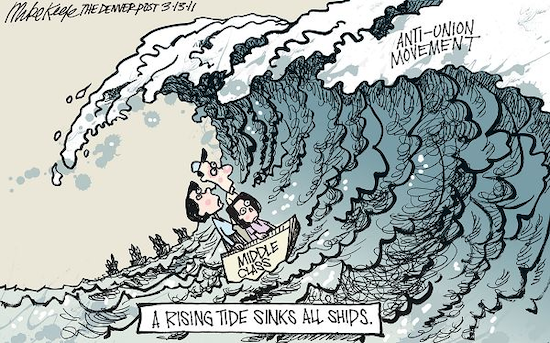
HCR2040, sponsored by Justin Olson (R-10), aims to legislate away teacher's unions by creating a slew of new limits on how educators can collectively organize and bargain, something which creates better working conditions for teachers and better learning conditions for students. The measure would ban teachers from deducting their union dues directly through payroll (which only happens at teachers' requests) in a blatant attempt to shrink membership. It would also prohibit districts from using any public resources to support labor organizations, which means school facilities couldn’t be used to host union meetings — even when rented like other clubs or organizations — or even allow union members to have a presence at events like new teacher orientations. Scheduled for Senate Government Committee, Wednesday. OPPOSE.
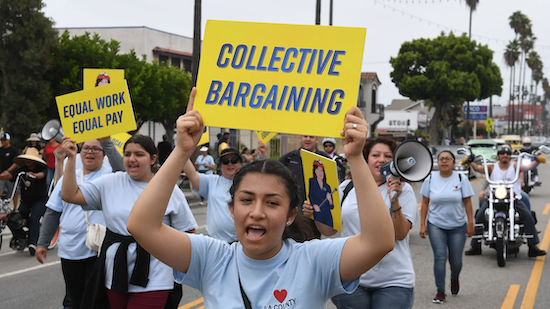
HCR2044, sponsored by Steve Montenegro (R-29), would ask voters to enshrine racism in the state Constitution. This culture-war-driven measure would prevent the state from giving BIPOC-owned businesses any preference in state contracts, block teachers from discussing accurate history, ban certain content from being taught in schools, and block trainings on how to support LGBTQ+ staff and students. It would also allow the legislature to "prescribe related practices or concepts" to ban — in other words, to tack on any conceivable open-ended, misguided notion. Scheduled for Senate Government Committee, Wednesday. OPPOSE.
HCR2048, sponsored by Michael Way (R-15), would ask voters to withhold pay from the governor, state lawmakers, and other statewide elected officials if they fail to pass a budget by April 30. While we can understand the impulse to penalize our elected officials, the date is arbitrary. The state budget used to be negotiated in committees with public input, instead of behind closed doors; returning to that method would be a far more sensible reform. Scheduled for Senate Government Committee, Wednesday. OPPOSE.
HCR2051, sponsored by Michael Carbone (R-25), would ask voters to institute a host of anti-democratic requirements for initiatives and petition circulators that would make measures much harder to put on the ballot. Paid petition circulators would have to tell each signer their state of residence, wear an ID badge, and identify themselves verbally (not just on the petition) as a paid circulator. Signatures collected without these unnecessary disclosures would be void, opening petitions up to a new type of legal challenge. All draconian restrictions on statewide petitions would also be expanded to local city- and county-wide ballot measures. Scheduled for Senate Judiciary & Elections Committee, Wednesday (held last week). OPPOSE.
HCR2056, sponsored by Nick Kupper (R-25), would ask voters to end school vaccine requirements and destroy current societal protections against everything from lice and scabies to Hepatitis A and whooping cough. The measure does not just court disaster by gutting Arizona's already lax vaccine laws, which allow reason-free "personal belief" exemptions. It would also prevent schools from sending children home with lice and directing parents to treat them before they can return. This would put the well-being of all Arizonans at risk. The bill's sponsor was nearly removed from the Air Force for refusing to be vaccinated. Scheduled for Senate Government Committee, Wednesday. OPPOSE.
 Will Humble and Bob England, The Arizona Republic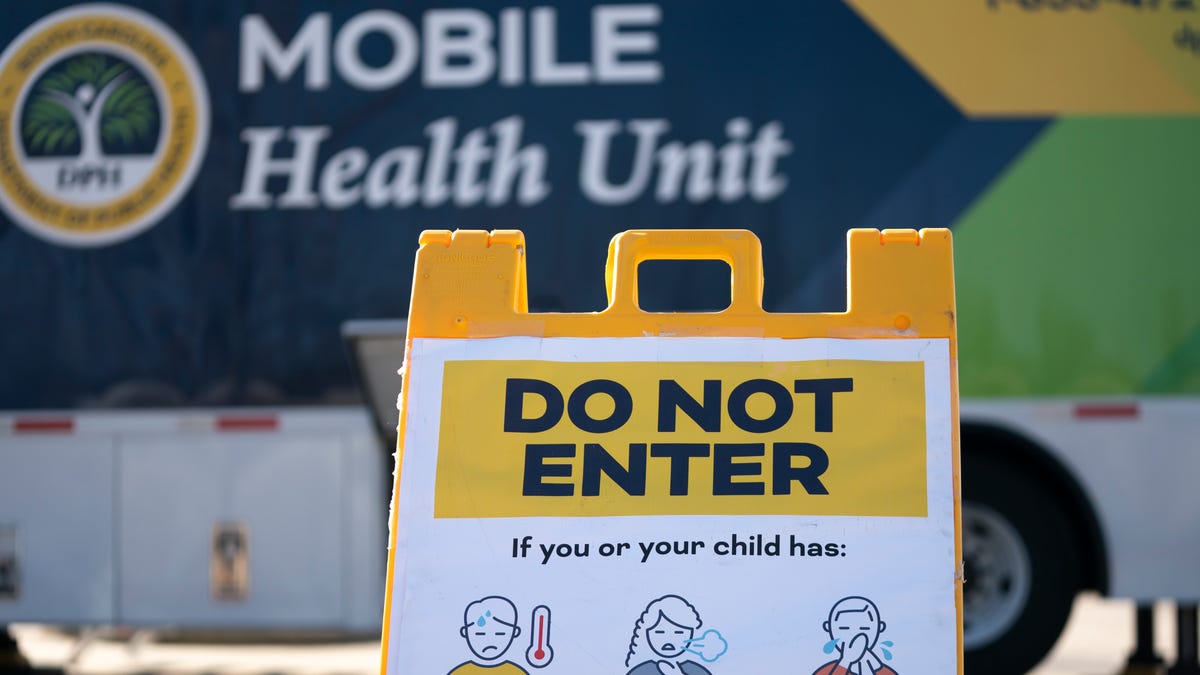

Legislative calendars dictate that bills must be heard in committee in the opposite chamber by the end of this week. RTS will end entirely after the end of next week, when regularly scheduled committees stop meeting.
Affordability
🐟 SB1042, sponsored by Wendy Rogers (R-7), is a copy of a vetoed bill from last year that would allow the state treasurer and state retirement systems to invest public monies in "virtual currency." The volatility and risk of cryptocurrency makes it a terrible retirement investment. Crypto is speculative, has no intrinsic value, and is not backed by any regulatory mechanism. It's 5 to 10 times as volatile as the US stock market; even the most aggressive investment advisors recommend it make up less than 10% of a portfolio. This bill would gamble with our tax dollars and Arizonans’ lifetime savings. Scheduled for House Ways & Means Committee, Wednesday. OPPOSE.
🐟 SB1043, sponsored by Wendy Rogers (R-7), is a copy of a vetoed bill from last year that would allow the state to accept cryptocurrency as a method of payment. Crypto is highly financially risky, 5 to 10 times as volatile as the US stock market. This move would put state government at risk of massive financial losses. Scheduled for House Ways & Means Committee, Wednesday. OPPOSE.
If you see this little fish next to a bill, it indicates a previously vetoed idea — something intended as "bait" to artificially drive up the governor's veto count and bolster stinky talking points.
"Any man who puts his intelligence up against a fish and loses had it coming." — John Steinbeck
SB1221, sponsored by JD Mesnard (R-13), would require the Arizona Department of Revenue to notify legislative committee chairs before creating tax forms that "adversely affect taxpayers prospectively" and to testify at any committee hearing on the topic. This is politically motivated sour grapes. In November, Gov. Hobbs issued an executive order directing ADOR to prepare tax forms early, enabling quick action if lawmakers approved her tax plan. Hobbs vetoed a more expensive tax plan authored by the sponsor, who made no secret of his hurt feelings. Scheduled for House Ways & Means Committee, Wednesday. OPPOSE.
SB1338, sponsored by Wendy Rogers (R-7), would allow the state and its cities and counties to distribute public retirement benefits without verifying whether the recipient is a lawful US resident. This is especially hypocritical given the many heavy-handed bills being pushed this year to verify citizenship for everything from voter registration to health care and driver licenses. Scheduled for House Government Committee, Wednesday. OPPOSE.
➡️ SB1437, sponsored by Jake Hoffman (R-15), would require cities and school districts to fulfill public records requests "electronically and in the least expensive manner possible," thus banning them from charging a reasonable fee for the time it takes them to fulfill those requests. Typical fees are roughly $1 per page, which does not cover the staff time required to produce records. This is a complex issue; some right-wing politicians are "delaying, denying and deflecting" legitimate records requests, but at the time, other public agencies are struggling with bad actors who file numerous frivolous or duplicate "weaponized" requests in order to disrupt or harass, often with the support of politically motivated right-wing lobbying groups. While transparency is important, this bill would force taxpayers to shoulder the financial impacts of bad actors. Scheduled for House Government Committee, Wednesday. OPPOSE.
SB1501, sponsored by David Gowan (R-19), would attack the ability of our state government to function efficiently by directing the Administrative Rules Oversight Committee to hunt down agency rules that "exceed their statutory authority" (i.e., go any further than lawmakers want them to) and recommend legislative changes. Rule making is a specialized, data-driven process best carried out by skilled officials. Allowing the legislature to inject argumentative chaos into nonpartisan regulatory decisions would clog the process, creating confusion or even stalemate. Scheduled for House Government Committee, Wednesday. OPPOSE.
🌟 SB1602, sponsored by Lela Alston (D-5), would gradually raise the monthly stipend for kinship foster care parents (those related to the child) to the same $600 per month that every other foster parent gets. Kinship foster parents are often grandparents raising grandkids; the bill sponsor, who has been working for parity for these families since 2019, says some families must send the children back to the state because they cannot afford to take care of them. Scheduled for House Health & Human Services Committee, Monday. SUPPORT.
HB2140, sponsored by Lisa Fink (R-27), is subject to a striker that would allow the state of Arizona to invest in gold bullion. The value of gold fluctuates with the market, making this idea a volatile nightmare. In January, gold temporarily spiraled to an all-time high of $5,300 per ounce, leading some experts to call it "overbought and vulnerable to a correction." Republicans continue to run these bills year after year based on tinfoil-hat beliefs that our banking system is imploding, the federal government has conspired to cause a crisis by controlling our money, and the end of Western civilization as we know it is imminent. Scheduled for Senate Finance Committee, Monday. OPPOSE.
HB2165, sponsored by Lupe Diaz (R-19), would make all Arizona state parks free for military and their guests. The state currently offers a 50% discount for active-duty and retired military, free admission for disabled veterans, and free admission for veterans on Veterans Day. The cost to the parks system for mandating this much more expansive discount is unknown at present, but last year, the legislature cut the State Parks budget by $1.6 million, roughly 10% of the agency's budget. Also last year, State Parks raised their fees; the cost of the cheapest annual pass jumped from $75 to $200. Free year-round admission for some is nice, but our state parks system should remain accessible for everyone. Scheduled for Senate Government Committee, Wednesday. OPPOSE.
HB2946, sponsored by Khyl Powell (R-14), would create a host of restrictions making it difficult for cities and counties to thoughtfully plan their growth. Increases would be capped at 50% and limited to one every four years, except with unanimous approval and under specified extraordinary circumstances, and cities and counties would be banned from charging development fees for parks and libraries or from basing fees on residence size or number of bedrooms. Scheduled for Senate Regulatory Affairs & Government Reform, Wednesday. OPPOSE.
HB4056, sponsored by Teresa Martinez (R-16), would ban anyone from charging a state lawmaker reasonable fees for fulfilling a public records request. The striker amendment comes from Matt Gress (R-4) in response to the Tolleson school district charging him the standard rate of $1 per page for his massive records request for two years’ worth of documents totaling 26,000 pages. Lawmakers have an existing process to obtain public records via the Joint Legislative Audit Committee; meanwhile, the district's fee does not even cover the staff time required to produce so many records. It's petty, vindictive, and unnecessary for a lawmaker to stage this kind of publicity stunt instead of going through official channels. This bill would force taxpayers to shoulder the financial impacts from any lawmaker who wishes to exploit their political power to harm others. Scheduled for Senate Government Committee, Wednesday. OPPOSE.
Discrimination
🐟 SB1013, sponsored by Janae Shamp (R-29), is a copy of a bill vetoed last year that would ban public schools from implementing hiring policies based on factors other than "merit" as part of the MAGA attack on diversity, equity and inclusion. The bill would allow anyone to sue, which would lead to endless frivolous claims of “reverse racism.” Scheduled for House Government Committee, Wednesday (held last week). OPPOSE.
🐟 SB1015, sponsored by Janae Shamp (R-29), is an exact copy of a vetoed bill from last year that would force health care professionals to pay the medical costs for minors who want a “gender detransition” to “reclaim their God-given gender” within 25 years of a procedure. The bill also enables civil lawsuits against providers for damages, including medical costs, pain and suffering, and loss of income. It's similar to a vetoed bill from 2024 which Shamp based on her belief that “political ideology” is driving gender-affirming care. The bill, which does not define the term “gender transition,” is designed to harass providers with fear-mongering about future “liability” and to throw up unnecessary obstacles for transgender people getting the same types of care that cisgender people do. Scheduled for House Government Committee, Wednesday (held last week). OPPOSE.
SB1213, sponsored by Janae Shamp (R-29), would ban someone convicted of a state or local offense (including speeding, loitering and "criminal nuisance") from being eligible from probation if they are also undocumented, and requires the court to immediately notify ICE. Scheduled for House Judiciary Committee, Wednesday. OPPOSE.
SB1421, sponsored by Wendy Rogers (R-7), would ban undocumented immigrants from banking in Arizona, including cashing checks and sending wire transfers. Anyone who tried would have one-quarter of their transfer monies snatched via civil penalties. This punitive, mean-spirited bill is intended to drive undocumented immigrants out of our state, in willful ignorance of studies showing that they contribute $704 million in taxes to Arizona's economy for services they cannot access. Only 5% of Arizona's workforce is undocumented, but that tiny proportion does a lot; without them, Arizona's economy will suffer and prices will go up, especially on food, housing and services. Scheduled for House Commerce Committee, Tuesday. OPPOSE.
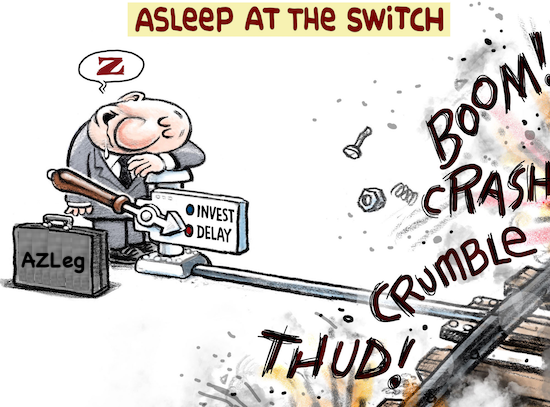
SB1457, sponsored by David Farnsworth (R-10), would expand Arizona's $2 million Advanced Air Mobility Fund (money the sponsor has been pushing to use toward the introduction of flying cars) and allow it to be used on border enforcement. We'll let the below cartoon speak for itself. Scheduled for House Transportation & Infrastructure Committee, Wednesday. OPPOSE.

SB1511, sponsored by Frank Carroll (R-28), would ban undocumented immigrants from driving commercial vehicles, and requires police to impound the vehicles and their cargo. The trucking industry is struggling with an ongoing, years-long driver shortage; meanwhile, the number of foreign-born US truck drivers has doubled in the last 25 years, up to now nearly 1 in 5. In other words, immigrants are doing the jobs Americans depend on but don't want to do themselves. Bills like this will gut an industry already facing severe labor shortages and raise prices on all goods transported by truck in Arizona. (If you're wondering why groceries are so expensive, one reason is that a federal crackdown has pulled 6,000 truckers off the road nationwide.) Scheduled for House Judiciary Committee, Wednesday. OPPOSE.
SB1573, sponsored by Wendy Rogers (R-7), would ban courts from using or referring to "religious sectarian law" in their decisions, unless it is "based on Anglo-American legal tradition and principles" — in other words, unless it is rooted in white nationalism. This thinly veiled attack on multiculturalism is related to efforts from xenophobic hate groups to demonize other faiths. Scheduled for House Judiciary Committee, Wednesday. OPPOSE.
HB2060, sponsored by Rachel Keshel (R-17), would ban district and charter schools, community colleges and state universities, and their employees acting in an official capacity — but not voucher-funded private schools — from "encouraging or facilitating abortions." The sponsor says her goal is to prevent any discussion of the constitutional right to terminate a pregnancy, including for health care professionals at a university student health center. Part of a package of bills from Republicans designed to attack the recently voter-approved Prop 139. Scheduled for Senate Government Committee, Wednesday. OPPOSE.
HB2144, sponsored by Justin Olson (R-10), would legalize court-ordered child support for a so-called "preborn child," beginning on the date of a positive pregnancy test that is confirmed by a licensed health care professional. This is part of the anti-scientific strategy of “fetal personhood,” which gives fetuses the same legal rights as people (to the detriment of women). Part of a package of bills from Republicans designed to attack the recently voter-approved Prop 139. Scheduled for Senate Federalism & Family Law Committee, Monday. OPPOSE.
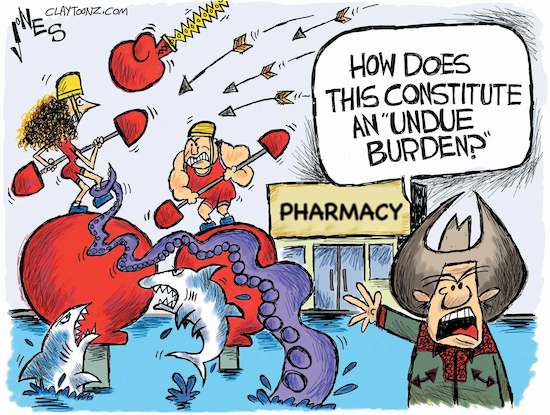
🐟 HB2364, sponsored by Rachel Keshel (R-17), would make it a felony to order or sell abortion drugs. These drugs have a better safety record than penicillin or Viagra; they’re safe and effective. Banning them would pose an undue burden on women. Part of a package of bills from Republicans designed to attack the recently voter-approved Prop 139, which cuckoos like the sponsor are hell-bent on undoing any way they can. Scheduled for Senate Judiciary & Elections Committee, Wednesday. OPPOSE.
🐟 HB2589, sponsored by Michael Way (R-15), threatens teachers and parents with jail time by making it a felony to allow anyone to perform in a “drag show performance” for people under 18, or even remain in the building during the performance. The bill's definition of “drag show” is broad enough to include school plays (such as Shakespeare) or football players who dress up as cheerleaders for pep rallies; evidence shows it was purposely crafted to provoke Democratic anger. In the bill's House committee hearing, lawmakers supporting the bill displayed clear bigotry, fear and ignorance, and could not even agree on exactly what it is they want to ban. Violations would carry a minimum sentence of 1 year in prison. In 2023, the Legislature’s nonpartisan rules attorneys told lawmakers a similar bill was likely unconstitutional, a message they repeated again this year. Scheduled for Senate Judiciary & Elections Committee, Wednesday. OPPOSE.
➡️ HB2830, sponsored by Rachel Keshel (R-17), would require the State Board of Education to create fetal and prenatal human development lessons for public schools to add to their science classes, while also banning them from teaching students about how pregnancy happens. The proposal would also ban any organization associated with abortion from providing instruction or education materials, even if those materials contained zero information about abortion. Schools that don’t comply would risk losing funding. This is a thinly veiled attack on Prop 139, which voters recently approved by nearly 2-to-1 margins. Scheduled for Senate Health & Human Services Committee, Wednesday. OPPOSE.
Energy, Water & Climate
🐟 SB1176, sponsored by Warren Petersen (R-14), is a copy of a failed bill from last year that would allow the storage of storm water to be used for replenishment credits. This gives credits for water that generally would be recharged anyway, and would likely result in a net increase in pumping. Scheduled for House Natural Resources, Energy & Water Committee, Tuesday. OPPOSE.
SB1332, sponsored by John Kavanagh (R-3), would mandate a legislative review of whether state participation in light rail expansion is "warranted." This review is designed to dig for evidence that light rail is overly expensive, inflexible and economically harmful, despite the fact that voters have repeatedly approved it. The sponsor has made no secret of his distaste for light rail; he and his Republican colleagues are doing everything they can to obstruct it. Lawmakers should listen to voters and honor their intent, not try to thwart it. Scheduled for House Transportation & Infrastructure Committee, Wednesday. OPPOSE.
SB1445, sponsored by Wendy Rogers (R-7), would limit how often the Department of Environmental Quality can require testing protected aquifers in small cities for bacterial contamination. Scheduled for House Natural Resources, Energy & Water Committee, Tuesday. OPPOSE.
SB1503, sponsored by David Gowan (R-19), would ban government from considering "environmental, social, policy or ideological goals" for public pension plans. In 2024, Arizona’s Public Safety Personnel Retirement System, which oversees pension funds for police and others, warned that a similar effort would hurt its goal of maximizing returns for its members. The idea appears driven by a panic that society will hold extremists accountable for their actions. One study says such efforts could cost Arizona millions. See our explainer on ESG. Scheduled for House Ways & Means Committee, Wednesday. OPPOSE.
SB1519, sponsored by Tim Dunn (R-25), would increase the weight limit for off-highway vehicles from 2500 to 3500 pounds, at the request of Polaris Industries, an off-road vehicle company. Excessive off-road travel in Arizona is already destroying pristine habitat; heavier vehicles will do even more harm. The bill has been amended to subject these heavier vehicles to a reduced vehicle license tax instead of no tax, which basically means Arizona would be selling our desert to a for-profit company to be torn up in exchange for a small amount of revenue. Scheduled for House Transportation & Infrastructure Committee, Wednesday. OPPOSE.
SB1725, sponsored by JD Mesnard (R-13), would declare "excessive marijuana smoke and odor" a public nuisance, making it a criminal activity that endangers public health and safety. Anyone who "creates excessive marijuana smoke and odor" would be subject to existing nuisance law. The need for this measure is questionable; Prop 207, which voters approved in 2020, bans smoking marijuana in public spaces and open areas, or anywhere other than one's own home or private property. The measure also fails to define the term "excessive," which could lead to absurd or unjust outcomes. A similar ballot referral, SCR1048, failed to clear the Senate. Scheduled for House Judiciary Committee, Wednesday. OPPOSE.
HB2055, sponsored by Gail Griffin (R-19), would dedicate state money to brackish groundwater recovery projects. Though Arizona has plenty of reasons to want new water — prolonged drought, the drying Colorado River, increased demand, and human-caused climate change — more groundwater pumping is not the answer, particularly not when that water sits nearly a quarter-mile below the surface and produces toxic brine as a byproduct. Brackish groundwater is still groundwater, and at this depth is essentially non-renewable. Scheduled for Senate Natural Resources Committee, Tuesday. OPPOSE.
🐟 HB2100, sponsored by Gail Griffin (R-19), is a copy of a vetoed bill from last year that allows counties to approve small subdivisions, purposely circumventing existing requirements that new developments have an assured water supply. This undoubtedly benefits the developers of so-called “wildcat” subdivisions, who split large parcels of land into smaller chunks and sell hundreds of those chunks off one by one, skirting the requirement to ensure a long-term water supply. Scheduled for Senate Government Committee, Wednesday. OPPOSE.
➡️ HB2145, sponsored by Gail Griffin (R-19), would let legislative leaders waive minimum required gasoline standards in Maricopa and Pinal counties at the request of any gas company that claims an "imminent supply shortage." This would harm Arizona's air quality without significantly affecting gas prices. A 1997 Arizona state law requires a specific fuel blend formulated to reduce emissions to be sold in these areas in hotter months because of poor air quality. Arizona ranks fourth in the number of unhealthy ozone days, and 84% of Arizonans live in areas with unhealthy air. In a 2023 hearing, a gas company rep told lawmakers that this move would do little to bring prices down because our state's three gas pipelines are at or near capacity. Gas formulations should remain the role of experts at the state agencies tasked with this complex topic, and not become part of the House Speaker and Senate President's political agendas. Scheduled for Senate Natural Resources Committee, Tuesday. OPPOSE.
HB2497, sponsored by Michael Way (R-15), would create a statutory right for Arizonans to hunt, fish, and harvest wildlife, bans any policies that "unreasonably restrict" it, and weakens the ability of Game and Fish to manage wildlife. This is not only anti-conservation, but the sponsor acknowledged in committee that his bill targets a problem that does not exist. Scheduled for Senate Natural Resources Committee, Tuesday. OPPOSE.
HB2696, sponsored by Julie Willoughby (R-13), would require the Arizona Commerce Authority to use "all available resources" to reduce gas prices. Our state lawmakers have been busy attacking light rail, obstructing solar power, and doing everything they can to artificially prop up gas cars and block other forms of transportation. This myopic hyperfocus on gasoline will not only increase air pollution and worsen public health, but it willfully ignores the fact that we could choose to make transportation affordable if we actually wanted to. Scheduled for Senate Natural Resources Committee, Tuesday. OPPOSE.
HB2781, sponsored by Neal Carter (R-15), would hamstring solar energy generation with special requirements and would require solar operators to create and submit decommissioning plans before they can even get started. This presents another barrier for solar. Why isn't the sponsor creating similar requirements for industries that are actually destructive, such as the polluting aluminum smelter that special interests want to site in Benson against the community's wishes? Scheduled for Senate Natural Resources Committee, Tuesday. OPPOSE.
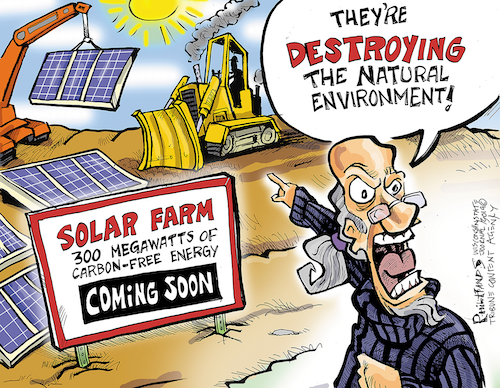
HB2787, sponsored by Lupe Diaz (R-19), would ban Arizona and its cities and counties from cooperating with the Mexican Wolf Reintroduction Program, ignoring the federal Endangered Species Act. Mexican gray wolves are the most endangered wolf subspecies in the world, and they belong in our ecosystem. The Mexican gray wolf, whose most recent population is estimated at around 286, has long been the target of cattle ranchers, who have been actively lobbying the Trump administration to delist the species. Scheduled for Senate Natural Resources Committee, Tuesday. OPPOSE.
HB2795, sponsored by Michael Carbone (R-25), would ban counties from regulating the siting of small modular nuclear reactors in any way as long as the federal government OKs them. This year the federal government secretly slashed environmental and security protections for experimental nuclear reactors, sidestepping the regulatory system. Modular reactors are not yet in commercial use anywhere in the US; only two exist worldwide, in Russia and China. The measure is part of a package of bills designed to force modular reactors into our state. Scheduled for Senate Natural Resources Committee, Tuesday. OPPOSE.
🌟 HB2889, sponsored by Myron Tsosie (D-6), would direct $1 million from the state general fund to monitoring for uranium contamination, such as with soil, water and home testing, in partnership with tribal epidemiology centers. Uranium mining on Navajo land has a deadly toll, including a legacy of contaminated water and lethal, aggressive cancers. 85 percent of all Navajo people live in uranium-contaminated homes. Scheduled for Senate Natural Resources Committee, Tuesday. SUPPORT.
HB2918, sponsored by David Marshall (R-7), would impose punitive taxes on renewable energy and storage equipment owned by a public power company. The sponsor has stated that his goal is to destroy policies that make building or investing in renewable energy more attractive. Scheduled for Senate Finance Committee, Monday. OPPOSE.
HB2955, sponsored by Julie Willoughby (R-13), would waive Arizona's requirement for clean-burning fuel in summer. State law currently requires a special summer blend of gasoline to help control ozone and other air pollutants in metro Phoenix, which consistently ranks among the regions with the worst air quality in the country. Scheduled for Senate Regulatory Affairs & Government Reform Committee, Wednesday. OPPOSE.
HB2975, sponsored by Ralph Heap (R-10), would force Arizona's State Land Department to suspend its "solar score" program, which is designed to help find the best locations for leased solar farms, and would direct the state to use the land for mining and housing instead. This would hamstring desperately needed (and lucrative) renewable energy development in favor of a dangerous and damaging practice that communities increasingly oppose. Scheduled for Senate Natural Resources Committee, Tuesday. OPPOSE.
➡️ HB2985, sponsored by Gail Griffin (R-19), would require the State Land Department to develop a new process for distribution of its allocation of CAP water. It appears that this is intended to allow water sellers and home builders to take more than their fare share of Arizona's groundwater, depleting this scarce and precious resource for existing residents. Scheduled for Senate Natural Resources Committee, Tuesday. OPPOSE.
Public Safety
SB1011, sponsored by Janae Shamp (R-29), would require medical examiners or forensic pathologists to review the infant's vaccination history in cases of sudden death. Assuming vaccinations are a direct cause of unexplained infant death is fact-free and blatantly anti-science. Despite the sponsor's personal beliefs, there's simply no link between vaccines and sudden infant death. Scheduled for House Government Committee, Wednesday. OPPOSE.
SB1012, sponsored by Janae Shamp (R-29), would force bars and restaurants that serve alcohol to let people carry concealed handguns on their premises as long as they hold a valid concealed weapons permit and don't drink alcohol. Currently it's the business's choice to ban concealed weapons by clearly posting signs. This bill would negatively impact property rights and public safety. Arizona already has some of the nation's least restrictive gun laws; restaurant workers didn’t sign up to monitor whether armed customers are drinking alcohol. What could possibly go wrong? The sponsor has a history of illegally carrying weapons. Scheduled for House Judiciary Committee, Wednesday. OPPOSE.
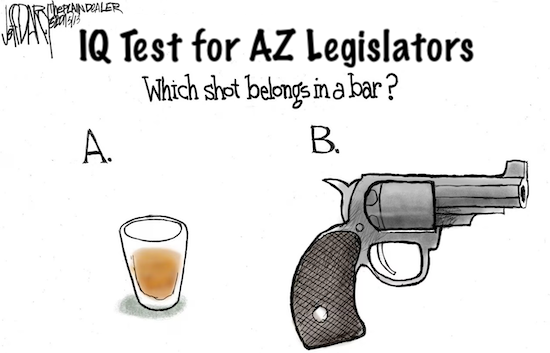
➡️ SB1052, sponsored by Wendy Rogers (R-7), is subject to a "hostile" striker (one not approved by the sponsor) that would keep the Department of Economic Security open without any extraneous policies. Agencies in Arizona require lawmakers to regularly approve bills that give them permission to continue operating, but Republicans have turned this year's approval bill into a political piñata stuffed with a host of unrelated and previously vetoed policies. The existence of DES is now tied to culture-war insanity like attacking Arizonans who rely on SNAP and forcing hospitals to ask patients about their immigration status. This would hang out to dry the Arizonans who rely on the services DES provides, and puts the entire agency at risk. Scheduled for House Health & Human Services Committee, Monday. Use RTS to comment and say you support the striker from Rep. Patty Contreras (D-12)! (We recommend you oppose or stay neutral on the bill itself, as without the striker, the bill is not good.)
➡️ SB1112, sponsored by Carine Werner (R-4), would make it easier to commit a person into involuntary confinement or mental health treatment by lowering the standard for hearings to require testimony from only one witness and allowing courts to waive the witness requirement entirely if they have "clear and convincing" evidence (a bar lower than required for a criminal conviction). Involuntary treatment is a very serious infringement on personal and civil liberties; eroding due process protections would increase the likelihood of Arizonans suffering through involuntary confinement and forced treatment. This bill would disproportionately impact domestic violence victims, people of color, people with intellectual and developmental disabilities, and others who didn't survive to talk about it. This bill would institute sledgehammer-style reforms to a very delicate area of statute where it would be more appropriate to use a scalpel. Scheduled for House Appropriations Committee, Wednesday. OPPOSE.
SB1212, sponsored by Janae Shamp (R-29), would ban health insurance companies from reimbursing coverage at different rates for people based on whether they are vaccinated. This is something that is not happening. Insurers can encourage members to get their routine vaccines with prizes or credits, but cannot charge people more for not adhering to recommended vaccine schedules. A fear-mongering, unnecessary bill and an attack on public health. Scheduled for House Government Committee, Wednesday. OPPOSE.
➡️ SB1456, sponsored by David Farnsworth (R-10), would allow ADOT to designate a state road as "primitive," classifying the road as a "use-at-your-own-risk" byway and limiting state liability for damage or injury. Under current law, when a road is not safe, ADOT closes it. This bill would allow the state to skirt needed road maintenance by simply throwing up its hands and saying it can't manage the repairs. It could also result in a greater burden on Arizona's emergency responders, whose job it is to help people in difficult situations (regardless of what signs the state decides to put up). Arizona has been struggling to properly maintain its roads due to a lack of resources, including the persistent drain of our $1-billion-a-year universal ESA voucher program. Perhaps we should deal with that instead of putting Arizonans at risk with "not my problem" style signage? Scheduled for House Transportation & Infrastructure Committee, Wednesday. OPPOSE.
🐟 HB2086, sponsored by Khyl Powell (R-14), would ban the state, its cities and counties, and district public (but not charter or voucher-funded) schools from requiring any vaccines. It would also ban masks, except for "long-standing workplace safety and infection control measures unrelated to COVID-19." Amazingly, it would also ban private businesses from requiring masks or vaccinations as a condition of entry or employment, subject to the same workplace safety exception. Scheduled for Senate Health & Human Services Committee, Wednesday. OPPOSE.
HB2118, sponsored by Neal Carter (R-15), would ban cities and counties from requiring background checks, ID or fingerprinting from the owner of a food truck before it issues a license. The state no longer requires these checks, which may include criminal, local civil court and driving history (remember, a food truck drives from place to place), instead leaving it up to cities and counties. Eliminating these checks entirely would harm public safety. Scheduled for Senate Government Committee, Wednesday. OPPOSE.
🐟 HB2136, sponsored by Michael Way (R-15), attempts to throw the book at peaceful protesters by creating new felony offenses of "civil terrorism" and "subversion" (with a sentence of 18 months in prison); making it illegal to "intimidate a civilian population" or "subvert the government"; expanding racketeering to include "riot" and "civil terrorism"; and making it illegal to work for any group the federal government labels a "foreign terrorist organization." (Federal executive orders are already attempting to criminalize opposition in this way.) For good measure, reviving a vetoed 2024 bill, the bill would also make it a class 6 felony for 3 or more protesters to block a road, with a sentence of 1 year in prison. Working for anyone the state of Arizona has labeled a "terrorist organization" would also be a class 5 felony; in a separate resolution, Republican lawmakers are working to label a group that tracks hate crimes against Muslims a "terrorist group." Previous bills like this have been purposely intended to criminalize protesting, which is a First Amendment right. Part of a package of bills intended to attack American Muslims. Scheduled for Senate Judiciary & Elections Committee, Wednesday. OPPOSE.
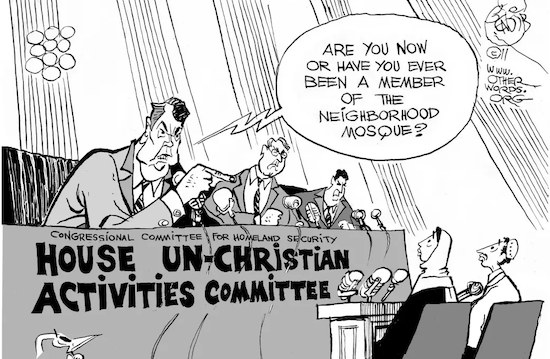
HB2417, sponsored by Quang Nguyen (R-1), would allow Arizona drivers to install a variable speed inhibitor in their cars instead of having their licenses revoked or suspended. The devices "cannot be switched off by the driver without being detected," but it's unclear who would be notified if the device were disabled, or on what timeline (or even whether) Arizona's desperately underfunded state agencies would have adequate resources to properly monitor offenders. And why aren't these drivers being placed on a provisional license? While the out-of-state group behind this bill has its heart in the right place, the policy needs more work to fit Arizona's needs. Scheduled for Senate Public Safety Committee, Wednesday. OPPOSE.
🌟 HB2641, sponsored by Sarah Liguori (D-5), would ban PFAs from being used in firefighting foam. Studies have found high levels of these "forever chemicals" in the blood of firefighters; they cause serious health problems like cancer, high cholesterol, depressed antibody response, and reproductive issues. Limiting PFAs would benefit public health and help protect our food and water from contamination. Scheduled for Senate Government Committee, Wednesday. SUPPORT.
HB2763, sponsored by Quang Nguyen (R-1), would require both chambers of the legislature (but not the governor) to first approve the closure of a state-owned shooting range before the state can take any action. The bill is a response to the sponsor's fear that the state will close the Ben Avery Shooting Facility in north Phoenix, something which is not planned or even being discussed. This measure would add unnecessary red tape and prevent Arizona Game & Fish from being able to perform its delegated responsibilities. Scheduled for Senate Natural Resources Committee, Tuesday. OPPOSE.
HB2862, sponsored by Quang Nguyen (R-1), would toughen penalties for someone who commits a crime while "wearing a mask with intent to conceal identity." This has potential First Amendment issues because it's based not on what someone does, but what they wear while doing it. Prosecutors could have to decide, for example, whether a woman's religious dress is really faith-based. Part of a package of bills that would criminalize our constitutionally protected right to protest. Scheduled for Senate Judiciary & Elections Committee, Wednesday. OPPOSE.
Voting Rights, Elections & Direct Democracy
SB1003, sponsored by John Kavanagh (R-3), would allow county supervisors and the other elections officials who are supposed to certify election returns to instead "acknowledge the results without prejudice." This would give elected officials a free pass to spread misinformation and stoke conspiracy theories about elections with no legal consequences for their behavior. This bill is also currently a court case, with Arizona's Senate president and House speaker suing to try to get the Arizona Supreme Court to agree that elections officials don't have to do their jobs. Scheduled for House Federalism, Military Affairs & Elections Committee, Wednesday. OPPOSE.
🐟 SB1060, sponsored by Wendy Rogers (R-7), is an exact copy of a bill vetoed last year that would ban US citizens from registering to vote in Arizona if they have a parent who is a US citizen and who is registered to vote in Arizona, but they themselves have never lived in the US. Banning citizens from voting is clearly unconstitutional. This is part of a national Republican push to disenfranchise voters in the name of “election integrity.” Scheduled for House Federalism, Military Affairs & Elections Committee, Wednesday. OPPOSE.
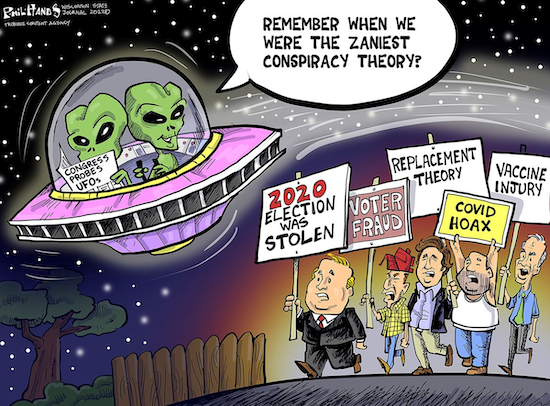
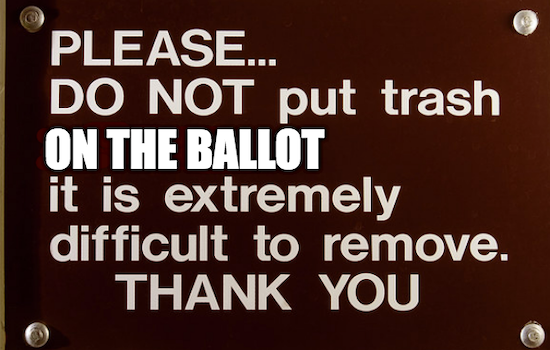
SB1134, sponsored by David Gowan (R-19), would allow political signs starting 71 days before the first day that early ballots are mailed, instead of 71 days before the election. That's about an extra 40 days. Nearly universally, Arizonans say they hate political signs, calling them "a nuisance," "ugly," and "trash"; every two years, one of the most common questions journalists get is when those signs will finally come down. Scheduled for House Federalism, Military Affairs & Elections Committee, Wednesday. OPPOSE.
🌟 HB2342, sponsored by Stacey Travers (D-12), would require homeowner's associations to allow residents to install reasonable shade structures in their back yards, and would allow the HOAs to adopt rules on size, placement and appearance. In our rapidly heating desert climate, shade is a necessity. These structures will help homeowners protect their families from excessive heat, reduce energy costs, create more usable outdoor living spaces, and quickly and sustainably adapt to rising temperatures. Scheduled for Senate Regulatory Affairs & Government Reform Committee, Wednesday. SUPPORT.
🐟 HB2745, sponsored by Tony Rivero (R-27), is a copy of a bill vetoed last year that would allow the legislature to arrest anyone who refuses to comply with a subpoena they issued — including another elected official — and physically haul them before a committee. In 2024, some far-right legislators convened a committee hearing to call for the impeachment of Attorney General Kris Mayes for protecting Arizonans from legislative overreach, which Mayes refused to attend, saying it made "a mockery of real legislative oversight." Scheduled for Senate Government Committee, Wednesday. OPPOSE.
HB4117, sponsored by Teresa Martinez (R-16), would make it a crime to "disturb a religious service" with "indecent behavior, profane discourse, or unnecessary noise," even if the disruption is outside the building. The bill comes after federal agents arrested journalist Don Lemon for covering an anti-ICE protest that disrupted a Minnesota church service, an action being broadly viewed as an unconstitutional overreach. The bill's inclusion of "profane discourse" likely violates the First Amendment right to freedom of speech; the sponsor herself has acknowledged it could implicate a child who yells a curse word during a church service. Right-wing lawmakers are advancing similar bills in Idaho, Ohio, Oklahoma and Tennessee. Part of a package of bills that would criminalize our constitutionally protected right to protest. Scheduled for Senate Judiciary & Elections Committee, Wednesday. OPPOSE.

2026 Session Timeline
Friday 3/27: Last day for a bill to get out of committees in its crossover house
Friday 4/3: End of crossover Appropriations committees, and the last day to use RTS until a budget drops
Tuesday 4/21: 100th Day of Session (the purported end goal; can be changed)
Tuesday 6/30: Constitutionally mandated deadline to pass a state budget
Committees & Contacts
Here's a handy list of lawmaker contact info, committee chairs and assignments.
CEBV Action Linktree
Want other ways to take action? Need to stay informed? Looking for our social media, inspiration, or self-care tips? Look no further than our Linktree.
Congratulations, you made it to the end! 🎉 Please enjoy this amusing parody video from "The Late Show with Stephen Colbert."

Comments ()