
March 16, 2026
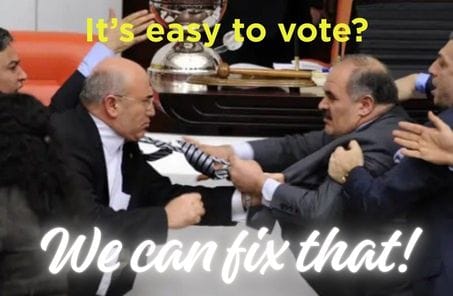
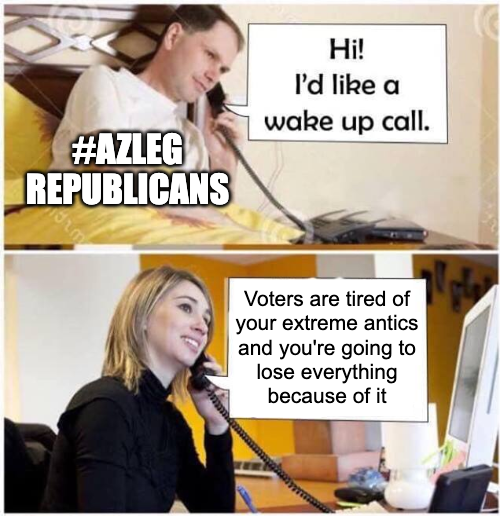
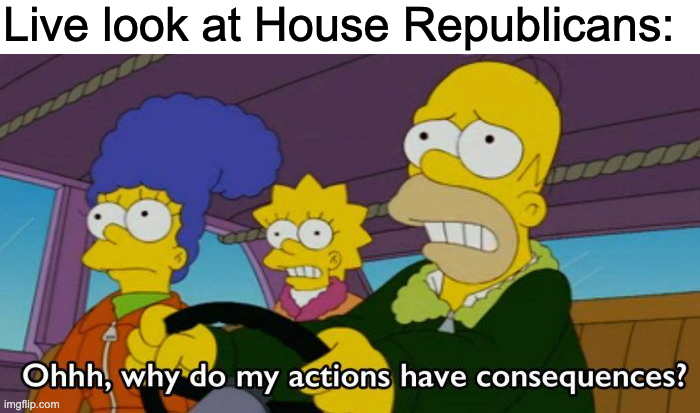
The best thing we can say about the Arizona Legislature this year is that Republican lawmakers can't agree on which bonkers, conspiracy-driven, voter-suppression ballot measures they want to pass.


Melinda Iyer, CEBV's Policy Director, has taken a well deserved break this week. Cathy Sigmon, Co-Founder and Co-Director, is attempting to fill her shoes!
The best thing we can say about the Arizona Legislature this year is that Republican lawmakers can't agree on which bonkers, conspiracy-driven, voter-suppression ballot measures they want to pass. This gives us hope that they will all fail — but obviously we can't count on that.
This week, lawmakers will consider SCR1001 (Bolick, R-2) in its House committee. As introduced, SCR1001 was identical to HCR2001 (Kolodin, R-3), which is also being heard in committee this week. Both measures would end Arizona's popular Active Early Ballot List, instead requiring voters to proactively ask for an early ballot by mail before each general election, and would end the ability to drop our mail ballots at vote centers after the Friday before Election Day. However, the devil is in the details: it seems House and Senate lawmakers have wildly different ideas on the details of how exactly to make it harder for Arizonans to vote.
Kolodin's bill requires voters to show a state-issued ID "concurrent with casting a ballot." How would this work exactly? Are voters supposed to make a photocopy of their ID and slip it in the yellow envelope, violating ballot privacy? Are we supposed to show up and stand in endless lines with our ballots to show ID before dropping them off? Who knows! That's probably why the Senate stripped this utterly unworkable requirement without explanation from their version of the bill last month, even though Kolodin said it was “non-negotiable.” (Please note that this guy — who the State Bar sanctioned, put on probation, and forced to take remedial ethics courses for filing baseless, bad-faith lawsuits challenging the 2020 election — also wants to be our next Secretary of State.)
As if these two competing measures aren't enough, HCR2016 (Keshel, R-17) is also advancing through the Senate Judiciary and Elections Committee. This retrogressive measure would eliminate voting centers, which allow voters to conveniently cast a ballot anywhere in the county, and turn back the clock to create precincts of no more than 2,500 registered voters. A similar change recently led to massive voter confusion and rejected ballots in Texas, and would likely disenfranchise huge numbers of voters in Arizona as well.
For each of these three bills, this week's committee hearing offers the last opportunity for public input — and, remember, these would go straight to the ballot and can't be vetoed. We won't dignify the measures with detailed rebuttals; there's been lots written on that subject already (Arizona Agenda, AZCentral, Center for the Future of Arizona, and Arizona Mirror). We'll just say the core ideas are not only unworkable, but also diametrically opposite to what voters actually want.
Extensive, detailed polling shows a runaway supermajority of Arizonans — 81%! — wants to keep the ability to vote early by mail. When asked if they prefer "earlier results" or "easy and convenient" voting, the answer isn't even close: only 31% of voters prioritize faster results, and 69% of voters want to continue to drop off their early ballots up to and including Election Day. These proportions constitute a runaway stomping rarely seen in these divisive political times.
The polling also makes it clear that Republican lawmakers' endless caterwauling about "stolen elections" has still failed to gain traction with the majority of voters. Two in three Arizonans trust current state and local election administration, including 51% of Republicans. While 88% of Arizonans worry about misinformation, local and state election workers are still the most trusted voices. Arizonans want more voting centers, and by 4-to-1 margins, we want to invest more in election modernization, upgrades and workers. Voters want to expand voting hours, not reduce them, which includes making Election Day a state holiday. And by large margins, we want to keep the very voting centers our Republican lawmakers are so intent on destroying.
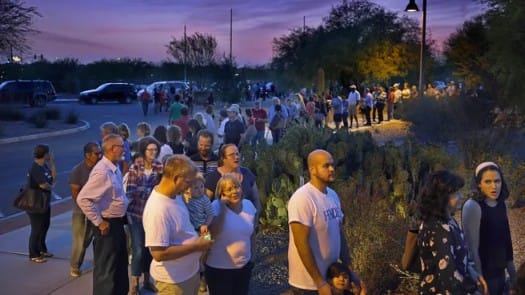
If you don't believe polling, we've got recent election results that constitute proof positive of Arizonans' non-negotiable views on election administration. Long lines at the 2016 presidential preference election were partly responsible for longtime Maricopa County Recorder Helen Purcell's ballot-box defeat that November. (One thing lawmakers clearly haven't yet acknowledged about Arizonans is that we hate standing in line for routine tasks or being forced to wait to exercise our constitutional rights.)
Why is this small handful of lawmakers wasting so much of Arizonans' time and money creating election restrictions that voters manifestly do not want? Who benefits from their pursuit of ridiculous "solutions" to baseless conspiracies? While a handful of true zealots (many of whom are Arizona state lawmakers) subscribe to these cultish views, others want to profit off the lies or to drum up voter anxiety for partisan ends.
Regardless of motive, it's abundantly clear that, if any of these measures make it to our ballot, the changes in them would frustrate and disenfranchise Republican and Democratic voters alike. When we contact our lawmakers (see below), let's lean first and foremost on the knowledge that, when voters can't cast their ballots, nobody wins.

⏰ If you have 5 minutes: If you haven't already, use Request to Speak to weigh in on the 6 ballot referrals in committee this week (see "Ballot Referrals" below for more information, or view our full list).
⏰ If you have 10 minutes: Also contact your own senator and representatives to ask them to put the brakes on all these the ballot measures.
⏰⏰ If you have 20 minutes: Contact committee members about the three election-attack ballot referrals being heard this week:
• for SCR1001, the House Federalism, Military Affairs & Elections Committee;
• for HCR2001, the Senate Judiciary & Elections Committee;
• for HCR2016, the Senate Judiciary & Elections Committee
⏰⏰⏰ If you have 30 minutes: Also use Request to Speak to weigh in on the bills being heard in committees this week. Refer to the information, links and talking points in "Use RTS on These Bills" below to craft your own comments to lawmakers.
⏰⏰⏰⏰ If you have 40 minutes: Also contact our Hall of Shame lawmakers (see that section below) to tell them what you think.
⏰⏰⏰⏰⏰⏰ If you have 60 minutes: Join us on Zoom for our CEBV Happy Hour conversation, packed with political analysis, conversation and community. Our guest this week is Alex Gulotta from All Voting is Local. If you have election concerns, this is a conversation you will want to hear! Happy Hour meets every Sunday at 4 PM through the end of legislative session. We're looking forward to seeing you!

The bullying and attempted erasure of the trans community is a favorite pastime of cultish MAGA Legislators. The current onslaught of legislation seeks to remove both protections and treatments.
This week we're watching SB1015 (Shamp, R-29), which would force health care professionals to pay the medical costs for minors who want a “gender detransition” to “reclaim their God-given gender” within 25 years of a procedure. The bill also enables civil lawsuits against providers for damages, including medical costs, pain and suffering, and loss of income.
SB1094, sponsored by the legislator who spends an inordinate amount of time worrying about bathroom practices, Sen. John Kavanagh, would allow people who requested gender reassignment surgery as minors to sue their physician up until 25 years after the minor turns 18, even if the surgery was done with parental consent.
SB1095 (Finchem, R-1) would ban puberty blockers and hormone therapy for transgender minors, making the treatment an act of unprofessional conduct (which means doctors would lose their licenses).
These gleeful attacks on trans people who are just trying to live their lives stem in part from a partisan calculation that seeks a wedge issue to drum up fear and division. The focus is also a diversionary tactic to turn attention away from issues that political strategists find helpful to conceal. Religious extremist groups such as the Alliance Defending Freedom and the Family Research Council appear to treasure the freedom to discriminate above actual individual freedom, and are pushing model legislation around the country. This year, 740 bills have been introduced in 42 states, according to translegislation.com.
Shamefully, the US Supreme Court has upheld a ban on transgender people in the military and a requirement that trans people use their birth sex on passports.

Polls consistently show that most people are far more concerned about the cost of living than fear of trans people. “I believe the Legislature should stay out of the business of telling Kansans how to go to the bathroom and instead stay focused on how to make life more affordable for Kansans," said Gov. Laura Kelly of Kansas when vetoing a bill that invalidated trans people's drivers licenses. (The veto was overridden by the Kansas Legislature, and is now being litigated.)
For those who profess to value privacy and freedom, it's despicable to make this glaring exception. Considering the generations of gay individuals finally enjoying marriage, families, and open expression, we eagerly anticipate the same for trans people.
Do you appreciate the many hours of work it takes to produce a resource like this every week? Become a paid subscriber and help keep us going:

One of our tasks is to hold our allies accountable. This section calls out those who support harmful bills. We ask them to heed and do better.
This week, we're disappointed in:
👎Flavio Bravo (D-26), 👎Eva Diaz (D-22), 👎Mitzi Epstein (D-12) 👎 Brian Fernandez (D-23), 👎Theresa Hatathlie (D-6), and 👎Kiana Sears (D-9) for voting YES on SB1725 on the Senate floor. This bill would declare "excessive marijuana smoke and odor" a public nuisance, making it a criminal activity subject to existing nuisance law. We fail to understand why some legislators vote for bills they know are ill-conceived and could carry unintended consequences. The irony doesn't escape us that the sponsor, JD Mesnard (R-13), is upset that his health and sensitivities are being intruded on. Women's bodily autonomy escapes his notice, as do the public health benefits of required vaccines. SB1725 now advances to the House for committee assignment. Interestingly, all Democrats voted NO on the ballot measure version, SCR1048. Contact them as follows:
▶️ Flavio Bravo (D-26) • fbravo@azleg.gov • 602-926-4033
▶️ Eva Diaz (D-22) • eva.diaz@azleg.gov • 602-926-3473
▶️ Mitzi Epstein (D-12) • mepstein@azleg.gov 602-926-4870
▶️ Theresa Hatathlie (D-6) • thatathlie@azleg.gov 602-926-5160
▶️ Brian Fernandez • bfernandez@azleg.gov • 602-926-3098
▶️ Kiana Sears (D-9) • ksears@azleg.gov • 602-926-3374


Lawmakers are advancing these measures through committees this week with the ultimate goal of placing them on our November ballot. We are tracking a stunning thirty-eight potential measures. (See the full list here.) For comparison, our 2024 ballots contained eleven legislative referrals, which was at that time the most in 20 years and forced election officials in Maricopa and Pima Counties to print our ballots across two sheets of paper.
All the below bills have already made it through one full chamber. Unlike regular bills, these referrals cannot be vetoed. Use RTS to weigh in; refer to the information, links and talking points here to craft your own comments to lawmakers.
 Wayne Schutsky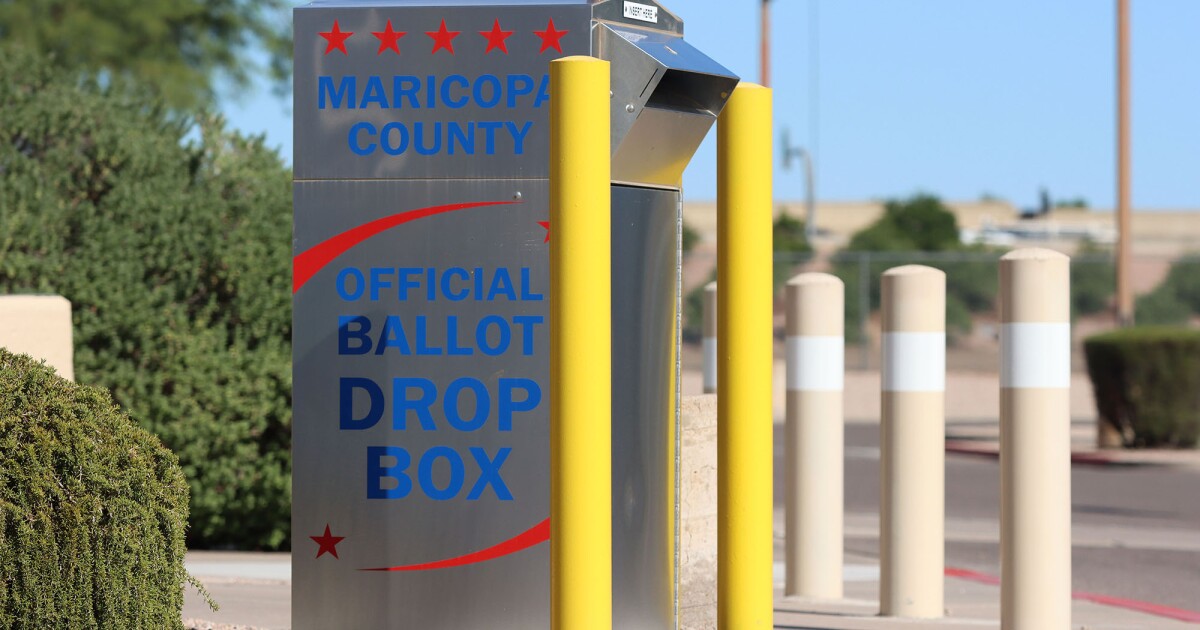
SCR1001, sponsored by Shawnna Bolick (R-2), would ax the early voting system which Arizona pioneered and require all voters — even those voting mail-in ballots — to present a "proof of identity to vote" (no one is sure how that would work). Arizonans already rejected the legislature's push to toughen voter ID requirements in 2022 by voting down Prop 309, which means this is also an attack on voter will. If approved by voters, this measure would make it harder to vote by mail and harder to vote generally — exactly the opposite of what we should be doing. Now-competing measures SCR1001 and HCR2001 are the subject of an intraparty fight. Scheduled for House Federalism, Military Affairs & Elections Committee, Wednesday. OPPOSE.
SCR1004, sponsored by Wendy Rogers (R-7), would ask voters to ban cities across Arizona from using photo radar unless a local community votes every 10 years to approve it. Numerous studies have found both speed and red-light cameras offer many safety benefits, reducing traffic crashes and injuries by up to 35 percent. Nobody likes a ticket, but Arizona has had speed cameras since 1987 for good reason. Repealing photo radar will lead to more dangerous roads and more collisions. Incredibly, far-right extremists call photo radar “totalitarianism” and “mass surveillance,” and argue banning it “will single-handedly stop the World Economic Forum's globalist agenda.” Gov. Hobbs has vetoed similar bills, but this measure would head directly to our ballot. Read former Maricopa County Recorder Stephen Richer's argument as to why we need more, not fewer, red-light cameras. Scheduled for House Transportation & Infrastructure Committee, Wednesday. OPPOSE.
HCR2001, sponsored by Alex Kolodin (R-3), would ask voters to ax the early voting system which Arizona pioneered, ban all-mail elections, and require all voters to present a government-issued ID. Arizonans already rejected the legislature's push to toughen voter ID requirements in 2022 by voting down Prop 309, which means this is also an attack on voter will. As the Arizona Agenda put it, "Either Kolodin doesn’t know what he’s doing, and he wrote a bad bill. Or he knows exactly what he’s doing, and he’s hoping to muddy the waters of election law and continue to sow baseless conspiracies and capitalize on them to further his own political career." Now-competing measures SCR1001 and HCR2001 are the subject of an intraparty fight. Scheduled for Senate Judiciary & Elections Committee, Wednesday. OPPOSE.
HCR2016, sponsored by Rachel Keshel (R-17), is a copy of a failed bill from last year that would ban voting centers in Arizona and return the state to precinct-based voting with just 2,500 registered voters at each precinct. Every voter would be assigned a neighborhood polling location; the ballots of voters who go to the wrong polling place would be thrown out. Before Arizona shifted to our current voting center model, our elections were plagued by long lines and technology issues, and tens of thousands of votes were never counted for being cast at the wrong location. This ridiculous, deeply flawed proposal would return Arizona's elections to those days, which would not only be inefficient, but incredibly expensive. The bill’s fiscal note estimates a cost to the state of nearly $7 million each election year, along with a one-time equipment cost of more than $10 million. Scheduled for Senate Judiciary & Elections Committee, Wednesday. OPPOSE.
HCR2051, sponsored by Michael Carbone (R-25), would ask voters to institute a host of anti-democratic requirements for initiatives and petition circulators that would make measures much harder to put on the ballot. Paid petition circulators would have to tell each signer their state of residence, identify themselves verbally as a paid circulator, and wear a visible ID badge. Signatures collected without these disclosures would be void, opening petitions up to a new type of legal challenge. All draconian restrictions on statewide petitions would also be expanded to local city- and county-wide ballot measures. Scheduled for Senate Judiciary & Elections Committee, Wednesday. OPPOSE.
HCR2058, sponsored by Tony Rivero (R-27), would ask voters to mandate a private audit of AHCCCS, Arizona’s Medicaid program, reviewing every single payment made over the past 3 years. This is stunningly bad policy. Audits are supposed to be independent and objective, but the private contractors hired as a result of this measure would be paid based on the claims they recover, a bad design which provides a strong motive to cite claims as fraudulent. What's more, the Joint Legislative Audit Committee is in charge of auditing agencies; not only does it already examine AHCCCS quite often, but the legislature has the power to call further audits at any time they wish. Scheduled for Senate Health & Human Services Committee, Wednesday. OPPOSE.

Vetoed: Friday, March 13
This past week, Gov. Hobbs exercised her power to protect Arizonans from the following harmful, CEBV-opposed legislation. Contact her office to say thank you at 602-542-4331 or engage@az.gov.
- HB4115 (Montenegro, R-29) would have instituted a host of anti-democratic requirements for ballot initiatives and petition circulators that would make it much harder for initiatives to qualify for the ballot.
On the Governor's Desk
Even if we expect these bills to receive a veto, it remains important to contact the governor’s office to request one. This creates a body of evidence demonstrating that her actions have strong public support. Learn how to write a veto request letter by reading our guide here.
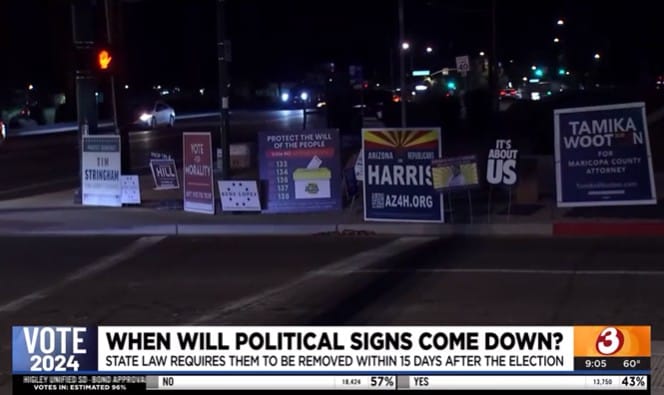
SB1134, sponsored by David Gowan (R-19), would allow political signs starting 71 days before the first day that early ballots are mailed, instead of 71 days before the election. That's about an extra 40 days. Nearly universally, Arizonans say they hate political signs, calling them "a nuisance," "ugly," and "trash"; every two years, one of the most common questions journalists get is when those signs will finally come down.
SB1212, sponsored by Janae Shamp (R-29), would ban health insurance companies from reimbursing coverage at different rates for people based on whether they are vaccinated. This is not happening. Insurers can encourage people to get their routine vaccines with prizes or credits, but cannot charge people more for not adhering to recommended vaccine schedules. A fear-mongering, unnecessary bill and an attack on public health.

A strict calendar dictates that bills must be heard in committee in their originating chamber by the end of this week. RTS will end entirely on April 2, when regularly scheduled committees stop meeting.
Discrimination
🐟 SB1013, sponsored by Janae Shamp (R-29), is a copy of a bill vetoed last year that would ban public schools from implementing hiring policies based on factors other than "merit" as part of the MAGA attack on diversity, equity and inclusion. The bill would allow anyone to sue, which would lead to endless frivolous claims of “reverse racism.” Scheduled for House Government Committee, Wednesday. OPPOSE.
If you see this little fish next to a bill, it indicates a previously vetoed idea — something intended as "bait" to artificially drive up the governor's veto count and bolster stinky talking points.
"Any man who puts his intelligence up against a fish and loses had it coming." — John Steinbeck
🐟 SB1015, sponsored by Janae Shamp (R-29), is an exact copy of a vetoed bill from last year that would force health care professionals to pay the medical costs for minors who want a “gender detransition” to “reclaim their God-given gender” within 25 years of a procedure. The bill also enables civil lawsuits against providers for damages, including medical costs, pain and suffering, and loss of income. It's similar to a vetoed bill from 2024 which Shamp based on her belief that “political ideology” is driving gender-affirming care. The bill, which does not define the term “gender transition,” is designed to harass providers with fear-mongering about future “liability” and to throw up unnecessary obstacles for transgender people getting the same types of care that cisgender people do. Scheduled for House Government Committee, Wednesday. OPPOSE.
🐟 SB1018, sponsored by Janae Shamp (R-29), would add "Sharia law" to a list of legal systems banned in Arizona. This hysteria is largely being driven by anti-Muslim hate groups and is intended to demonize the Islamic faith. Such a ban serves no legal purpose; its only purpose is to scapegoat and ostracize our Muslim neighbors. Attacks like this bill, along with others from our Islamophobic federal administration, are already placing our Muslim neighbors in grave danger: discrimination and attacks in the US against Muslims are soaring to record numbers. As Analise Ortiz said, "It does not make sense that we are proposing (a new law) just because someone got afraid of a word that was in a proposal." Scheduled for House Federalism, Military Affairs & Elections Committee, Wednesday. OPPOSE.
🐟 SB1075, sponsored by Mark Finchem (R-1), is a copy of a vetoed bill from last year that would ban the sale of public or private land in Arizona to a "hostile foreign entity" without majority approval of both chambers of the legislature. Last year's measure raised concerns about racial profiling, and the legislature's nonpartisan rules attorney warned lawmakers that it could violate the US Constitution. The sponsor, who is linked to hate groups, routinely spouts conspiracy theories and anti-semitic, xenophobic and racist views. Scheduled for House Land, Agriculture & Rural Affairs Committee, Monday. OPPOSE.
🐟 SB1094, sponsored by John Kavanagh (R-3), is a version of a vetoed bill from last year that would allow people who requested gender reassignment surgery as minors to sue their physician up until 25 years after the minor turns 18, even if the surgery was done with parental consent. Despite the sponsor's personal beliefs, the regret rates for gender-affirming surgeries remain among the lowest in medical care overall. This is a blatant, ideologically driven attack on health care providers, and is intended to discourage them from providing this care for patients. Scheduled for House Judiciary Committee, Wednesday. OPPOSE.
🐟 SB1095, sponsored by Mark Finchem (R-1), would ban puberty blockers and hormone therapy for transgender minors, making the treatment an act of unprofessional conduct (which means doctors would lose their licenses). It would also ban referrals, which means a doctor could not even send their patient outside the state for needed care. A similar bill from 2023 did not even receive a hearing. Scheduled for House Health & Human Services Committee, Monday. OPPOSE.
🆕 🐟 SB1139, sponsored by Mark Finchem (R-1), is a version of a bill vetoed last year that would require both parents to consent before a family court could order counseling or other intervention. Court-ordered behavioral intervention is used in family law cases where children and parents are estranged, often in high-conflict custody situations, to address parental behavior that is harming children. This bill would allow one parent to block any kind of court-ordered family treatment, from domestic violence to substance abuse, potentially putting children at further risk. Scheduled for House Judiciary Committee, Wednesday. OPPOSE.
SB1520, sponsored by Wendy Rogers (R-7), would require Arizona and all its state agencies to share immigration information with ICE, forcing cooperation with what has become a de facto terror force of untrained, undisciplined federal agents using illegal and excessive force against immigrants and US citizens alike. Even federal judges are placing limits on ICE’s actions, and most Arizona agencies are avoiding cooperation programs with the lawless agency. The Arizona Agenda calls the bill "part of the right-wing plan (Project 2025, that is) to create a massive deportation and carceral machine — and it requires state and local officials to serve as henchmen for the feds." Scheduled for House Public Safety & Law Enforcement Committee, Monday. OPPOSE.
SB1635, sponsored by John Kavanagh (R-3), would make it a crime, punishable by up to 6 months in jail, to blow a whistle to alert your neighbors that ICE is present. Despite attempts from the far right to manufacture outrage over or criminalize the monitoring of law enforcement, calling it “domestic terrorism,” it is legal and constitutionally protected. The sponsor, who has a history of making legally indefensible attacks on the First Amendment right to protest, cited the constitutionally protected actions of another senator as justification for the bill. Part of a package of bills that would criminalize our constitutionally protected right to protest. Scheduled for House Judiciary Committee,Wednesday. OPPOSE.
SB1686, sponsored by Jake Hoffman (R-15), would rename Wesley Bolin Plaza to "the Wesley Bolin and Charlie Kirk Freedom Plaza" and authorize memorials to commemorate both Charlie Kirk and Don Bolles. Elevating someone who made combative, incendiary, racist and sexist behavior his calling card to the same level as a lifelong public servant who held office as Arizona's Secretary of State for 13 consecutive terms is a deeply offensive outrage. The sponsor, who chairs the committee hearing this bill, has blocked all previous bipartisan efforts to honor Bolles. The Arizona Agenda called him "an angry little man with far too much power in his little domain" and described this bill as "using the names of the dead as ransom notes." Scheduled for House Government Committee, Wednesday. OPPOSE.
HB2416, sponsored by Quang Nguyen (R-1), would take $20 million from the state general fund for "local border support." These costs are the federal government's responsibility and our general fund is already overextended. Scheduled for Senate Military Affairs & Border Security Committee, Monday. OPPOSE.
HB2443, sponsored by Chris Lopez (R-16), would require commercial driver license applicants to speak English. Studies show no correlation between English proficiency and accidents involving commercial truck drivers; meanwhile, nearly 1 in 5 truck drivers is Latino, making them critical to the industry. This xenophobic bill will pull drivers off the highways, raising prices on all goods transported by truck in Arizona. (If you're wondering why groceries are so expensive, it doesn't help that a similar federal policy has pulled 6,000 truckers off the road nationwide.) Scheduled for Senate Appropriations, Transportation & Technology Committee, Tuesday. OPPOSE.
HB2446, sponsored by Chris Lopez (R-16), would require commercial truck drivers to speak English, and roadside inspections to be conducted in English only without interpreters. Studies show no correlation between English proficiency and accidents involving commercial truck drivers; meanwhile, nearly 1 in 5 truck drivers is Latino, making them critical to the industry. This xenophobic bill will lead to unfair targeting of Latinos by law enforcement officers, and pulling drivers off the highways will raise prices on all goods transported by truck in Arizona. (If you're wondering why groceries are so expensive, it doesn't help that a similar federal policy has pulled 6,000 truckers off the road nationwide.) Scheduled for Senate Appropriations, Transportation & Technology Committee, Tuesday. OPPOSE.
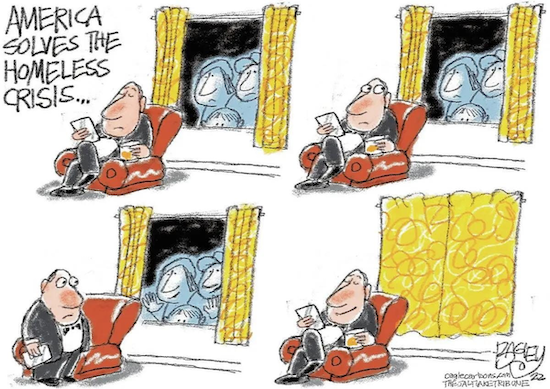
HB2532, sponsored by Matt Gress (R-4), would strip money from the Housing Trust Fund, which is meant to help promote solutions for affordable housing, and spend it on a performance audit of the state and local programs and services in Arizona that help individuals experiencing homelessness. Experts say our state's homelessness crisis is about to surge again thanks to federal defunding of successful programs. The sponsor has a history of pushing hostile bills that make it a lot harder to be homeless, including trying to stop cities from housing homeless people in hotels. Scheduled for Senate Appropriations, Transportation & Technology Committee, Tuesday. OPPOSE.
HB2806, sponsored by John Gillette (R-30), is a wide-ranging anti-immigrant bill that would require Arizona to verify citizenship using a flawed federal system for everything from voter registration to health care and driver licenses. The bill's effects range from unnecessary (the state already requires proof of citizenship for getting a driver license) to actively harmful (using this system increases the risk of erroneous purges, disenfranchising eligible voters). The sponsor has a history of shocking racist, xenophobic comments, including calling for the execution of a Democratic congresswoman (who happens to be brown) and calling Muslims "f***ing savages" and "terrorists" from "sh*t hole" countries. Scheduled for Senate Military Affairs & Border Security Committee, Monday. OPPOSE.
HB2903, sponsored by Steve Montenegro (R-29), would ban the state from requiring banks to consider social or environmental values when lending. This is something that Arizona is not requiring. The idea appears driven by a panic that society will hold extremists accountable for their actions or that "woke" investment policies will prevail. In fact, ESG plays a large role in corporate risk management, employee retainment, and long-term profitability. See our explainer on ESG. Scheduled for Senate Finance Committee, Monday. OPPOSE.
HB4117, sponsored by Teresa Martinez (R-16), would make it a crime to "disturb a religious service" with "indecent behavior, profane discourse, or unnecessary noise," even if the disruption is outside the building. The bill comes after federal agents arrested journalist Don Lemon for covering an anti-ICE protest that disrupted a Minnesota church service, an action being broadly viewed as an unconstitutional overreach. The bill's inclusion of "profane discourse" likely violates the First Amendment right to freedom of speech; the sponsor herself has acknowledged it could implicate a child who yells a curse word during a church service. Right-wing lawmakers are advancing similar bills in Idaho, Ohio, Oklahoma and Tennessee. Part of a package of bills that would criminalize our constitutionally protected right to protest. Scheduled for Senate Judiciary & Elections Committee, Wednesday. OPPOSE.
Energy, Water & Climate
SB1200, sponsored by TJ Shope (R-16), appears to be a version of a failed bill from last year exempting specific proposed housing developments in Queen Creek and Buckeye from a building moratorium by citing 20-year-old groundwater supply models. This would benefit developers and could result in excessive groundwater pumping. The water that would be used for required replenishment of any water pumped as a result of this bill would come almost exclusively from the Colorado River, which is likely to face steep cuts in the near future. See duplicate bill HB2094. Scheduled for House Natural Resources Committee, Tuesday. OPPOSE.
SB1280, sponsored by David Farnsworth (R-10), would ban Arizona Game and Fish from transporting Mexican gray wolf puppies into Arizona or using public resources for that transportation. Mexican gray wolves are a protected species, the most endangered wolf subspecies in the world, and belong in our ecosystem. The transport of puppies helps support genetic diversity and recover the species. Why should imperiled native wildlife have to make way for private profit? Scheduled for House Land, Agriculture & Rural Affairs Committee, Monday. OPPOSE.
SB1419, sponsored by Frank Carroll (R-28), would layer new requirements on top of existing licensing and building regulations for rooftop solar installations, increasing costs without demonstrating improved safety or quality outcomes. The bill even bans solar contractors from making “written or oral” statements on whether a customer might save money on their utility bills by installing solar (spoiler: they will). One speaker testified in committee on Tuesday that the bill "will probably prevent any new rooftop solar from being installed in the state of Arizona”; others noted it could run afoul of the First Amendment by restricting contractors’ ability to speak on the benefits of solar. Scheduled for House Natural Resources Committee, Tuesday. OPPOSE.
HB2031, sponsored by Gail Griffin (R-19), would give applicants even more time to file for grandfathered rights in the Willcox Active Management Area, which was created two years ago. This sounds like a delaying tactic, and is unnecessary. Scheduled for Senate Natural Resources, Energy & Water Committee, Tuesday. OPPOSE.
HB2056, sponsored by Gail Griffin (R-19), would require the state to spend time and money studying whether it can desalinate brackish groundwater. Water experts call the use of brackish groundwater "a mirage," pointing out the laundry list of environmental, physical, financial, technical, regulatory and legal barriers to its use. This bill is a waste of taxpayer dollars and a distraction from real solutions. Scheduled for Senate Appropriations, Transportation & Technology Committee, Tuesday. OPPOSE.
HB2102 and HB2103, sponsored by Gail Griffin (R-19), would create new infrastructure to enable water hauling in active management areas, parts of the state that need aggressive groundwater management to ensure they don't run dry. Rural Arizona has real, significant water concerns, and residents need help protecting their wells and properties from industrial agriculture, data centers, etc. These bills do nothing to solve those problems. Scheduled for Senate Natural Resources Committee, Tuesday. OPPOSE.
HB2494, sponsored by James Taylor (R-29), would ban counties from regulating whether solar, wind, gas and nuclear power generating plants are built if the state has already studied their environmental impact. Why are our state lawmakers against oversight? Scheduled for Senate Natural Resources Committee, Tuesday. OPPOSE.
HB2758, sponsored by Gail Griffin (R-19), would allow private, out-of-state water companies to transfer groundwater out of the area where Saudi company Fondomonte grows water-guzzling alfalfa for their cattle overseas. The push is coming from a New York-based investment fund, Water Asset Management, that owns nearly 13,000 acres in the area and whose mission is to “maximize returns for its investors.” By removing the ban on groundwater transportation, this bill destroys the only state law that protects groundwater for the people, communities and industries in La Paz County that rely on it, and devastates a community where county supervisors are pleading for more state regulation to protect groundwater. The bill passed the House with some bipartisan support (see our Feb. 23 "Hall of Shame"), so it's important that lawmakers hear from us. Scheduled for Senate Natural Resources Committee, Tuesday. OPPOSE.
HB2975, sponsored by Ralph Heap (R-10), would force Arizona's State Land Department to suspend its "solar score" program, which is designed to help find the best locations for leased solar farms, and would direct the state to use the land for mining and housing instead. This would hamstring desperately needed (and lucrative) renewable energy development in favor of a dangerous and damaging practice that communities increasingly oppose. Scheduled for Senate Natural Resources Committee, Tuesday. OPPOSE.

Public Safety
SB1010, sponsored by Warren Petersen (R-14), would rename Loop 202 to the “Charlie Kirk Highway.” Parts of Loop 202 already have a name, including a 23-mile stretch named for longtime Arizona congressman Ed Pastor, who was instrumental in securing the federal funds for its construction. The bill politicizes the highway naming process, generally handled by the legislatively created Arizona State Board on Geographic and Historic Names; the board's policy to not name something after people until at least five years after their death avoids political controversy and allows historical perspective. Then there's the practicality of the suggestion: the horrific way Kirk was killed does not excuse the combative, incendiary, racist and sexist behavior around which he constructed his public work. Scheduled for House Transportation & Infrastructure Committee, Wednesday. OPPOSE.
SB1624, sponsored by David Gowan (R-19), would institute a host of limits on photo radar, including capping the cost of tickets at $75, banning cities from suspending or revoking a driver license based on information from a red-light camera, and banning insurance companies from raising rates or canceling coverage because someone gets photo radar speeding or red-light tickets. Nobody likes a ticket, but Arizona has had speed cameras since 1987 for good reason. Numerous studies have found both speed and red-light cameras offer many safety benefits, reducing traffic crashes and injuries by up to 35 percent. These ill-considered limits will lead to more dangerous roads and more collisions. Scheduled for House Transportation & Infrastructure Committee, Wednesday. OPPOSE.
HB2248, sponsored by Lisa Fink (R-27), would ban private businesses from refusing employment or service based on whether a person is vaccinated. The bill specifically bans ticket issuers from denying access to entertainment events based on a ticket holder’s vaccination status. It would also ban the state, its cities and counties, and all schools from requiring any vaccines, mentioning such wide-ranging circumstances as public transportation or entry to buildings, as well as higher salaries for vaccinated people. As Nancy Gutierrez pointed out on the House floor, it would even ban public schools from sending children with lice home and directing the family to treat it. Will Humble, Executive Director of the Arizona Public Health Association, and public health expert Bob England, also pushed back, writing Got Lice? for AZCentral. Scheduled for Senate Health & Human Services Committee, Wednesday. OPPOSE.

HB2369, sponsored by Teresa Martinez (R-16), would require photo radar tickets to be signed by a judge. This is not currently required (it's the ticketed person's responsibility to prove they are not the one in the photo). Nobody likes a ticket, but Arizona has had speed cameras since 1987 for good reason. This attack on photo radar would mean more dangerous roads and more collisions. Scheduled for Senate Appropriations, Transportation & Technology Committee, Tuesday. OPPOSE.
HB2457, sponsored by Justin Wilmeth (R-2), would allow power companies to build new power plants near "a large industrial energy user," such as a data center or aluminum smelter, without examining the environmental impact of their plans, as long as it's zoned for it and they hold a public comment session. This flies in the face of voter wishes; Arizonans of all political affiliations are pushing back against data centers in our communities due to their excessive land, energy and water usage. Scheduled for Senate Regulatory Affairs & Government Reform Committee, Wednesday. OPPOSE.
HB2592, sponsored by Justin Wilmeth (R-2), would require every state agency to try to incorporate AI into its everyday operations. Agencies wouldn't be allowed to regulate its use without the legislature's express permission. Blindly trusting AI in this way carries serious risk. In just the past year, AI has made racist and anti-semitic remarks, wiped out a corporate database and lied about it, helped plan a politically motivated assault, and offered to write a teen's suicide note. These are just a few examples. We shouldn't be using AI without some serious oversight, and we definitely shouldn't be using it to replace state employees. Scheduled for Senate Appropriations, Transportation & Technology Committee, Tuesday. OPPOSE.
🌟 HB2673, sponsored by Consuelo Hernandez (D-21), would institute basic safeguards for screening and treating mental illness in prisoners, a long-overdue move. In 2022, a federal judge ruled mental health care for incarcerated Arizonans is so bad it amounts to cruel and unusual punishment. This bill is not only ethically imperative, but would keep Arizona's prison system from continually being held in contempt of court and accruing millions of dollars in fines. Scheduled for Senate Public Safety Committee, Wednesday. SUPPORT.
🐟 HB2811, sponsored by John Gillette (R-30), is a version of a previously vetoed bill that would criminalize attempts to “obstruct” ICE officers’ arrests. The bill is so vague as to be potentially unconstitutional; speaking loudly, yelling, or following ICE agents as they drive around could suddenly land peaceful protesters a minimum sentence of 6 months in prison. Meanwhile, the racial profiling by ICE agents, both in Arizona and across the country, is well documented. ICE has detained hundreds of US citizens and has killed at least 9 people so far in 2026. Scheduled for Senate Judiciary & Elections Committee, Wednesday. OPPOSE.
🌟 HB2941, sponsored by Lupe Contreras (D-22), would reclassify the dangerous practice of "lane splitting" by motorcycles, when a motorcyclist rides between lanes of traffic (typically on congested freeways) along the white divider line, as reckless driving. In 2022, over the objections of the Arizona Chiefs of Police and Arizona Sheriffs, lawmakers made it legal for motorcyclists to ride between stopped vehicles on surface streets. Riding a motorcycle is risky enough without the dangerous practice of lane splitting through a car driver's blind spot: though motorcycle crashes make up just 2.59% of total crashes in Arizona, they account for over 21% of all traffic fatalities. Scheduled for Senate Public Safety Committee, Wednesday. SUPPORT.
HB2957, sponsored by Lisa Fink (R-27), would ban Arizona from requiring an "enhanced driver license program" such as Real ID for any government purpose, and would require ADOT to continue offering non-REAL ID-compliant driver licenses and informing applicants that REAL IDs are voluntary. This appears to be motivated by paranoia. We hope the sponsor doesn't need to board an airplane anytime soon. Scheduled for Senate Appropriations, Transportation & Technology Committee, Tuesday. OPPOSE.
Voting Rights, Elections & Direct Democracy
🐟 SB1037, sponsored by Mark Finchem (R-1), is a copy of a vetoed bill from last year that would require voting equipment to meet "Department of Homeland Security standards." Many of the security measures in the bill, like prohibiting remote access and Internet access, are already covered by Arizona law. Multiple elections officials have testified over multiple years that other provisions of the bill are either unneeded or actively harmful. The sponsor, who was at the US Capitol on January 6, has repeatedly claimed without evidence that election machines were remotely hacked in 2020 and 2022. Scheduled for House Federalism, Military Affairs & Elections Committee, Wednesday. OPPOSE.
HB2168, sponsored by Lupe Diaz (R-19), would stop Arizona's attorney general from filing a “public nuisance action” or penalize her for doing so. Benson residents are suing to stop an aluminum smelting plant from being built in the middle of their community and have asked AG Mayes to intervene; she says nuisance law (which she famously used against Saudi company Fondomonte) is the strongest tool she has to help them. Diaz supports the smelting plant. AG Mayes is also considering using the ordinance to oppose the enormous new ICE prison camp in Surprise. Scheduled for Senate Judiciary & Elections Committee 3/11. OPPOSE.
🐟 HB2805, sponsored by John Gillette (R-30), is a previously vetoed idea that would make local school board elections partisan, a move being pushed by national extremist organizations. Our smallest, most democratic institutions should stay above party politics, so they don't become just another venue for extremist conflict. Scheduled for Senate Judiciary & Elections Committee, Wednesday. OPPOSE.

2026 Session Timeline
Friday 3/27: Last day for a bill to get out of committees in its crossover house
Friday 4/3: End of crossover Appropriations committees, and the last day to use RTS until a budget drops
Tuesday 4/21: 100th Day of Session (the purported end goal; can be changed)
Tuesday 6/30: Constitutionally mandated deadline to pass a state budget
Committees & Contacts
Here's a handy list of lawmaker contact info, committee chairs and assignments.
CEBV Action Linktree
Want other ways to take action? Need to stay informed? Looking for our social media, inspiration, or self-care tips? Look no further than our Linktree.
Congratulations, you made it to the end! 🎉

Comments ()