
February 16, 2026
Long agendas. Petty, vindictive, angry little lawmakers. Eleven bright spots. What could be our longest ballot yet.


This is the last week¹ to hear bills in committee in their chamber of origin (House bills in House committees, Senate bills in Senate committees). Unfortunately, majority lawmakers are doubling down on advancing a flotilla of punitive, mean-spirited culture-war legislation — much of it previously vetoed — that does nothing to address any of our state's many actual problems.
 Reagan Priest Arizona Capitol Times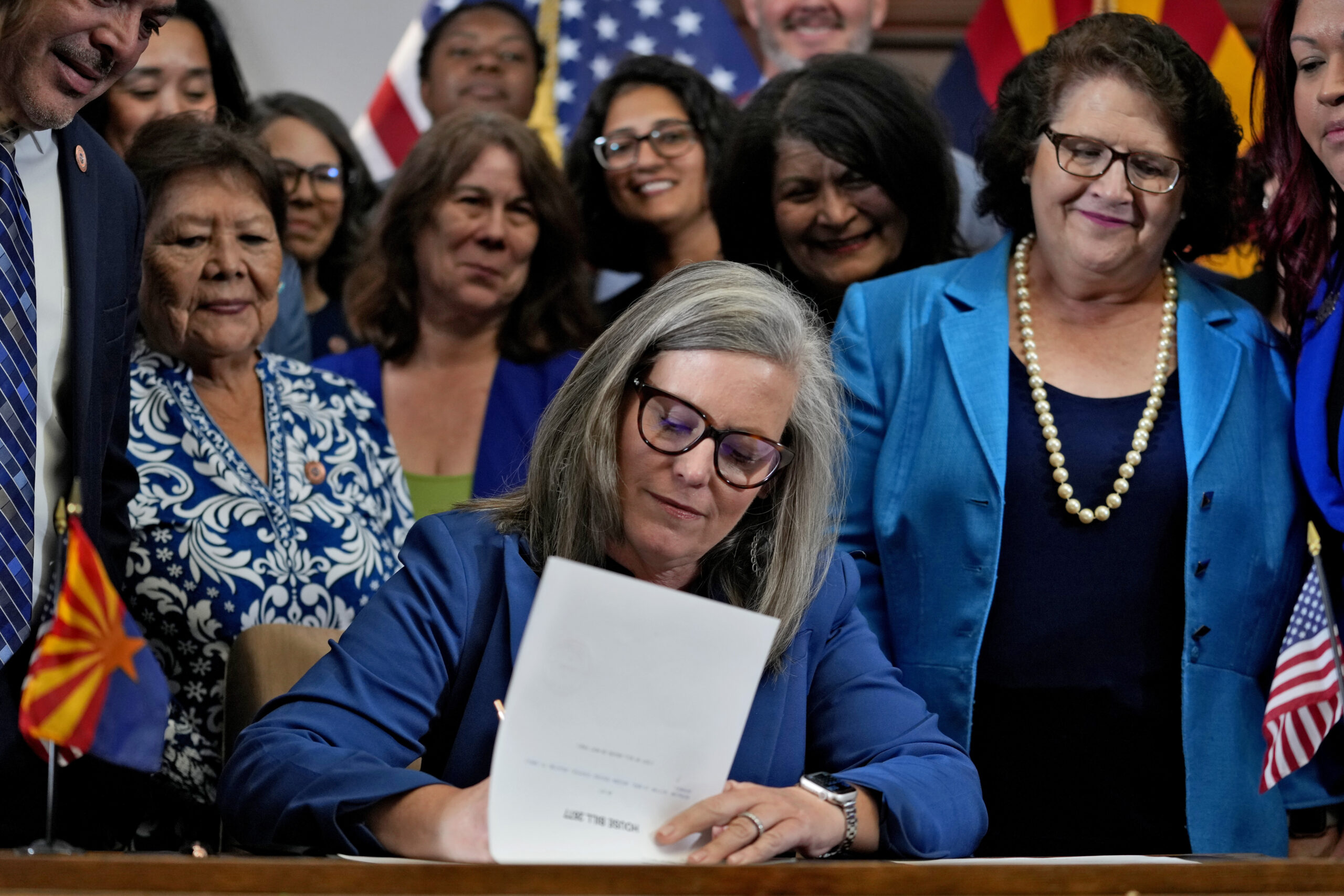
Our legislative majority may be made up of petty, vindictive, angry little people who need to be taken down a notch (or six), but our opinions are welcome input for Gov. Hobbs’ veto pen. Trust us: it matters!
This is the time for us to buckle down and focus on RTS. After this week comes "Crossover Week," where all the action is on the floor and committees (except for "trash can Appropriations"²) take a week off. Each chamber tries to vote through as many bills as possible so those bills can cross to the other chamber to start the committee process all over again. This will give our RTS fingers a one-week break.

⏰ If you have 30 seconds: Use My Bill Positions (also known as RTS 2.0) to OPPOSE HB2805. This is especially important if you have already used RTS to support the bill. See "The More You Know" section below for instructions and details.
⏰⏰ If you have 10 minutes: Also use Request to Speak to OPPOSE the 12 (!) ballot measures moving this week. See the "Ballot Referrals" section below for a list and more details.
⏰⏰⏰ If you have 15 minutes: Also use Request to Speak to SUPPORT the 11 good bills moving this week, marked with 🌟. See the "Spotlight" section below for a list and more details.
⏰⏰⏰⏰ If you have 55 minutes: Use Request to Speak on all other bills being heard in committees this week. We know, it's a long list. We're sorry.
⏰⏰⏰⏰⏰ If you have 60 minutes: Join us on Zoom for our CEBV Happy Hour conversation, packed with political analysis, conversation and community. Happy Hour meets every Sunday at 4 PM through the end of legislative session. We're looking forward to seeing you!

Our top action this week is urging you to use My Bill Positions (RTS 2.0) to OPPOSE one of last week's bills, HB2805.
This bill would open Arizona's online signature portal, E-Qual, to local races like school board and community college board candidates. Last week we recommended you SUPPORT, but this week, we're asking you to change your position to OPPOSE. The bill's sponsor has attached a poison pill. He amended the bill in committee to make these local races partisan, and plans to amend it further on the floor. Watch him explain:
This helps us see that there's nothing support-worthy about HB2805. The work of a city council (fixing potholes and collecting refuse) isn't partisan. And despite attempts by national extremist organizations to drag school boards into culture wars, educating children isn't partisan. If our society is to retain any hope of emerging someday from today's toxic, hyper-polarized maelstrom, it's incredibly important for these small local races to stay above party politics. Allowing them to descend into the mud turns them into just another venue for extremist conflict.
In his comments, the sponsor also mentioned the outpouring of "cross-partisan support" for his bill in RTS. This statement turned our stomachs. We cannot allow him to use our names to further his malignant intent.
If you do nothing else this week, please take a moment to go into RTS and OPPOSE HB2805. If you've never used My Bill Positions, it's easy and will take you just seconds. Log in, search the page for the bill number, click the light blue "Update" button, enter a few words as to why you're changing your position ("don't make local races partisan" will suffice), and click "Submit." Easy as that. Done!

Amid the more than 2,100 bills lawmakers have introduced this session, and the flood of garbage currently deluging committees, a few good bills have squeaked through.

Use Request to Speak to SUPPORT these eleven bills. For more details on each, search this post for the bill number to find CEBV's full write-up.
🌟 SB1372, Shope (R-16), a first step toward adding comprehensive adult dental coverage to Arizona's Medicaid program
🌟 SB1539, Payne (R-27), requiring "backyard breeders" to follow safe pet breeding and basic health/safety practices
🌟 SB1602, Alston (D-5), supporting kinship foster care parents by paying them the same as every other foster parent
🌟 SB1609, Shope (R-16), banning political parties from misusing terms like "independent" and confusing voters
🌟 HB2429, sponsored by Selina Bliss (R-1), allowing cities and counties to regulate the number of short-term and vacation rentals
🌟 HB2593, Stahl Hamilton (D-21), would assist health care providers in supporting patients during pregnancy, postpartum and early childhood
🌟 HB2673, C Hernandez (D-21), creating some basic safeguards for screening and treating mental illness in prisoners
🌟 HB2843, P Contreras (D-12), allowing Arizonans to use portable solar generation devices without utility approval or fees
🌟 HB2861, Nguyen (R-1), allowing a gun used to kill or seriously harm someone to be destroyed instead of sold
🌟 HB2889, Tsosie (D-6), setting up monitoring for uranium contamination on Navajo land
🌟 HB2951, Connolly (D-8), creating consumer protections for automatic subscription renewals

Lawmakers are advancing these measures through committees this week with the ultimate goal of placing them on our November ballot. With the addition of the below twelve (!) bills, we are now tracking a stunning thirty-two potential ballot measures. For comparison, our 2024 ballots contained eleven legislative referrals, which was at that time the most in 20 years and prompted elections officials in Maricopa County to send out a two-card ballot.
Unlike regular bills, these referrals cannot be vetoed. Use RTS to weigh in; refer to the information, links and talking points we include here to craft your own comments to lawmakers.

SCR1023, sponsored by JD Mesnard (R-13), would ask voters to skew Arizona's Independent Redistricting Commission by allowing the legislature to appoint four members and requiring 6 of the resulting 9 commissioners to live in Maricopa and Pima counties. It would also force legislative districts to vary in size by no more than 5,000 people, splitting minority voting blocs and giving Republicans an advantage. Currently districts can vary by up to 10%, allowing populations such as the Navajo Nation to stay together in one district. Arizona’s current redistricting system is a national model, making these changes especially questionable. Republicans introduced similar, failed proposals in 2020, 2018 and 2017. Scheduled for Senate Government Committee, Wednesday. OPPOSE.
SCR1027, sponsored by JD Mesnard (R-13), would ask voters to amend the Arizona Constitution to move mayoral, city council and school board elections to the same Tuesday in November as presidential and midterm elections. Adding these races to our already long general election ballots could increase "ballot fatigue," in which voters skip lower-level voting because of the sheer number of races. It could force candidates for small local elections who want to cut through the chaos of national politics to spend an outsized amount of money just to get noticed. And forcing cities and school districts to move their elections is an attack on local control and the right to self-determination. Scheduled for Senate Judiciary & Elections Committee, Wednesday (held last week). OPPOSE.
SCR1029, sponsored by JD Mesnard (R-13), would ask voters to create term limits for mine inspector beginning in 2031, limiting those who serve to 2 consecutive 4-year terms and requiring at least 1 full term out of office before they can serve again. Mining inspector is a very specialized position that requires specific experience and expertise in order to be effective. Instituting term limits would make our inspector a perpetual newbie, likely increasing the influence of deep-pocketed pro-mining special interest groups and allowing lobbyists to pull strings behind the scenes. A true reform would be asking voters to make this position a hired one, not an elected one. Scheduled for Senate Government Committee, Wednesday. OPPOSE.
SCR1040, sponsored by TJ Shope (R-16), would ask voters to amend the Arizona Constitution to raise judges' mandatory retirement age from 70 to 75. This is simply an attempt to move the goalposts to keep older conservatives on the bench. Polls show 3 in 4 Americans favor maximum age limits for Supreme Court justices, and an even larger number wishes their lawmakers had one too. Arizona voters rejected a similar ballot measure in 2012 by nearly 3 to 1 margins. Scheduled for Senate Judiciary & Elections Committee, Wednesday (held last week). OPPOSE.
SCR1041, sponsored by Jake Hoffman (R-15), and SCR1051, sponsored by JD Mesnard (R-13), are companion measures that would ask voters to create a new version of Prop 123 that restricts funds to “eligible teachers” and bases their pay on performance. This is bad policy; individual schools are best suited to determine their own needs. It's also unlikely to pass, despite the fact that public schools and the general fund desperately need it to. Any renewal of Prop 123 needs to look more like the original, expired version, which directed new money to the many and varied needs of public schools (and which barely passed despite heavy support from the governor, education groups, and the business community). This version lacks that support, and the sponsors know it. Both bills are scheduled for Senate Education Committee, Wednesday. OPPOSE.
SCR1048, sponsored by JD Mesnard (R-13), would ask voters to declare "excessive marijuana smoke and odor" a public nuisance, making it a criminal activity that endangers public health and safety. Anyone who "creates excessive marijuana smoke and odor" would be subject to existing nuisance law. The need for this measure is questionable; Prop 207, which voters approved in 2020, bans smoking marijuana in public spaces and open areas, or anywhere other than your own home or private property. The measure also fails to define the term "excessive," which could lead to absurd or unjust outcomes. Scheduled for Senate Judiciary & Elections Committee, Wednesday. OPPOSE.
SCR1049, sponsored by Kevin Payne (R-27), would ask voters to amend the Arizona Constitution to require that prisoners who kill a law enforcement officer be executed by firing squad and to give other prisoners sentenced to death the choice to opt for a firing squad. Reminiscent of a failed bill from last year, the measure carries a variety of problems, from who pulls the trigger (one former corrections officer testified last year, “I have taken a life, and I promise you, it never goes away") to whether the change will impact Arizona's already low prison staff retention rates. Scheduled for Senate Public Safety Committee, Wednesday. OPPOSE.
HCR2040, sponsored by Justin Olson (R-10), would ask voters to let people who are "homeless or at risk of becoming homeless" make the inhuman, untenable choice to opt to work for sub-minimum wage if they say so in writing to a current or prospective employer. This reprehensible bill would let companies indefinitely exploit our society's most vulnerable, who often lack basic work requirements like an address, ID, professional clothing, transportation and child care, if they feel they have little choice other than to volunteer to accept less pay. Republican lawmakers loathe Arizona's voter-approved minimum wage law and continually seek ways to weaken or invalidate it; in 2024, voters rejected their attempt to create a sub-minimum wage for tipped employees by 3 to 1 margins. Scheduled for House Education Committee, Tuesday. OPPOSE.
HCR2048, sponsored by Michael Way (R-15), would ask voters to withhold pay from the governor, state lawmakers, and other statewide elected officials if they fail to pass a budget by April 30. While we can understand the impulse to penalize our elected officials, the date is arbitrary. The state budget used to be negotiated in committees with public input, instead of behind closed doors; returning to that method would be a far more useful reform. Scheduled for House Government Committee, Wednesday. OPPOSE.
HCR2051, sponsored by Michael Carbone (R-25), would ask voters to institute a host of anti-democratic requirements for initiatives and petition circulators that would make measures much harder to put on the ballot. Paid petition circulators would have to tell each signer their first name and state of residence, identify themselves verbally as a paid circulator, and wear a visible ID badge. Signatures collected without these disclosures would be void, opening petitions up to a new type of legal challenge. All draconian restrictions on statewide petitions would also be expanded to local city- and county-wide ballot measures. Scheduled for House Federalism, Military Affairs & Elections Committee, Wednesday. OPPOSE.
HCR2056, sponsored by Nick Kupper (R-25), would ask voters to amend the state Constitution to make it a state right for people to "refuse medical mandates," and ban government from "mandating or coercing" anyone to receive vaccines or other medical treatment. This reinforces a selfish, paranoid message that vaccines are a risky personal choice rather than a risk-mitigating responsibility to one's community. (The bill's sponsor was nearly removed from the Air Force for refusing to be vaccinated against COVID.) As the US battles the largest measles outbreak in decades, Arizona's accelerating vaccine exemption rates have become “a disaster waiting to happen.” The current rash of anti-science bills attacking public health would put the well-being of all Arizonans at risk. Scheduled for House Health & Human Services Committee, Monday. OPPOSE.

Yes, this section is long. But take heart: a strict calendar dictates that bills must be heard in committee in their originating chamber by the end of this week. RTS will end entirely on April 2, when committees stop meeting.
A number of the below bills were held last week and are now reappearing on agendas. Your bill position will remain, but if you want the committee to see your comments, you must re-enter them.
If you see this little fish next to a bill, it indicates a previously vetoed idea — something intended as "bait" to artificially drive up the governor's veto count and bolster stinky talking points.
"Any man who puts his intelligence up against a fish and loses had it coming." — John Steinbeck
Affordability
SB1338, sponsored by Wendy Rogers (R-7), would allow the state and its cities and counties to distribute public retirement benefits without verifying whether the recipient is a lawful US resident. This is especially hypocritical given the many draconian bills being pushed this year to verify citizenship for everything from voter registration to health care and driver licenses. Scheduled for Senate Government Committee, Wednesday. OPPOSE.
🌟 SB1372, sponsored by TJ Shope (R-16), would create a study committee to evaluate the feasibility, costs and public health outcomes of expanding AHCCCS, Arizona's Medicaid program, to include comprehensive adult dental coverage. A study committee is often a first step toward taking legislative action, and this would be a good one. Lack of access to dental care poses serious health risks and can lead to complications or costly treatments. Scheduled for Senate Health & Human Services Committee, Wednesday. SUPPORT.
SB1501, sponsored by David Gowan (R-19), would attack the ability of our state government to function efficiently by directing the Administrative Rules Oversight Committee to hunt down agency rules that "exceed their statutory authority" (i.e., go any further than lawmakers want them to) and recommend legislative changes. Rule making is a specialized, data-driven process best carried out by skilled officials. Allowing the legislature to inject argumentative chaos into nonpartisan regulatory decisions would clog the process, creating confusion or even stalemate. Scheduled for Senate Government Committee, Wednesday. OPPOSE.
SB1516, sponsored by Tim Dunn (R-25), would give private jet owners a tax break, something the sponsor has been trying to do for several years now. The bill doesn't yet have a cost estimate, but a similar bill last year was estimated to cost millions. Republican lawmakers have for decades systematically slashed state revenues, increasing tax carve-outs from $16 billion in 2014 to nearly $30 billion in 2024. These tax cuts hurt Arizona’s ability to properly fund our public schools and services. Scheduled for Senate Finance Committee, Monday. OPPOSE.
🌟 SB1602, sponsored by Lela Alston (D-5), would gradually raise the monthly stipend for kinship foster care parents (those related to the child) to the same $600 per month that every other foster parent gets. Kinship foster parents are often grandparents raising grandkids; the bill sponsor, who has been working for parity for these families since 2019, says some families must send the children back to the state because they cannot afford to take care of them. Scheduled for Senate Health & Human Services Committee, Wednesday. SUPPORT.
HB2107, sponsored by Teresa Martinez (R-16), would expand restrictions on using SNAP for fast food to our society's most vulnerable people. Rules already bar SNAP (food stamps) from use at most restaurants, but the fast food carve-out exists for people who may not be able to prepare meals or who don't have homes and kitchens. Just 3% of SNAP users qualify for this carve-out; banning them would disproportionately impact disabled, elderly and homeless people. Scheduled for House Rural Economic Development Committee, Thursday. OPPOSE.
🌟 HB2429, sponsored by Selina Bliss (R-1), would allow cities and counties to limit the number of short-term and vacation rentals by capping permits or licenses or by establishing minimum distance requirements. Existing permitted properties in good standing would be grandfathered in, with some exceptions. In 2016, the Arizona Legislature severely limited cities' ability to regulate short-term rentals, drastically changing the housing market. Sedona has become ground zero for the crisis: 20% of homes there are now short-term rentals, pricing out everyday residents and driving a housing emergency that has the city scrambling with drastic measures like creating a program that allows workers to sleep in their cars. We aren't happy about the grandfather clause, but the legislature must address the harms they caused by banning local regulation, and they have to start somewhere. Scheduled for House Commerce Committee, Tuesday. SUPPORT.
Do you appreciate the many hours of work it takes to produce a resource like this every week? Become a paid subscriber and help keep us going:
HB2911, sponsored by Laurin Hendrix (R-14), would repeal the Registrar of Contractors' ability to order licensed contractors to provide restitution to homeowners if they abandon residential contracts or do work so shoddy it constitutes grounds to suspend their license. Currently, aggrieved homeowners can file an administrative claim against a recovery fund (which contractors pay in to at licensing) that was designed to safeguard consumers against defective workmanship. Getting reimbursed from this fund is a labyrinthine process that can take years; even if a homeowner is entitled to a claim, there must be money in the fund for them to receive a payout. This bill is an attack on consumer protection. Scheduled for House Commerce Committee, Tuesday. OPPOSE.
HB2940, sponsored by John Gillette (R-30), would ban the state from granting anyone Medicaid or SNAP benefits without first affirmatively verifying their eligibility. Agency employees who "willfully fail to comply" would be fired and and forfeit their retirement benefits. The eligibility process for these programs is already tightly managed; adding heavy-handed penalties for overworked and under-resourced employees is unnecessary and cruel. Scheduled for House Federalism, Military Affairs & Elections Committee, Wednesday. OPPOSE.
HB2946, sponsored by Khyl Powell (R-14), would create a host of restrictions making it difficult for cities and counties to thoughtfully plan their growth. Increases would be capped at 50% and limited to one every four years, except with unanimous approval and under specified extraordinary circumstances, and cities and counties would be banned from charging development fees for parks and libraries or from basing fees on residence size or number of bedrooms. Scheduled for House Rural Economic Development Committee, Thursday. OPPOSE.
🌟 HB2951, sponsored by Janeen Connolly (D-8), would create consumer protections for automatic subscription renewals. Companies would have to clearly disclose renewal terms, allow consumers to opt in directly rather than being passively renewed, and offer an easy cancellation mechanism. Consumers could even get refunds from companies that don't follow the law. Scheduled for House Commerce Committee, Tuesday. SUPPORT.
HB4066, sponsored by Justin Olson (R-10), would ban cities from charging fees for creating, upgrading or replacing public services that are higher than "necessary." This is an attack on local control and negatively impacts cities' ability to serve their residents. Scheduled for House Government Committee, Wednesday. OPPOSE.
HB4056, sponsored by Teresa Martinez (R-16), is subject to a striker that would ban anyone from charging a state lawmaker reasonable fees for fulfilling a public records request. The striker amendment comes from Matt Gress (R-4) in response to the Tolleson school district charging him the standard rate of $1 per page for his massive records request for two years’ worth of documents totaling 26,000 pages. Lawmakers have an existing process to obtain public records via the Joint Legislative Audit Committee; meanwhile, the district's fee does not even cover the staff time required to produce so many records. It's petty, vindictive, and unnecessary for a lawmaker to stage this kind of publicity stunt instead of going through official channels. This bill would force taxpayers to shoulder the financial impacts from any lawmaker who wishes to exploit their political power to harm others. Scheduled for House Education Committee, Tuesday. OPPOSE.

Discrimination
🐟 SB1014, sponsored by Janae Shamp (R-29), is a version of a vetoed bill from last year that would force health care professionals to pay the medical costs for “gender detransition” procedures. Similar to a vetoed bill from last year which the sponsor based on her own belief that “political ideology” is driving gender-affirming care. The bill, which does not define “gender transition,” is designed to harass providers with fear-mongering about future “liability” and to throw up unnecessary obstacles for transgender people getting the same types of care that cisgender people do. Scheduled for Senate Health & Human Services Committee, Wednesday. OPPOSE.
🐟 SB1094, sponsored by John Kavanagh (R-3), is a version of a vetoed bill from last year that would allow people who requested gender reassignment surgery as minors to sue their physician up until 25 years after the minor turns 18, even if the surgery was done with parental consent. This is a blatant, ideologically driven attack on health care providers, and is intended to discourage them from providing this care for patients. Scheduled for Senate Health & Human Services Committee, Wednesday. OPPOSE.
SB1156, sponsored by Wendy Rogers (R-7), would take $20 million from the state general fund to reimburse cities and counties for providing short-term detention holds for undocumented immigrants. Arizona's general fund is already stretched too thin for our state's own needs; these costs are the federal government's responsibility. Putting the obvious immorality aside, If ICE wants local law enforcement rounding people up for them, ICE should pay for it. Scheduled for Senate Appropriations Committee, Tuesday. OPPOSE.
SB1157, sponsored by Wendy Rogers (R-7), would take $20 million from the state general fund to fund cities and counties that build walls along Arizona’s southern border. These costs are the federal government's responsibility. Scheduled for Senate Appropriations Committee, Tuesday. OPPOSE.
🐟 SB1177, sponsored by Wendy Rogers (R-7), would make it a class 4 felony to use public monies to fund a gender transition. Don't these lawmakers have anything better to do? Scheduled for Senate Health & Human Services Committee, Wednesday. OPPOSE.

🐟 SB1474, sponsored by Wendy Rogers (R-7), is a version of a previously vetoed bill that would force cities, counties and public schools to work with and for ICE (regardless of whether anyone wants that), and would mandate that all employees take a federal immigration enforcement training. Upon request from any state lawmaker, the Attorney General would be required to investigate whether a city, county or school was failing to cooperate, and take enforcement action. As the Arizona Agenda reports, "It’s all part of the right-wing plan (Project 2025, that is) to create a massive deportation and carceral machine — and it requires state and local officials to serve as henchmen for the feds." Scheduled for Senate Military Affairs & Border Security Committee, Monday. OPPOSE.
SB1573, sponsored by Wendy Rogers (R-7), would ban courts from using or referring to "religious sectarian law" in their decisions, unless it is "based on Anglo-American legal tradition and principles" — in other words, unless it is rooted in white nationalism. This thinly veiled attack on multiculturalism is related to efforts from xenophobic hate groups to demonize other faiths. Scheduled for Senate Judiciary & Elections Committee, Wednesday (held last week). OPPOSE.
SB1635, sponsored by John Kavanagh (R-3), would make it a crime, punishable by up to 6 months in jail, to blow a whistle to alert your neighbors that ICE is present. Despite attempts from the far right to manufacture outrage at the use of whistles (even calling it “domestic terrorism”), monitoring law enforcement is a constitutionally protected activity. The sponsor has a history of making legally indefensible attacks on our First Amendment right to protest. Scheduled for Senate Judiciary & Elections Committee, Wednesday (held last week). OPPOSE.
SB1650, sponsored by Mark Finchem (R-1), would make judges legally liable for damages if they "knew or should have known" that actions in a case violated someone's civil rights. Judicial immunity is a longstanding American doctrine that ensures judges can make impartial, independent decisions without fear of harassment or financial ruin. This bill attacks the integrity of the judicial process. Scheduled for Senate Judiciary & Elections Committee, Wednesday. OPPOSE.
SB1668, sponsored by Shawnna Bolick (R-2), would require funeral homes to obtain a permit to transport embryonic and fetal remains (the bill uses the term "unborn child") before 20 weeks of gestation in cases of abortion if the woman authorizes it. (This is way before fetal viability, the point at which a fetus can survive outside a uterus.) This is part of the anti-scientific strategy of “fetal personhood,” which gives fetuses the same legal rights as people (to the detriment of women). Scheduled for Senate Regulatory Affairs & Government Efficiency Committee, Wednesday. OPPOSE.
HB2600, sponsored by Matt Gress (R-4), would require public schools to keep students in grades 6-8 out of student clubs and organizations unless they have written parental permission. This is likely designed to dampen participation in clubs such as Gender & Sexuality Alliance, a student-led club which offers safe, supportive spaces for LGBTQ+ youth, and which is often legally protected under the Equal Access Act. It would also exclude kids whose parents are unable to be as involved in their lives, worsening inequities among kids who may already be under-resourced. Scheduled for House Education Committee, Tuesday. OPPOSE.
HB4027, sponsored by Michael Carbone (R-25), would rename Loop 202 to the “Charlie Kirk Highway.” Highways generally get their names changed only after review by a specific state board, which also has a policy to not name something after people until at least five years after their death, to both avoid political controversy and allow historical perspective. Parts of Loop 202 already have a name, including a 23-mile stretch named for longtime Arizona congressman Ed Pastor, who was instrumental in securing the federal funds for its construction. Then there's the practicality of the suggestion: the horrific way Kirk was killed does not excuse the combative, incendiary, racist and sexist behavior around which he constructed his public work. Duplicate bill SB1010 has already passed its Senate committee. Scheduled for House Transportation & Infrastructure Committee, Wednesday. OPPOSE.
HB4117, sponsored by Teresa Martinez (R-16), would make it a crime to "disturb a religious service" with "indecent behavior, profane discourse, or unnecessary noise," even if the disruption is outside the building. The bill comes after federal agents arrested journalist Don Lemon for covering an anti-ICE protest that disrupted a Minnesota church service, an action being broadly viewed as an unconstitutional overreach. The bill's inclusion of "profane discourse" likely violates the First Amendment right to freedom of speech. Right-wing lawmakers are advancing similar bills in Idaho, Ohio, Oklahoma and Tennessee. Scheduled for House Judiciary Committee, Wednesday. OPPOSE.
Energy, Water & Climate
🐟 SB1176, sponsored by Warren Petersen (R-14), is a copy of a failed bill from last year that would allow the storage of storm water to be used for replenishment credits. This gives credits for water that generally would be recharged anyway, and would likely result in a net increase in pumping. Scheduled for Senate Natural Resources Committee, Tuesday, and Senate Regulatory Affairs & Government Efficiency Committee, Wednesday. OPPOSE.
SB1200, sponsored by TJ Shope (R-16), appears to be a version of a failed bill from last year exempting specific proposed housing developments in Queen Creek and Buckeye from a building moratorium by citing 20-year-old groundwater supply models. This would benefit developers and could result in excessive groundwater pumping. The water that would be used for required replenishment of any water pumped as a result of this bill would come almost exclusively from the Colorado River, which is likely to face steep cuts in the near future. See duplicate bill HB2094. Scheduled for Senate Natural Resources Committee, Tuesday (held 2 weeks ago). OPPOSE.
SB1332, sponsored by John Kavanagh (R-3), would ban Arizona from participating in any light rail construction project. The sponsor has made no secret of his distaste for light rail, and he and his Republican colleagues are doing everything they can to obstruct it. Meanwhile, voters have repeatedly approved and reaffirmed light rail. The sponsor should listen to voters and honor their intent, not try to thwart it. Scheduled for Senate Appropriations Committee, Tuesday. OPPOSE.
SB1725, sponsored by JD Mesnard (R-13), would declare "excessive marijuana smoke and odor" a public nuisance, making it a criminal activity that endangers public health and safety. Anyone who "creates excessive marijuana smoke and odor" would be subject to existing nuisance law. The need for this measure is questionable; Prop 207, which voters approved in 2020, bans smoking marijuana in public spaces and open areas, or anywhere other than one's own home or private property. The measure also fails to define the term "excessive," which could lead to absurd or unjust outcomes. The bill is also moving as a ballot referral, SCR1048. Scheduled for Senate Judiciary & Elections Committee, Wednesday. OPPOSE.
HB2492, sponsored by James Taylor (R-29), would ban Arizona and its cities and counties from managing urban sprawl or limiting services from being extended to new areas of sprawl. Arizona is increasingly dominated by sprawl, a model that is unsustainable over the long term. Growth in the desert cannot continue without planning; our water future depends on managing growth, not ignoring it. Scheduled for House Natural Resources, Energy & Water Committee, Tuesday. OPPOSE.
HB2757, sponsored by Gail Griffin (R-19), would allow La Paz County to pump more groundwater out of a protected area in Butler Valley. This area was intended to serve as reserve groundwater and an insurance policy in case of deep cuts to Colorado River water, which we may be facing very soon. Arizona has very few laws in place to protect groundwater for the people, communities and industries that already rely on them. Scheduled for House Natural Resources, Energy & Water Committee, Tuesday. OPPOSE.
HB2915, sponsored by David Marshall (R-7), would require county boards of supervisors to create a fund to "compensate homeowners" for the inconvenience of living near wind or solar energy facilities. The bill would yank half the property taxes from new renewable energy projects away from county budgets, redirecting them to property tax breaks for nearby residents on the grounds that the "negative visual impacts" of solar and wind energy reduce property values. Not only are wind and solar quiet and peaceful forms of energy generation, stripping counties of half the tax revenues from these facilities would leave a large dent in local budgets, impacting public safety, roads, libraries and more. Scheduled for House Natural Resources, Energy & Water Committee, Tuesday. OPPOSE.
HB2918, sponsored by David Marshall (R-7), would impose punitive taxes on renewable energy and storage equipment owned by a public power company. The sponsor has stated that his goal is to reverse policies that make building or investing in renewable energy more attractive. Scheduled for House Natural Resources, Energy & Water Committee, Tuesday. OPPOSE.
HB4025, sponsored by Pamela Carter (R-4), would establish a committee to study petroleum availability in Arizona and the feasibility of constructing gas refineries here. Why not study solar instead? With over 300 sunny days per year, Arizona could be a global leader in renewable energy if not for majority lawmakers' myopic focus on dirty gasoline. Scheduled for House Natural Resources, Energy & Water Committee, Tuesday. OPPOSE.
Public Safety
SB1012, sponsored by Janae Shamp (R-29), would force bars and restaurants that serve alcohol to let people carry concealed handguns on their premises as long as they hold a valid concealed weapons permit and don't drink alcohol. Currently it's the business's choice to ban concealed weapons by clearly posting signs. This bill would negatively impact property rights and public safety. Arizona already has some of the nation's least restrictive gun laws; restaurant workers didn’t sign up to monitor whether armed customers are drinking alcohol. What could possibly go wrong? The sponsor has a history of illegally carrying weapons. Scheduled for Senate Judiciary & Elections Committee, Friday. OPPOSE.
Kickoff luncheon Friday for AZ legislative session was attended by 100s at PHX Convention Center - Gov, GOP leaders, lawmakers, CEOs. Under AZ law, firearms are banned in building. Signs on many doors. I spotted GOP Sen. Janae Shamp inside luncheon w holstered pink pistol. pic.twitter.com/GmLbtjzd6P
— Brahm Resnik (@brahmresnik) January 12, 2026
SB1047, sponsored by Wendy Rogers (R-7), is a copy of a failed bill from last year that would ban the governor from calling the National Guard into active duty unless Congress or the Arizona Legislature requests it. A general and spokesman for the Arizona Guard warned the move would leave the Guard with no money and no equipment, and argued "refusing to do the federal part of our job" would result in an automatic loss of federal funding (which constitutes over 96% of the Guard's operating budget). Rogers told the general she disagreed with him and that she thought many would opt to serve without pay. Last year, the Senate’s rules attorneys warned lawmakers the bill's core intent is unconstitutional. Scheduled for Senate Military Affairs & Border Security Committee, Monday. OPPOSE.
SB1194, sponsored by Janae Shamp (R-29), would ban health care workers and hospitals from denying care or services, or downgrading the priority or quality of care, for someone who isn't vaccinated. The bill would allow anyone to sue, and makes medical professionals liable for a $500 penalty for each violation or three times actual damages, plus punitive damages, costs and attorney fees. The bill even specifies that the ban applies in the event of a public health emergency, health care crisis or pandemic. Scheduled for Senate Health & Human Services Committee, Wednesday. OPPOSE.
SB1212, sponsored by Janae Shamp (R-29), would ban health insurance companies from reimbursing coverage at different rates for people based on whether they are vaccinated. This is something that is not happening. Insurers can encourage members to get their routine vaccines with prizes or credits, but cannot charge people more for not adhering to recommended vaccine schedules. A fear-mongering, unnecessary bill and an attack on public health. Scheduled for Senate Finance Committee, Monday. OPPOSE.
SB1214, sponsored by Janae Shamp (R-29), would ban medical professionals from using embryonic stem cell therapy if the cells or tissues were derived from an aborted embryo. The bill makes doctors criminally liable and allows patients to sue for violations. Embryonic stem cell therapy holds great promise for treating leukemia, lymphoma, Parkinson’s, spinal cord injury, and other debilitating conditions. Most stem cells used in such therapies come from discarded blastocysts (3- to 5-day-old embryos) left over from an in vitro fertilization process. This ignorant bill would handcuff future medical breakthroughs in the name of rigid, anti-science ideology. Scheduled for Senate Health & Human Services Committee, Wednesday. OPPOSE.
🌟 SB1539, sponsored by Kevin Payne (R-27), would require "backyard pet breeders" to maintain basic health and safety conditions, practice safe breeding and humane placement, provide their customers with a valid certificate of veterinary inspection, and charge sales tax on the animals they sell, or face a civil penalty of up to $1,000 per violation. Currently, there are almost no regulations on animal breeders in Arizona. Some people have purchased dogs from "backyard breeders" only to later find their pet is sick or was denied medical treatment, leading to thousands of dollars in vet bills or even needing to euthanize their animal. Scheduled for Senate Natural Resources Committee, Tuesday. SUPPORT.
SB1557, sponsored by Janae Shamp (R-29), requires a health professional to get a patient’s signed informed consent before any "medical intervention," except during emergency medical care. Consent is a good thing, but this poorly written bill leaves medical professionals at risk. It does not account for children (can they legally consent? does the bill want a parent to consent for them?) and, despite the sponsor's insistence that life begins at conception, makes no provision for how professionals should obtain consent from fetuses. Scheduled for Senate Health & Human Services Committee, Wednesday. OPPOSE.
SB1707, sponsored by Wendy Rogers (R-7), would spend $5 million in state funds on AI for border security. This could lead to inaccuracies, create privacy issues, and erode public confidence in immigration enforcement, which is already experiencing an abysmal level of public distrust. Scheduled for Senate Appropriations, Transportation & Technology Committee, Tuesday. OPPOSE.
SB1751, sponsored by Kevin Payne (R-27), would require that prisoners who kill a law enforcement officer be executed by firing squad, and give other prisoners sentenced to death the choice to opt for a firing squad, if voters approve companion bill SCR1049. Reminiscent of a failed bill from last year, the measure carries a variety of problems, from who pulls the trigger (one former corrections officer testified last year, “I have taken a life, and I promise you, it never goes away") to whether the change will impact Arizona's already low prison staff retention rates. Scheduled for Senate Public Safety Committee, Wednesday. OPPOSE.
🐟 HB2334, sponsored by Ralph Heap (R-10), is a copy of a vetoed bill from 2024 that would ban food that "has received a mRNA vaccine" from being sold in Arizona. The bill appears to be driven by a false conspiracy theory that mRNA vaccines have entered the US food supply. Scheduled for House Land, Agriculture & Rural Affairs Committee, Monday. OPPOSE.
HB2349, sponsored by Lupe Diaz (R-19), would exempt rural fire districts in counties of under 1 million residents from being required to give their firefighters workers’ compensation coverage. Firefighting is one of the most dangerous occupations, and it's not any less dangerous in rural areas. Scheduled for House Land, Agriculture & Rural Affairs Committee, Monday. OPPOSE.
HB2416, sponsored by Quang Nguyen (R-1), would take $20 million from the state general fund for "local border support." These costs are the federal government's responsibility and our general fund is already overextended. Scheduled for House Public Safety & Law Enforcement Committee, Monday (held last week) and House Appropriations Committee, Wednesday. OPPOSE.
🌟 HB2593, sponsored by Stephanie Stahl Hamilton (D-21), would continue funding for Arizona's Perinatal and Pediatric Psychiatry Access Line, a phone number health care providers can call to get real-time psychiatric guidance and a plan of care to support their patients during pregnancy, postpartum and early childhood. Arizona faces a shortage of psychiatrists trained in maternal mental health, and OB-GYNs receive limited mental health training, which means this bill fills important public safety gaps. Scheduled for House Health & Human Services Committee, Monday and House Appropriations Committee, Wednesday. SUPPORT.
🌟 HB2673, sponsored by Consuelo Hernandez (D-21), would institute basic safeguards for screening and treating mental illness in prisoners, a long-overdue move. In 2022, a federal judge ruled mental health care for incarcerated Arizonans is so bad it amounts to cruel and unusual punishment. This bill is not only ethically imperative, but would keep Arizona's prison system from continually being held in contempt of court and accruing millions of dollars in fines. Scheduled for House Health & Human Services Committee, Monday. SUPPORT.
HB2775, sponsored by Khyl Powell (R-14), would ban Arizona and its cities and counties from assisting certain "international organizations," including the World Health Organization, the United Nations, the International Criminal Court and NATO, without a court order. This isolationist scheme appears to be intended to shield our current federal government from any future responsibility for its actions. Scheduled for House Federalism, Military Affairs & Elections Committee, Wednesday (discussed and held last week). OPPOSE.
🐟 HB2811, sponsored by John Gillette (R-30), is a version of a previously vetoed bill that would criminalize attempts to “obstruct” ICE officers’ arrests. The bill is so vague as to be potentially unconstitutional; speaking loudly, yelling, or following ICE agents as they drive around could suddenly land peaceful protesters a minimum sentence of 6 months in prison. Meanwhile, the racial profiling by ICE agents, both in Arizona and across the country, is well documented. ICE has detained hundreds of US citizens and has killed at least 9 people so far in 2026. Scheduled for House Public Safety & Law Enforcement Committee, Monday (held last week). OPPOSE.

🌟 HB2843, sponsored by Patty Contreras (D-12), would allow Arizonans to use portable or "plug-in" solar generation devices without having to first obtain utility approval or pay fees. A portable solar generator is a combination power station and solar panel that collects renewable energy, converts it to electricity, and stores it in batteries for later use. Solar generators can power anything from phone chargers to refrigerators, and can also provide backup power for homes and businesses for power outages, disaster preparedness or unforeseen situations. This bill gives families an option to lower their utility costs and take control of their energy future. Scheduled for House Natural Resources, Energy & Water Committee, Tuesday. SUPPORT.
🌟 HB2861, sponsored by Quang Nguyen (R-1), would allow government to destroy a gun that was used to kill or seriously harm someone, instead of selling or transferring the weapon as state law currently requires. The bill would also require law enforcement to tell crime victims they can ask for the weapon used in their case to be destroyed once it's no longer needed as evidence. The bill is being driven by the widow of a police officer shot and killed on duty in 2007 who recently learned the weapon used to kill her husband is still in storage. Along with suing to stop the gun from being sold, she worked with the Maricopa County Attorney's office to draft this bill to change the law. Scheduled for House Judiciary Committee, Wednesday. SUPPORT.
HB2862, sponsored by Quang Nguyen (R-1), would make it illegal for protesters — but not ICE agents — to wear a mask "with intent to conceal identity" in public. A first offense could mean 30 days in jail; subsequent offenses could get 6 months. Scheduled for House Judiciary Committee, Wednesday. OPPOSE.
🌟 HB2889, sponsored by Myron Tsosie (D-6), would direct $1 million from the state general fund to monitoring for uranium contamination, such as with soil, water and home testing, in partnership with tribal epidemiology centers. Uranium mining on Navajo land has a deadly toll, including a legacy of contaminated water and lethal, aggressive cancers. 85 percent of all Navajo people live in uranium-contaminated homes. Scheduled for House Natural Resources, Energy & Water Committee, Tuesday. SUPPORT.
Voting Rights, Elections & Direct Democracy
SB1392, sponsored by John Kavanagh (R-3), would give county boards of supervisors wide-ranging pre-election access to secure areas like ballot processing, tabulation and storage. Supervisors would be allowed to observe and to copy records. Refusing to grant access would be punishable by up to 4 months in jail. There's no reason for boards to insert themselves into elections like this; county recorders and elections officials must be allowed to do their jobs without this type of interference. Scheduled for Senate Judiciary & Elections Committee, Wednesday. OPPOSE.
SB1428, sponsored by JD Mesnard (R-13), would expand county boards of supervisors starting in 2033 based on population. Maricopa County would be forced to expand to 9 members, and Pima County to 7. Meanwhile, a board of 5 supervisors is common in populous areas; Los Angeles County has 5 supervisors, and Houston has 4. This bill is likely related to Republican legislative leaders' well-documented dislike of the Maricopa County Board of Supervisors. (If you can't make them do what you want, stack the board until you can!) A similar measure failed in 2021. Scheduled for Senate Government Committee, Wednesday. OPPOSE.
SB1489, sponsored by TJ Shope (R-16), and HB4115, sponsored by Steve Montenegro (R-29), would institute a host of anti-democratic requirements for ballot initiatives and petition circulators that would make it much harder for initiatives to qualify for the ballot. Paid petition circulators would have to tell each signer their first name and state of residence, identify themselves verbally as a paid circulator, and wear a visible ID badge; signatures collected without these disclosures would be void, opening petitions up to a new type of stringent legal challenge. All restrictions on statewide petitions would also be expanded to local city- and county-wide ballot measures. SB1489 is scheduled for Senate Judiciary & Elections Committee, Wednesday (held last week). HB4115 is scheduled for House Federalism, Military Affairs & Elections Committee, Wednesday. OPPOSE.
🌟 SB1609, sponsored by TJ Shope (R-16), would require new political parties to use a name that voters can distinguish from existing parties and bans them from misappropriating terms like "independent." This comes after the No Labels Party of Arizona, in October, changed its name to the Arizona Independent Party. Arizona approved the change, saying there was no legal authority to deny it, but the change is fueling controversy. Critics (like the Citizens Clean Elections Commission, which is suing to invalidate the change) argue it confuses people who intend to register as actual independents but end up with a political party designation instead. The bill is retroactive, so it would force the new party to drop the Independent moniker. Scheduled for Senate Judiciary & Elections Committee, Wednesday (held last week). SUPPORT.
SB1647, sponsored by Mark Finchem (R-1), would ban ballot measures from accepting money or in-kind donations from "a foreign corporation or person." This is model legislation from the Trump-connected America First Policy Institute, which claims "left-wing special interests are weaponizing ballot measures to push their radical agenda." Their chief complaint appears to be that a wealthy Wyoming resident with Swiss citizenship is donating to organizations that underwrite progressive ballot initiatives, something the FEC says is legal. The bill is also moving as a ballot referral, SCR1005. Scheduled for Senate Judiciary & Elections Committee, Wednesday. OPPOSE.
🐟 SB1746, sponsored by Jake Hoffman (R-15), is a copy of a previously vetoed bill that would require public district schools to be closed on every regular primary and general election day, and to provide their gymnasiums for use as polling places upon request. Teachers would be required to attend inservice training and banned from taking a vacation day, presumably to keep them from working the polls. Arizona and the nation are already struggling to find enough election workers; it makes no sense to legislate a ban on teachers doing their patriotic duty — to say nothing of the disruption this would cause to families. Whether schools offer their space for elections should be left up to local decisions. Scheduled for Senate Judiciary & Elections Committee, Wednesday. OPPOSE.
SB1755, sponsored by Mark Finchem (R-1), would ban a judge from practicing law in Arizona, except in limited circumstances. This is already against the rules of the Judicial Code of Conduct and the American Bar Association, making a bill unnecessary. Scheduled for Senate Judiciary & Elections Committee, Wednesday. OPPOSE.
HB2313, sponsored by Matt Gress (R-4), is subject to a striker that would ban two or more teachers from participating together in a strike. District or charter schools that experience a work stoppage would see their base support level cut. The bill is prompted by the sponsor’s desire to punish students and teachers for exercising their First Amendment Rights to protest ICE and the federal government. Scheduled for House Education Committee, Tuesday. OPPOSE.
🐟 HB2745, sponsored by Tony Rivero (R-27), is a copy of a bill vetoed last year that would allow the legislature to arrest anyone who refuses to comply with a subpoena they issued — including another elected official — and physically haul them before a committee. In 2024, some far-right legislators convened a committee hearing to call for the impeachment of Attorney General Kris Mayes for protecting Arizonans from legislative overreach, which Mayes refused to attend, saying it made "a mockery of real legislative oversight." Scheduled for House Government Committee, Wednesday. OPPOSE.
🐟 HB2805, sponsored by John Gillette (R-30), is a previously vetoed idea that would make local school board elections partisan, a move being pushed by national extremist organizations. Our smallest, most democratic institutions should stay above party politics, so they don't become just another venue for extremist conflict. Not in a committee this week; use My Bill Positions to OPPOSE.

2026 Session Timeline
Friday 2/20: Last day for a bill to get out of committees in its originating house (Appropriations committees get one extra week)
Monday 2/23: Crossover Week begins (most committee hearings are suspended)
Friday 3/27: Last day for a bill to get out of committees in its crossover house
(and the last day to use RTS until a budget drops)
Tuesday 4/21: 100th Day of Session (the stated end goal; can be changed)
Tuesday 6/30: Last day to pass a constitutionally mandated state budget
Committees & Contacts
Here's a handy, freshly updated list of lawmaker contact info, committee chairs and assignments.
CEBV Action Linktree
Want other ways to take action? Need to stay informed? Looking for our social media, inspiration, or self-care tips? Look no further than our Linktree.
Congratulations, you made it to the end! 🎉 We encourage you to take a mental health break, and watch the below video with the sound turned up. It'll be good for you, we promise.
This is Bogie. This rope is his very favorite toy because it makes his tiny human smile too. 13/10 (TT: _chelsea_brown_4)
— WeRateDogs (@weratedogs.com) 2026-02-12T22:28:49.909Z
- When we say “last chance,” we only sort of mean it. There’s always room to cook up some legislative shenanigans (a strike-everything amendment, for example), or for lawmakers to waive their own rules to enable the late introduction of a new bill. But these are the exception, not the rule.
- Though the official deadline for bills to be heard in committee in their chamber of origin is this Friday, the Appropriations committees are traditionally given an extra week to discuss the financial impacts of various measures. Unfortunately, this has given rise to what we call "trash can Approps," a silly-season hearing with a catch-all nonsense agenda crammed full of every random priority that lawmakers are panicking to advance before the deadline.


Comments ()