
February 9, 2026
The glut nobody wanted. Eight good eggs. Lawmakers behaving badly. Why good bills so rarely get a hearing. This might be our longest report ever.



Buckle up, friends. This is a long one. Go grab a cup of coffee or other favorite beverage. We'll be here when you get back.
A record-breaking deluge. OK! Still with us? If you're dismayed at the firehose of bad legislation you've seen over the past weeks, you're not alone. As we enter Week 5 at the Arizona Legislature, the House has introduced a jaw-dropping 1,046 bills — so many that legislative staff were forced to update their software to accommodate numbers in the 4000s (e.g., HB4046). This doesn't include an additional 60 or so ballot referrals, resolutions, memorials, etc. The takeaway: Even with another full day to introduce bills (the deadline is Monday/today at 5 PM), House lawmakers have already broken a record no one asked them to break. And we're expecting another onslaught on Monday.

Partisan games. Not only are we seeing more bills this session than ever before, but so, so many of them are complete wastes of time. CEBV is tracking so many bills that have already been vetoed (and which lawmakers are doggedly reintroducing without negotiation or discussion) that we've had to resort to labeling all of them with a stinky little fish. 🐟 Also, despite razor-thin partisan splits in both chambers, roughly 70% of this year's bills come from Republicans.
Burning our tax dollars. Let's be clear. In an attempt to paint the governor as an "obstructionist" and impede her re-election, Republicans are introducing a gazillion bills they know will be vetoed — and they're burning our tax dollars to do it.
The weeks to come. We're tracking 72 bills here, perhaps more than we've ever featured in a single report — but next week will be heavy, too. The last day* for a bill to get out of committees in its originating house is Friday, Feb. 20. By the end of this month, if you're a regular reader, this report will mostly contain bills you've already seen.
The next deadline. As lawmakers rush to get their harmful ideas a hearing, a few good ones are slipping through — and we'd like to see that number go way up. See the "Spotlight" section below for action items you can use to help push for good bills to make it out of committee before time runs out.
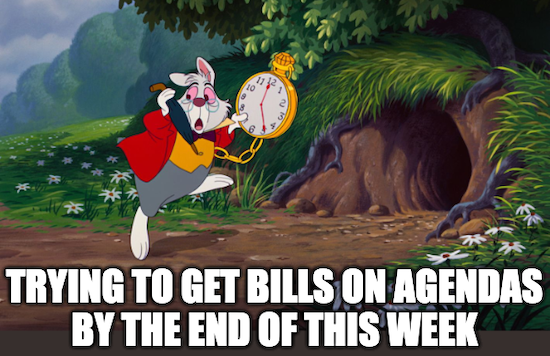

⏰ If you have 5 minutes: Use Request to Speak to SUPPORT the 9 good bills moving this week. See "Spotlight" below for more details.
⏰⏰ If you have 10 minutes: Also use Request to Speak to OPPOSE the 5 ballot measures moving this week. See "Ballot Referrals" below for more information.
⏰⏰⏰ If you have 15 minutes: Also directly contact the six House lawmakers who voted YES on HCR2043 this week to express your disappointment. See the “Hall of Shame” section below for more.
⏰⏰⏰⏰ If you have 55 minutes: Use Request to Speak on all other bills being heard in committees this week.
⏰⏰⏰⏰⏰ If you have 60 minutes: Join us on Zoom for our CEBV Happy Hour conversation, packed with political analysis, conversation and community. Happy Hour meets every Sunday at 4 PM through the end of legislative session. We're looking forward to seeing you!

This week, we'd like to lift up the handful of good bills being heard in what is otherwise mostly a sea of toxic legislative sludge. Please make it a priority to weigh in and SUPPORT these nine bills this week. It makes a difference.
• SB1523, Hatathlie (D-6), constructing a pipeline to bring water to Ganado, a town on the Navajo reservation
• SB1547, Farnsworth (R-10), requiring electric cars and other alt-fuel vehicles to pay an 18-cent energy tax equivalent
• SB1609, Shope (R-16), clearing confusion by requiring new political parties to use a unique, distinguishable name
• HB2579, Gutierrez (D-18), funding free school lunches for low-income kids
• HB2683, A Hernandez (D-20), creating a new temporary emergency food assistance fund to support SNAP
• HB2805, Gillette (R-30), allowing local candidates to collect signatures electronically via E-Qual
• HB2941, L Contreras (D-22), classifying motorcycle "lane splitting" as reckless driving
• HB2951, Connolly (D-8), creating consumer protections for automatic subscription renewals
• HB2958, C Hernandez (D-21), requiring Arizona's Medicaid program to provide comprehensive dental care for pregnant women ages 21+
More information on each bill can be found lower in our report; just search for the bill number.

One of our tasks is to hold our allies accountable. This section calls out those who support harmful bills. We ask them to heed and do better.
This week, we're disappointed in 👎 Alma Hernandez (D-20), 👎 Consuelo Hernandez (D-21), 👎 Lydia Hernandez (D-24), 👎 Elda Luna-Najera (D-22), 👎 Myron Tsosie (D-6) and 👎 Kevin Volk (D-17) for voting YES on HCR2043 on the House floor.
This resolution would add Arizona’s name to a list of states asking Congress to call an Article V constitutional convention to amend the US Constitution and create Congressional term limits. This is incredibly dangerous; the Constitution sets no rules for an Article V convention. Just as the 1787 convention went far beyond its stated purposes, this bill could result in a "runaway convention" and a whole new form of government. HCR2043 is not about "term limits" as it may appear, but about whether our current federal regime should get the opportunity to redesign our government from the ground up.
The bill would not have passed the House without support from these six lawmakers. If passed, it would not go to the governor or the voters for approval, but would be transmitted directly to Congress. Duplicate measure SCR1011 awaits a vote of the full Senate.
Contact these lawmakers as follows:
▶️ Alma Hernandez • ahernandez@azleg.gov • 602-926-3136
▶️ Consuelo Hernandez • chernandez@azleg.gov • 602-926-3523
▶️ Lydia Hernandez • lhernandez@azleg.gov • 602-926-3553
▶️ Elda Luna-Najera • eluna-najera@azleg.gov • 602-926-3881
▶️ Myron Tsosie • mtsosie@azleg.gov • 602-926-3157
▶️ Kevin Volk • kvolk@azleg.gov • 602-926-3498

We get a lot of questions about why Democratic bills so rarely receive a hearing. Here are answers to some of the most common ones.
How many bills are we talking about? Single digits. By our count, just 9 of the 349 House bills and 3 of the 257 Senate bills introduced by Democrats have gotten a committee hearing so far this session. Based on the track record from previous years, we don't expect to see that number climb much higher.
Why does this happen? Republicans are the majority party, which gives them total control of everything from who serves as a committee chair to which bills get the privilege of a committee hearing (or are even assigned to a committee). If they want to stonewall something, they can — and they almost always want to.
Why do they do it? Petty partisan politics plays an outsized role. Rather than evaluating each idea on its merits, legislative Republicans view advancing a Democratic bill as giving the Democratic Party and the bill sponsor a "win," something they are loath to do for people they view as opponents.
How do they choose? The Democratic bills that move tend to be almost ridiculously inoffensive ones, sponsored by lawmakers from non-competitive blue districts (ones unlikely to elect a Republican) or who anger their own constituents by advancing right-wing ideas. There's an unspoken expectation of tit for tat: if Republicans advance their bills, the Democrats will reciprocate by voting for some Republican bills. (And it often works: see the "Hall of Shame" section above.)
Aren't there any consequences? Our only recourse is at the ballot box. As we watch Republican lawmakers purposely obstruct nearly all non-Republican legislation, we must keep in mind that they represent just 35% of Arizona's registered voters. Ignoring 65% of the population has worked for them so far; other than a brief two-year stint in the 1990s where the Senate was evenly split, Republicans have enjoyed total one-party control of the Arizona Legislature since the 1950s. But voters in today's acrimonious political environment are tired of not being heard, and their ability to tolerate being ignored is running out.

Lawmakers are advancing these measures through committees this week, with the ultimate goal of placing them on our November ballot. Unlike regular bills, these cannot be vetoed. Use RTS to weigh in; refer to the information, links and talking points we include here to craft your own comments to lawmakers.

SCR1024, sponsored by JD Mesnard (R-13), would ask voters to require state lawmaker candidates to live in the legislative district they want to represent, instead of in the county, for at least one year before the election. Given that several actual lawmakers don’t reside in the districts they represent, and that violating current law carries basically no consequences, this bill is a waste of time and ballot space. Scheduled for Senate Government Committee, Wednesday. OPPOSE.
SCR1025, sponsored by JD Mesnard (R-13), would ask voters to delay the annual opening date of the Arizona Legislature by two weeks, to the fourth Monday in January. We find it interesting that this sponsor wants to push the start date of legislative session back, and other lawmakers want to push the ending date forward, even as none of them can seem to get their work done under the timeline they have now (ref: 2023, 2024, 2025). Scheduled for Senate Government Committee, Wednesday. OPPOSE.
SCR1027, sponsored by JD Mesnard (R-13), would ask voters to amend the Arizona Constitution to move general elections for mayors, city council and school board members to the same Tuesday in November as presidential and midterm elections. Adding these races to our already long general election ballots could increase "ballot fatigue," in which voters skip lower-level voting because of the sheer number of races. It could force candidates for small local elections who want to cut through the chaos of national politics to spend an outsized amount of money just to get noticed. And forcing cities and school districts to move their elections is an attack on local control and the right to self-determination. Scheduled for Senate Judiciary & Elections Committee, Wednesday. OPPOSE.
SCR1040, sponsored by TJ Shope (R-16), would ask voters to amend the Arizona Constitution to raise judges' mandatory retirement age from 70 to 75. This is simply an attempt to move the goalposts to keep older conservatives on the bench. Polls show 3 in 4 Americans favor maximum age limits for Supreme Court justices, and an even larger number wishes their lawmakers had one too. Arizona voters rejected a similar ballot measure in 2012 by nearly 3 to 1 margins. Scheduled for Senate Judiciary & Elections Committee, Wednesday. OPPOSE.
HCR2052, sponsored by Justin Olson (R-10), would ask voters to freeze city and county taxes, fees and utility rates at their current levels for four years. This would hamstring local government's ability to respond in times of crisis and could harm local services such as public safety, roads, parks, libraries and more. Scheduled for House Ways & Means Committee, Wednesday. OPPOSE.

Use RTS to weigh in, and refer to the information, links and talking points we include here to craft your own comments to lawmakers.
If you see this little fish next to a bill, it indicates a failed or previously vetoed idea — something intended as "bait" to artificially drive up the governor's veto count and bolster stinky talking points.
"Any man who puts his intelligence up against a fish and loses had it coming." — John Steinbeck
Affordability
🐟 SB1090, sponsored by Mark Finchem (R-1), is subject to a striker that would ban cities from charging sales tax on food. In 2023, analysts estimated that though taxing food costs consumers just pennies per transaction, nixing it would drain nearly $200 million a year from city budgets. Forcing such a drastic blanket change against cities' wishes harms public safety, roads, parks and libraries, and more. Some cities say they have no way to make up the loss and would be forced to either slash services or raise property taxes. Preemption (legislation blocking cities’ right to govern themselves) is sadly a cherished tradition at the Arizona Capitol, and cutting revenues is a poor solution to Arizona’s problems. Gov. Hobbs has repeatedly vetoed this idea. Scheduled for Senate Finance Committee, Monday. OPPOSE.
SB1633, sponsored by JD Mesnard (R-13), creates a new dollar-for-dollar tax write-off for the profits from the sale of a primary residence, at an as-yet unknown cost to the state. Republican lawmakers have for decades systematically slashed state revenues, increasing tax carve-outs from $16 billion in 2014 to over $30 billion in 2025. These carve-outs have now reached the point where increasing costs and insufficient funds have left us without the resources to fund basic state services. Our budget is in the bottom 5 states in per capita spending nationally, and our schools are funded at 48th in the country. Scheduled for Senate Finance Committee, Monday. OPPOSE.
SB1745, sponsored by Jake Hoffman (R-15), would force Maricopa and Pima counties to slash their local taxes to 2.5% unless residents specifically vote for a higher rate, and would also require the state treasurer to withhold state funding if cities don't comply. This is ironic given that the legislature has pushed many of the costs for running essential services onto local governments. Such an obstructionist, top-down move would have an extreme impact on our communities, harming public safety, roads, parks, libraries and more. Scheduled for Senate Government Committee, Wednesday. OPPOSE.
HB2951, sponsored by Janeen Connolly (D-8), would create consumer protections for automatic subscription renewals. Companies would have to give clear disclosure of renewal terms, allow consumers to buy in directly rather than getting passively renewed, and offer an easy cancellation mechanism. Consumers could even get refunds if companies don't follow the law. Scheduled for House Commerce Committee, Tuesday. SUPPORT.
HB4030, sponsored by Justin Olson (R-10), would freeze city and county taxes, fees and utility rates at their current levels for four years. This would hamstring local government's ability to respond in times of crisis and could harm local services such as public safety, roads, parks, libraries and more. The bill has also been introduced as a ballot referral that would circumvent Gov. Hobbs' veto. Scheduled for House Ways & Means Committee, Wednesday. OPPOSE.
Discrimination
SB1327, sponsored by David Farnsworth (R-10), is a sweeping attack on the relationships between Arizona's universities and other countries. The bill bans recruiting international students, bans recognition of international student associations, and requires the Board of Regents to review and approve each academic or research partnership with a "foreign principal." This xenophobic bill would hamstring international collaboration and academic success. ASU, for example, is the country's top public university for international students, with 15,100 students from 157 countries. It offers those students more than 40 associations which help them build community, and benefits from deep academic ties to other universities worldwide. Because international students pay non-discounted tuition, they also keep our state universities financially afloat in the face of persistent legislative underfunding. Scheduled for Senate Education Committee, Wednesday. OPPOSE.
Meanwhile, the Arizona Constitution is clear on the legislature's responsibility to fund our state universities: "The instruction furnished shall be as nearly free as possible."
SB1421, sponsored by Wendy Rogers (R-7), would ban undocumented immigrants from banking in Arizona, including cashing checks and sending wire transfers. Anyone who tried would have one-quarter of their transfer monies snatched via civil penalties. This punitive, mean-spirited bill is intended to drive undocumented immigrants out of our state, in willful ignorance of studies showing that they contribute $704 million in taxes to Arizona's economy for services they cannot access. Only 5% of Arizona's workforce is undocumented, but that tiny proportion does a lot; without them, Arizona's economy will suffer and prices will go up, especially on food, housing and services. Scheduled for Senate Military Affairs & Border Security Committee, Monday. OPPOSE.
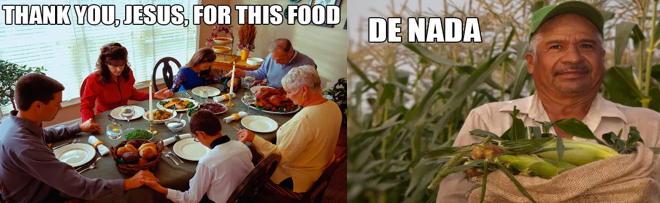
SB1457, sponsored by David Farnsworth (R-10), would expand Arizona's $2 million Advanced Air Mobility Fund (money the sponsor has been pushing to use toward the introduction of flying cars) and allow it to be used on border enforcement. We'll let the below cartoon speak for itself. Scheduled for Senate Appropriations, Transportation & Technology Committee, Tuesday. OPPOSE.

SB1511, sponsored by Frank Carroll (R-28), would ban undocumented immigrants from driving commercial vehicles, and requires police to impound the vehicles and their cargo. The trucking industry is struggling with an ongoing, years-long driver shortage; meanwhile, the number of foreign-born US truck drivers has doubled in the last 25 years, up to now nearly 1 in 5. In other words, immigrants are doing the jobs Americans depend on but don't want to do themselves. Bills like this will gut an industry already facing severe labor shortages and raise prices on all goods transported by truck in Arizona. (If you're wondering why groceries are so expensive, a federal crackdown has pulled 6,000 truckers off the road nationwide.) Scheduled for Senate Military Affairs & Border Security Committee, Monday. OPPOSE.
SB1520, sponsored by Wendy Rogers (R-7), would require Arizona and all its state agencies to share immigration information with ICE, forcing cooperation with what has become a de facto terror force of untrained, undisciplined federal agents using illegal and excessive force against immigrants and US citizens alike. Even federal judges are placing limits on ICE’s actions, and most Arizona agencies are avoiding cooperation programs with the lawless agency. Scheduled for Senate Military Affairs & Border Security Committee, Monday. OPPOSE.
SB1573, sponsored by Wendy Rogers (R-7), would ban courts from using or referring to "religious sectarian law" in their decisions, unless it is "based on Anglo-American legal tradition and principles" — in other words, unless it is rooted in white nationalism. This thinly veiled attack on multiculturalism is related to efforts from xenophobic hate groups to demonize other faiths. Scheduled for Senate Judiciary & Elections Committee, Wednesday. OPPOSE.
SB1635, sponsored by John Kavanagh (R-3), would make it a crime, punishable by up to 6 months in jail, to blow a whistle to alert your neighbors that ICE is present. Despite attempts from the far right to manufacture outrage at the use of whistles (even calling it “domestic terrorism”), monitoring law enforcement is a constitutionally protected activity. The sponsor has a history of making legally indefensible attacks on the First Amendment right to protest. Scheduled for Senate Judiciary & Elections Committee, Wednesday. OPPOSE.
SB1686, sponsored by Jake Hoffman (R-15), would rename Wesley Bolin Plaza to "the Wesley Bolin and Charlie Kirk Freedom Plaza" and authorize memorials to commemorate both Charlie Kirk and Don Bolles. Elevating someone who made combative, incendiary, racist and sexist behavior his calling card to the same level as a lifelong public servant who held office as Arizona's Secretary of State for 13 consecutive terms is a deeply offensive outrage. The sponsor, who chairs the committee hearing this bill, has blocked all previous bipartisan efforts to honor Bolles. The Arizona Agenda called him "an angry little man with far too much power in his little domain" and described this bill as "using the names of the dead as ransom notes." Scheduled for Senate Government Committee, Wednesday. OPPOSE.
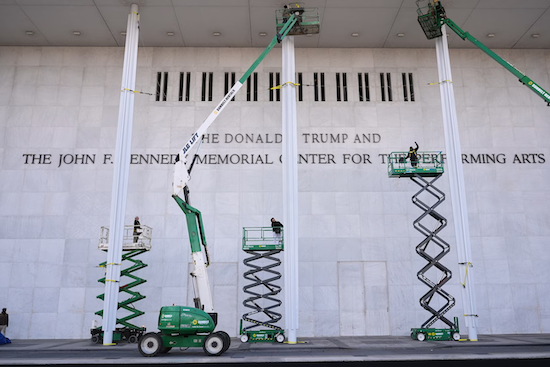
HB2040, sponsored by Rachel Keshel (R-17), would require university campus health clinics to bring up adoption whenever a student asks for contraception or is tested or treated for an STI. This should happen at the discretion of a physician, not at the whim of an anti-abortion lawmaker. The bill also forces the discussion of adoption into school sex ed classes at district and charter (but not private or voucher-funded) schools. Scheduled for House Education Committee, Tuesday. OPPOSE.
🐟 HB2575, sponsored by Michael Way (R-15), is a copy of a vetoed bill from last year that would would ban public schools from teaching, promoting, funding or training students in "antisemitic conduct,” putting teachers at risk of losing their homes and livelihoods via personal civil liability. The bill would ban creating "a hostile educational environment" (which is often coded language for avoiding any discussion that deals with thought-provoking or difficult subjects, which encourages censorship). Though actual antisemitism should never be tolerated, the definition used here has become so weaponized, even its creator says state legislatures shouldn’t be using it due to its misuse as “a blunt instrument to label anyone an antisemite.” The effect is to shut down any accurate discussion of the ongoing Israeli-Palestinian conflict or Palestinian human rights. Scheduled for House Education Committee, Tuesday. OPPOSE.
HB2904, sponsored by Steve Montenegro (R-29), would require Arizona to protect its "sovereign authority" against "unlawful invasion at the border" by drug cartels, and directs judges to interpret Arizona law to support that purpose. This would enable further federal due process and civil rights violations in the name of "border enforcement." Further, as immigration is solely a matter of federal authority, the bill is likely unconstitutional; a 2012 US Supreme Court ruling said Arizona has no right to enforce federal immigration laws, and the House’s nonpartisan rules attorneys explicitly warned lawmakers in 2024 that a similar bill was likely unconstitutional. Scheduled for House Public Safety & Law Enforcement Committee, Monday. OPPOSE.
Energy, Water & Climate
SB1241, sponsored by Shawnna Bolick (R-2), would privatize the building permit review process and ban cities and counties from rejecting private permits or charging additional fees for them. This is tailor-made for bad actors and misuse. Private companies, unlike the city, have a financial incentive to tell builders what they want to hear instead of conducting an impartial evaluation that considers key safety and building standards. The bill contains no conflict-of-interest provisions banning those with business or family relationships from conducting reviews, nor does it set any qualifications for the third parties hired to produce permits. Scheduled for Senate Regulatory Affairs and Government Efficiency Committee, Wednesday (held last week). OPPOSE.
🐟 SB1281, sponsored by David Farnsworth (R-10), would require both chambers of the legislature to vote to approve any sale of land to the federal government. The idea seems to be to stop land from being turned into national monuments. That would threaten not only conservation efforts, but Arizona’s $1.4 billion outdoor recreation industry and the local economies tied to it. Gov. Hobbs vetoed a very similar bill in 2024. Scheduled for Senate Federalism Committee, Monday. OPPOSE.
SB1418, sponsored by Frank Carroll (R-28), and HB2456, sponsored by Justin Wilmeth (R-2), would ban counties from using zoning regulations for small modular reactors colocated with "a large industrial energy user," such as a data center or aluminum smelter. The purpose seems to be to pepper our state with nuclear-powered data centers. This flies in the face of voter wishes; Arizonans of all political affiliations are pushing back against data centers in our communities due to their excessive land, energy and water usage. SB1418 is scheduled for Senate Natural Resources Committee, Tuesday. HB2456 is scheduled for House Artificial Intelligence & Innovation Committee, Thursday. OPPOSE.
SB1419, sponsored by Frank Carroll (R-28), would layer new requirements on top of existing licensing and building regulations for rooftop solar installations, increasing costs without demonstrating improved safety or quality outcomes. With over 300 sunny days per year, Arizona should be a solar energy leader, but we're not, thanks in part to shortsighted bills like these. Scheduled for Senate Natural Resources Committee, Tuesday. OPPOSE.
SB1445, sponsored by Wendy Rogers (R-7), would limit how often the Department of Environmental Quality can require testing protected aquifers in small cities for bacterial contamination. Scheduled for Senate Natural Resources Committee, Tuesday. OPPOSE.
SB1503, sponsored by David Gowan (R-19), would ban government from considering "environmental, social, policy or ideological goals" for public pension plans. In 2024, Arizona’s Public Safety Personnel Retirement System, which oversees pension funds for police and others, warned that a similar effort would hurt its goal of maximizing returns for its members. The idea appears driven by a panic that society will hold extremists accountable for their actions. One study says such efforts could cost Arizona millions. See our explainer on ESG. Scheduled for Senate Finance Committee, Monday. OPPOSE.
SB1519, sponsored by Tim Dunn (R-25), would increase the weight limit for off-highway vehicles from 2500 to 3500 pounds. Excessive off-road travel in Arizona is already destroying pristine habitat; heavier vehicles will do even more harm. Scheduled for Senate Natural Resources Committee, Tuesday. OPPOSE.
SB1547, sponsored by David Farnsworth (R-10), would require electric cars and other alt-fuel vehicles to pay an energy tax equivalent to the 18 cents per gallon in gas taxes paid by conventional cars. These taxes go directly to fund Arizona highway maintenance; it's only fair that EVs pay in too. Arizona has the third-worst maintained highways in the nation, with only 35% of our pavement in good condition. Our gas taxes are among the lowest in the nation, and for decades, the legislature has been raiding the fund to pay other bills. Because this bill raises revenues, it unfortunately requires a 2/3 supermajority vote, but it's a conversation we should be having. Scheduled for Senate Appropriations, Transportation & Technology Committee, Tuesday. SUPPORT.
 Arizona Center for Economic Progress
HB2026, sponsored by Gail Griffin (R-19), would create a new loophole for developers to get around assured water supply requirements. Arizona has less water now than it did 20 years ago; it's time developers accepted that fact instead of trying to destroy consumer protections so they can pump more water than they're entitled to. Scheduled for House Natural Resources, Energy & Water Committee, Tuesday. OPPOSE.
HB2027, sponsored by Gail Griffin (R-19), would create a new loophole in the Groundwater Management Act by banning the state from using certain methods of measuring water. Our groundwater is a finite resource and we should treat it as such. Scheduled for House Natural Resources, Energy & Water Committee, Tuesday. OPPOSE.
HB2028, sponsored by Gail Griffin (R-19), would let developers sue the state over a water application before the state's decision is even final. A recipe for chaos. Scheduled for House Natural Resources, Energy & Water Committee, Tuesday. OPPOSE.
HB2031, sponsored by Gail Griffin (R-19), would give applicants even more time to file for grandfathered rights in the Willcox Active Management Area, which was created two years ago. Amusingly, the bill has an emergency clause. Scheduled for House Natural Resources, Energy & Water Committee, Tuesday. OPPOSE.

HB2094, sponsored by Gail Griffin (R-19), appears to be a version of a failed bill from last year exempting specific proposed housing developments in Queen Creek and Buckeye from a building moratorium by citing 20-year-old groundwater supply models. This would benefit developers and could result in excessive groundwater pumping. The water that would be used to replenish any water pumped (which is required) would come almost exclusively from the Colorado River, which is likely to face steep cuts in the near future. Scheduled for House Natural Resources, Energy & Water Committee, Tuesday (held two weeks ago). See duplicate bill SB1200, Shope (R-16). OPPOSE.
HB2095, sponsored by Gail Griffin (R-19), would weaken assured water supply requirements by messing with the definition of depth thresholds in wells. The sponsor seems to be coming up with a lot of creative ways to overuse and exploit our natural resources. Wouldn't it be easier to just conserve? Scheduled for House Natural Resources, Energy & Water Committee, Tuesday. OPPOSE.
🐟 HB2100, sponsored by Gail Griffin (R-19), is a copy of a vetoed bill from last year that allows counties to approve small subdivisions, purposely circumventing existing requirements that new developments have an assured water supply. This undoubtedly benefits the developers of so-called “wildcat” subdivisions, who split large parcels of land into smaller chunks and sell hundreds of those chunks off one by one, skirting the requirement to ensure a long-term water supply. Scheduled for House Land, Agriculture & Rural Affairs Committee, Monday. OPPOSE.
HB2101, sponsored by Gail Griffin (R-19), would mess with the state's ability to assess groundwater supply and demand by relying on modeling instead of actual data. Scheduled for House Natural Resources, Energy & Water Committee, Tuesday. OPPOSE.
HB2102 and HB2103, sponsored by Gail Griffin (R-19), would create new infrastructure to enable water hauling in active management areas, parts of the state that need aggressive groundwater management to ensure they don't run dry. Rural Arizona has real, significant water concerns, and residents need help protecting their wells and properties from industrial agriculture, data centers, etc. These bills do nothing to solve those problems. Both bills are scheduled for House Natural Resources, Energy & Water Committee, Tuesday. OPPOSE.
HB2147, sponsored by Gail Griffin (R-19), would require Arizona Game and Fish to issue permits to land owners for hunting deer. That agency is tasked with conserving and managing Arizona’s wildlife; this is not a thoughtful approach and squanders what should be a precious resource. Scheduled for House Land, Agriculture & Rural Affairs Committee, Monday. OPPOSE.
HB2159, sponsored by Lupe Diaz (R-19), would allow land owners to hunt and kill Mexican gray wolves. Mexican gray wolves are the most endangered wolf subspecies in the world, are protected by the federal Endangered Species Act, and belong in our ecosystem. Scheduled for House Land, Agriculture & Rural Affairs Committee, Monday. OPPOSE.
HB2267, sponsored by David Marshall (R-7), would declare a utility-scale wind or solar farm within four miles of residential property to be a "public nuisance," and requires the Attorney General to sue. AG Mayes famously used nuisance law against Saudi company Fondomonte to stop it from draining Arizona's groundwater, and is considering using it to halt a polluting aluminum smelter — by contrast, wind and solar energy don't pollute or drain resources. Scheduled for House Natural Resources, Energy & Water Committee, Thursday. OPPOSE.
HB2388, sponsored by Teresa Martinez (R-16), would dedicate an unspecified amount of state tax money for a study on "the economic benefits of small modular reactors and data centers in Arizona" — a biased premise that by definition promotes nuclear-powered data centers. Arizonans of all political affiliations are pushing back against data centers in our communities, not just because they use so much energy, but also for their excessive land and water usage. Passed House Rural Economic Development Committee last week; now scheduled for House Appropriations Committee, Wednesday. OPPOSE.
HB2497, sponsored by Michael Way (R-15), would create a statutory right for Arizonans to hunt, fish, and harvest wildlife, bans any policies that "unreasonably restrict" it, and weakens the ability of Game and Fish to manage wildlife. This is anti-conservation. If we view it as a human right to hunt wildlife whenever and however we wish, soon there will be no wildlife at all. Scheduled for House Land, Agriculture & Rural Affairs Committee, Monday. OPPOSE.

HB2457, sponsored by Justin Wilmeth (R-2), would allow power companies to build new power plants near "a large industrial energy user," such as a data center or aluminum smelter, without examining the environmental impact of their plans, as long as it's zoned for it and they hold a public comment session. This flies in the face of voter wishes; Arizonans of all political affiliations are pushing back against data centers in our communities due to their excessive land, energy and water usage. Scheduled for House Artificial Intelligence & Innovation Committee, Thursday. OPPOSE.
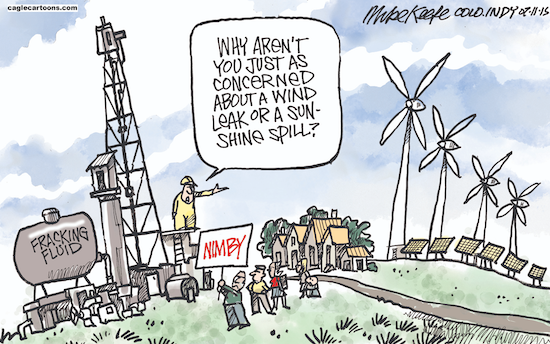
HB2755, sponsored by Gail Griffin (R-19), would force the state to prioritize mining as "the highest and best use" of state trust land if a conflict arises between using the land for mining or something else (such as solar). This is backward. Mining has pronounced and destructive impacts on the environment; by contrast, nobody ever worried about a sunshine spill. Scheduled for House Natural Resources, Energy & Water Committee, Thursday. OPPOSE.
HB2781, sponsored by Neal Carter (R-15), would hamstring solar energy generation with special requirements and would require solar operators to create and submit decommissioning plans before they can even get started. This presents another barrier for solar. Why isn't the sponsor creating similar requirements for industries that are actually destructive, such as the polluting aluminum smelter that special interests want to site in Benson against the community's wishes? Scheduled for House Natural Resources, Energy & Water Committee, Thursday. OPPOSE.
HB2787, sponsored by Lupe Diaz (R-19), would ban Arizona and its cities and counties from cooperating with the Mexican Wolf Reintroduction Program under the federal Endangered Species Act. Mexican gray wolves are the most endangered wolf subspecies in the world, and they belong in our ecosystem. Scheduled for House Land, Agriculture & Rural Affairs Committee, Monday. OPPOSE.
HB2975, sponsored by Ralph Heap (R-10), would force Arizona's State Land Department to suspend its "solar score" program, which is designed to help find the best locations for leased solar farms, and would direct the state to use the land for mining and housing instead. This would hamstring desperately needed (and lucrative) renewable energy development in favor of a dangerous and damaging practice that communities increasingly oppose. Scheduled for House Natural Resources, Energy & Water Committee, Thursday. OPPOSE.
HB4009, sponsored by Jeff Weninger (R-13), would require the State Land Department to create a map identifying suitable locations for data centers on state trust land. How many new ways do Arizonans need to say we don't want more data centers in our communities? Citizens of all political affiliations are pushing back against these land-, energy- and water-gobbling behemoths. Scheduled for House Natural Resources, Energy & Water Committee, Thursday. OPPOSE.
Public Safety
SB1111, sponsored by Kevin Payne (R-27), would exempt all automated license plate reader (ALPR) data from public records, snuffing out public scrutiny. This is distressing: over 65 law enforcement agencies in Arizona use ALPR. The best-known ALPR company, Flock, has repeatedly breached citizen privacy and committed other civil liberty abuses. Their default agreement with police gives license to share people's data. In a number of other states, police are illegally sharing with ICE, and Arizona is not exempt. Scottsdale’s ALPR use raises privacy concerns, and last year the University of Arizona shared data with the US Marshals and then lied about it. Any bill that purports to "regulate" ALPR must actually do so. Scheduled for Senate Appropriations, Transportation & Technology Committee, Tuesday. OPPOSE.

SB1523, sponsored by Theresa Hatathlie (D-6), would appropriate $340,000 from the state general fund to the Navajo Nation for a pipeline to bring water to the Ganado area. This amount of money is a pittance — just 0.002% of Arizona's yearly $17.6 billion budget — but would make a huge difference to families on the Navajo reservation who have no running water or infrastructure. Residents have been asking for help for years, and the state has a moral obligation to fulfill it. Scheduled for Senate Natural Resources Committee, Tuesday. SUPPORT.
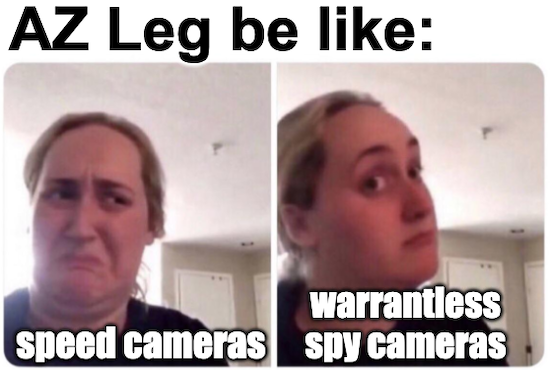
SB1624, sponsored by David Gowan (R-19), would institute a host of limits on photo radar, including capping the cost of tickets at $75, banning cities from suspending or revoking a driver license based on information from a red-light camera, and banning insurance companies from raising rates or canceling coverage because someone gets photo radar speeding or red-light tickets. Nobody likes a ticket, but Arizona has had speed cameras since 1987 for good reason. Numerous studies have found both speed and red-light cameras offer many safety benefits, reducing traffic crashes and injuries by up to 35 percent. These ill-considered limits will lead to more dangerous roads and more collisions. Scheduled for Senate Public Safety Committee, Wednesday. OPPOSE.
🐟 HB2076, sponsored by Selina Bliss (R-1), is a copy of a failed bill from last year that would allow K-12 public and private schools to allow employees to carry firearms on school grounds. The school would have to notify law enforcement of how many (but not which) employees are carrying, ensure the employees have a certification from an ADE-approved list of training programs, and keep their names confidential, including from parents at the school. The bill also gives these employees immunity from any liability if they are "acting in good faith during active threat events." Polls regularly find that the public does not support arming teachers. The bill was written by the Arizona Citizens Defense League, an extremist pro-gun group. Passed House Judiciary Committee 1/28 on party lines. Scheduled for House Education Committee, Tuesday. OPPOSE.
🐟 HB2136, sponsored by Michael Way (R-15), attempts to throw the book at peaceful protesters by creating new felony offenses of "civil terrorism" and "subversion" (with a sentence of 18 months in prison); making it illegal to "intimidate a civilian population" or "subvert the government"; expanding racketeering to include "riot" and "civil terrorism"; and making it illegal to work for any group the federal government labels a "foreign terrorist organization." (Executive orders are already attempting to criminalize opposition in this way.) For good measure, reviving a vetoed 2024 bill, the bill would also make it a class 6 felony for 3 or more protesters to block a road, with a sentence of 1 year in prison. Previous bills like this have been purposely intended to criminalize protesting, which is a First Amendment right. Scheduled for House Judiciary Committee, Wednesday. OPPOSE.

HB2410, sponsored by Alexander Kolodin (R-3), would declare a person’s communication with AI "privileged" just as it would be if the person sought advice from an actual human professional such as a lawyer. This is patently absurd. Since the sponsor has trouble distinguishing a bot from a licensed attorney, we'll help: AI portals' own legal disclaimers warn users they are not legal advice or counsel and specifies that people use AI at their own risk. Even if this bill were to somehow become law, any competent judge would probably laugh and then throw it out. Scheduled for House Artificial Intelligence & Innovation Committee, Thursday. OPPOSE.

HB2435, sponsored by Selina Bliss (R-1), would de-professionalize physicians by allowing graduates of foreign medical schools, even non-accredited ones, to practice medicine in Arizona without completing residency or declaring a specialty. By comparison, US graduates must usually complete 3 to 7 years of residency training before they can be certified to practice medicine. Doctors not trained in the US are less likely to be prepared to safely care for patients in the complex US system, and doctors without full training are less likely to be able to safely treat their patients. Scheduled for House Health & Human Services Committee, Monday. OPPOSE.
HB2683, sponsored by Alma Hernandez (D-20), would set aside $5 million for a new emergency food assistance fund to temporarily support SNAP when the federal government is shut down or otherwise unable to provide funding. The money could be used for direct temporary food aid, as well as for grants to food banks and other nonprofits. When the recent federal shutdown delayed SNAP benefits, Arizona food aid groups saw an unprecedented surge in need, even as they struggled to bridge the gaps due to lack of resources. Programs like this one are the very purpose of government: in the words of the Preamble to the US Constitution, to "promote the general welfare" and come together to help our communities. Scheduled for House Health & Human Services Committee, Monday. SUPPORT.
HB2775, sponsored by Khyl Powell (R-14), would ban Arizona and its cities and counties from assisting certain "international organizations," including the World Health Organization, the United Nations, the International Criminal Court and NATO, without a court order. This isolationist scheme appears to be intended to shield our current federal government from any future responsibility for its actions. Scheduled for House Federalism, Military Affairs & Elections Committee, Wednesday. OPPOSE.
HB2862, sponsored by Quang Nguyen (R-1), would make it illegal for protesters — but not ICE agents — to wear a mask "with intent to conceal identity" in public. A first offense could mean 30 days in jail, with subsequent offenses subject to 6-month jail time. Scheduled for House Judiciary Committee, Wednesday. OPPOSE.

HB2941, sponsored by Lupe Contreras (D-22), would reclassify the dangerous practice of "lane splitting" by motorcycles, when a motorcyclist rides between lanes of traffic (typically on congested freeways) along the white divider line, as reckless driving. In 2022, over the objections of the Arizona Chiefs of Police and Arizona Sheriffs, lawmakers made it legal for motorcyclists to ride between stopped vehicles on surface streets. Riding a motorcycle is risky enough without the dangerous practice of lane splitting through a car driver's blind spot: though motorcycle crashes make up just 2.59% of total crashes in Arizona, they account for over 21% of all traffic fatalities. Scheduled for House Transportation & Infrastructure Committee, Wednesday. SUPPORT.
HB2957, sponsored by Lisa Fink (R-27), would ban Arizona from requiring an "enhanced driver license program" such as Real ID for any government purpose, and would require ADOT to continue offering non-REAL ID-compliant driver licenses and informing applicants that REAL IDs are voluntary. This appears to be motivated by paranoia. We hope the sponsor doesn't need to board an airplane anytime soon. Scheduled for House Transportation & Infrastructure Committee, Wednesday. OPPOSE.
HB2958, sponsored by Consuelo Hernandez (D-21), would require AHCCCS, Arizona's Medicaid program, to provide comprehensive dental care for pregnant women ages 21+. Because dental care during pregnancy is crucial to the health of both mother and infant, this small investment will reap large future savings. This coverage, which will be met with federal dollars, was cut during the Great Recession and never restored. CEBV has been tracking this idea since 2017, when Democratic then-Rep. Kelli Butler first proposed it. The idea gets wide bipartisan support, but somehow stalls every year. It's long past time to get this done! Scheduled for House Health & Human Services Committee, Monday. SUPPORT.
Voting Rights, Elections & Direct Democracy
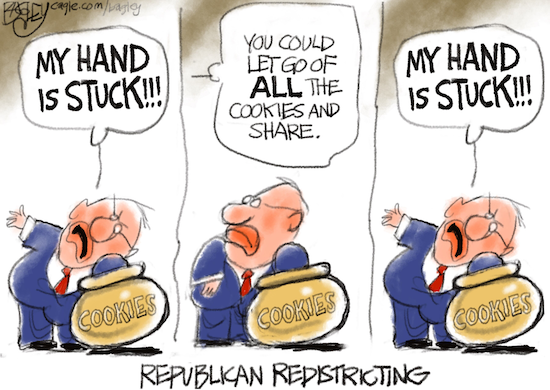
SB1433 and SB1434, sponsored by Jake Hoffman (R-15), would gerrymander Maricopa County to make Arizona more Republican on paper. The first bill would "crack" Maricopa by redrawing its boundaries and those of surrounding counties; the second would "pack" most Democrats into a tiny area by splitting Maricopa into four smaller counties and leaving Republicans to control the other three. These bills are based on frustration that county officials refuse to embrace the sponsor's baseless conspiracy theories or play nice with his loony MAGA friends. This is at least the fourth time Hoffman has introduced these ideas. Both bills are scheduled for Senate Government Committee, Wednesday. OPPOSE.
SB1489, sponsored by TJ Shope (R-16), institutes a host of anti-democratic requirements for initiatives and petition circulators that would make measures much harder to put on the ballot. Paid petition circulators would have to tell each signer their first name and state of residence, identify themselves verbally as a paid circulator, and wear a visible ID badge. Signatures collected without these disclosures would be void, opening petitions up to a new type of legal challenge. All draconian restrictions on statewide petitions would also be expanded to local city- and county-wide ballot measures. Scheduled for Senate Judiciary & Elections Committee, Wednesday. OPPOSE.
SB1568, sponsored by Jake Hoffman (R-15), would require voters to have a new signature on file every five years in order to receive an early ballot or see it counted. This is cumbersome and potentially disenfranchising. Scheduled for Senate Judiciary & Elections Committee, Wednesday. OPPOSE.
SB1609, sponsored by TJ Shope (R-16), would require new political parties to use a name that voters can distinguish from existing parties and bans them from misappropriating terms like "independent." This comes after the No Labels Party of Arizona, in October, changed its name to the Arizona Independent Party. Arizona approved the change, saying there was no legal authority to deny it, but the change is fueling controversy. Critics (like the Citizens Clean Elections Commission, which is suing to invalidate the change) argue it confuses people who intend to register as actual independents but end up with a political party designation instead. The bill is retroactive, so it would force the new party to drop the Independent moniker. Scheduled for Senate Judiciary & Elections Committee, Wednesday. SUPPORT.
HB2579, sponsored by Nancy Gutierrez (D-18), would fund free school lunches for children whose families meet the federal income requirements for free or reduced-price lunches. This change would help kids who don't qualify for free meals but whose families still struggle to afford the costs. In a nutshell, helping kids helps society; this is an excellent use for our tax dollars. Scheduled for House Education Committee, Tuesday, and House Appropriations Committee, Wednesday. SUPPORT.
🐟 HB2745, sponsored by Tony Rivero (R-27), is a copy of a bill vetoed last year that would allow the legislature to arrest anyone who refuses to comply with a subpoena they issued — including another elected official — and physically haul them before a committee. In 2024, some far-right legislators convened a committee hearing to call for the impeachment of Attorney General Kris Mayes for protecting Arizonans from legislative overreach, which Mayes refused to attend, saying it made "a mockery of real legislative oversight." Scheduled for House Government Committee, Wednesday (held last week). OPPOSE.
HB2805, sponsored by John Gillette (R-30), would require the state to allow online signatures via E-Qual for nomination petitions for local candidates for various boards, including school board and community college board. This will help working parents and other community members to qualify for the ballot, promoting better representation. Scheduled for House Federalism, Military Affairs & Elections Committee, Wednesday (HELD last week). SUPPORT.

2026 Session Timeline
Friday 2/20: Last day for a bill to get out of committees in its originating house (Appropriations committees get one extra week)
Monday 2/23: Crossover Week begins (most committee hearings are suspended)
Friday 3/27: Last day for a bill to get out of committees in its crossover house
(and the last day to use RTS until a budget drops)
Tuesday 4/21: 100th Day of Session (the stated end goal; can be changed)
Tuesday 6/30: Last day to pass a constitutionally mandated state budget
Committees & Contacts
Here's a handy, freshly updated list of lawmaker contact info, committee chairs and assignments.
CEBV Action Linktree
Want other ways to take action? Need to stay informed? Looking for our social media, inspiration, or self-care tips? Look no further than our Linktree.
* Though the official deadline for bills to be heard in committee in their chamber of origin is Feb. 20, the Appropriations committees are traditionally given an extra week to discuss the financial impacts of various measures. Unfortunately, this has given rise to what we call "trash can Approps," a silly-season hearing with a catch-all nonsense agenda crammed full of every random priority that lawmakers are panicking to advance before the deadline.
Congratulations, you made it to the end! 🎉 If you haven't yet seen this viral clip of Sir Ian McKellen on Stephen Colbert's Late Show, take 4 minutes to clear the decks and devote your full attention to it. You'll be glad you did.

Comments ()