
February 2, 2026
Lawmakers doing their best Scrooge impression. Attacks on immigrants, drag shows and the environment. More data centers?! One solitary good bill.
It's another heavy week at the Arizona Legislature: we're covering 61 bills this week, and only one of them is any good. As always, our voices will be critical in helping put the brakes on these bad ideas.
We're also bracing ourselves for a new legislative record: the most bills ever introduced in a single legislative session. The House is poised to introduce more bills than they ever have before, and state IT folks have been frantically rebuilding the system in preparation to accommodate the first-ever HB4001. The kicker? The House's bill introduction deadline isn't until a week from today.

Fortunately, the end is in sight. Today marks the Senate bill introduction deadline; we're taking bets as to whether they, too, will surpass their high-water mark (which our records show they set in 2021, with 851 bills). Regardless of whether they do or not, one thing is for sure: until we can elect a legislative majority that's willing to actually represent voter wishes, the people of Arizona will continue to lose out.

⏰ If you have 5 minutes: Use Request to Speak to OPPOSE SB1333 and HB2206. See "Spotlight" below for more details.
⏰⏰ If you have 15 minutes: Also use Request to Speak to OPPOSE the nine (9!) ballot measures moving this week. See "Ballot Referrals" below for more information.
⏰⏰⏰ If you have 45 minutes: Use Request to Speak on all other bills being heard in committees this week.
⏰⏰⏰⏰ If you have 60 minutes: Join us on Zoom for our CEBV Happy Hour conversation, packed with political analysis, conversation and community. Happy Hour meets every Sunday at 4 PM through the end of legislative session. We're looking forward to seeing you!

SNAP Attacks: "Decreasing the Surplus Population"
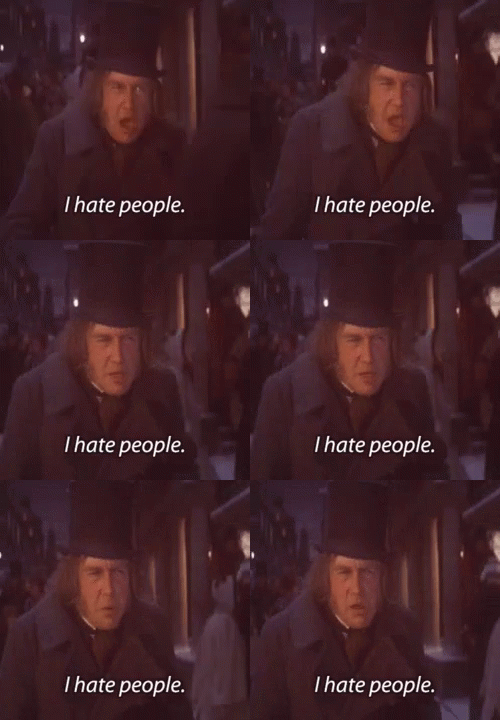
“If they would rather die,” said Scrooge, “they had better do it, and decrease the surplus population.”
— Charles Dickens, “A Christmas Carol”
You've probably read about the sweeping changes and draconian cuts that congressional Republicans made to our country's low-income food assistance program, SNAP, in last summer's federal budget bill, HR1. The bill pushes costs downward to the states, forcing communities to make tough choices.
One particularly damaging provision also requires a new, lower error rate requirement for SNAP: starting in a couple of years, DC will start defunding food assistance in states that have a 6%+ error rate. Notably, this change does not target fraud. Instead, it penalizes states for administrative inaccuracies. This sets states up to fail, driving program costs up and risking benefit losses for millions.
The Scrooge Act
This week, Republican lawmakers John Kavanagh (R-3) and Nick Kupper (R-25) are channeling Ebenezer Scrooge, doubling down on the feds' punitive demands. Their duplicate bills would throw hungry Arizonans under the bus by requiring Arizona to reduce its payment error rate to below 3% by the end of 2030, or be punished by losing 10% of its administrative funding.
It's important to understand how comically unreasonable that 3% figure is. Arizona's error rate is currently around 10%, which is below the nationwide average of 11%. Right now, only eight states fall under the federal limit of 6%. (Many have opted to keep their people fed rather than get a gold star on their paperwork.) And which state has an error rate under 3%? None.
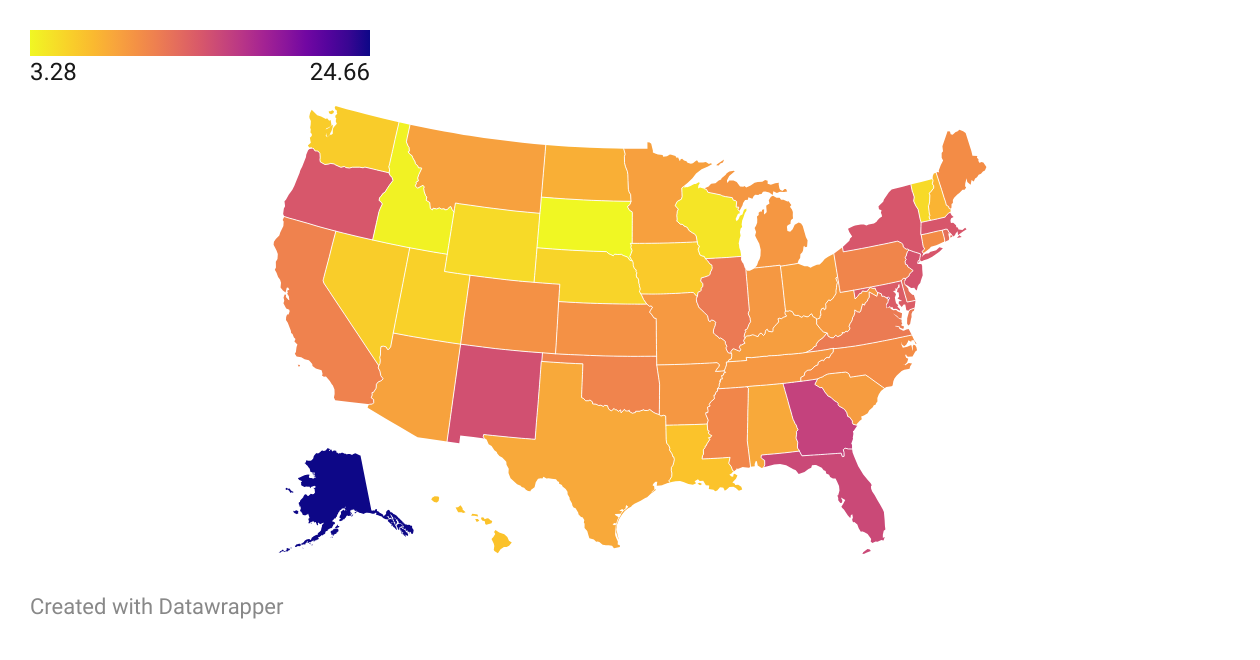
In other words, the sponsors of this bill want Arizona to somehow lower its rate below the lowest rate any state has reported so far. Complying with the feds' heavy-handed changes won't be easy, but that demand is ridiculous. What's more, defunding the agency would hit kids particularly hard. Did you know that 1 out of every 4 children in Arizona rely on SNAP's meager benefits?
These bills are not just punitive, they're mean-spirited. They echo the Dickensian trope that poor people are only poor because they’re lazy and just want to cheat. The sponsors clearly forget that many working people qualify for SNAP benefits, and that they do because many large corporations would rather shove their employees' basic needs (like health, food and shelter) onto the public dime than pay a living wage. And while they hand out fat subsidies to those corporations, they're snatching food out of the mouths of hungry children.
 Samantha Michaels
Both SB1333 and HB2206 will be heard in committees this week. Use Request to Speak to OPPOSE.


Lawmakers are advancing these measures through committees this week, with the ultimate goal of placing them on our November ballot. Unlike regular bills, these cannot be vetoed. Use RTS to weigh in; refer to the information, links and talking points we include here to craft your own comments to lawmakers.
SCR1013, sponsored by Shawnna Bolick (R-2), would ask voters to implement a far-reaching ban on "foreign" money and in-kind donations for election administration and ballot measures. This appears to be model legislation from the Trump-connected America First Policy Institute, which claims "left-wing special interests are weaponizing ballot measures to push their radical agenda." Their chief complaint appears to be that a wealthy permanent resident of Wyoming with Swiss citizenship is donating to organizations that underwrite progressive ballot initiatives, something the FEC says is legal. Similar bill SCR1005 went through committee a few weeks ago; this is wider-ranging. Scheduled for Senate Judiciary & Elections Committee, Wednesday. OPPOSE.
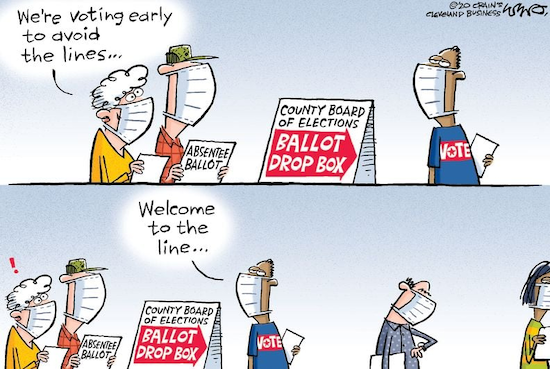
SCR1014, sponsored by Shawnna Bolick (R-2), would require voters to drop off their early ballots by the Friday before Election Day. This would void voters' ability to use drop boxes the weekend before the election or to drop ballots off on Election Day unless we stood in line and showed ID. Hundreds of thousands of voters would have to wait in long lines to cast our ballots, decreasing voter turnout and engagement; in November 2024, Maricopa County alone saw over 225,000 ballots dropped off across 240 voting locations. Gov. Hobbs has vetoed this idea at least twice. Scheduled for Senate Judiciary & Elections Committee, Wednesday. OPPOSE.
SCR1020, sponsored by John Kavanagh (R-3), would ask voters to institute annual inflation adjustments for state lawmaker salaries. That would raise their current $24,000/year to nearly $48,000, with future increases annually. We know it doesn't feel great to give lawmakers more money considering the folks we've got in charge, but we're getting what we're paying for. Lawmakers who try to make ends meet via non-exploitative means often end up resigning, citing long hours, low salary, and a chaotic, toxic pressure-cooker environment in which not much that’s productive gets done. We wrote extensively about this issue last year. Voters must approve lawmaker salaries, but haven't approved a pay raise since 1998 (and have rejected six proposed raises since). Scheduled for Senate Appropriations, Transportation and Technology Committee, Tuesday. SUPPORT.
SCR1022, sponsored by J.D. Mesnard (R-13), would ask voters to add 30 new state lawmakers by splitting our current legislative districts into three sections and giving each portion one representative. While some characterize it as a plan to overrepresent red rural districts, one thing is for sure: it would also mean new buildings for all the additional lawmakers. As the fiscal note from the 2022 version of this bill observes, there’s no way to estimate the possible cost, but it’s significant. Scheduled for Senate Government Committee, Wednesday. OPPOSE.
SCR1028, sponsored by JD Mesnard (R-13), would ask voters to amend the Arizona Constitution to require a two-thirds supermajority vote of the Legislature for statewide fees and assessments. A similar Constitutional provision for taxes has strangled state government over decades, making it nearly impossible to fund our state’s many needs and priorities. Scheduled for Senate Finance Committee, Monday. OPPOSE.
SCR1031, sponsored by Jake Hoffman (R-15), would blow up Arizona’s Independent Redistricting Commission (a nationwide model) by requiring it to hold its own fake “census” every 10 years to determine how many US citizens live in Arizona. This would be used to create grid-like legislative districts of equal citizen population. Any state lawmaker could sue if they didn’t like the result. The incredibly expensive bill (as much as $158 million every 10 years) would purposely undercount communities of color, negatively impacting Arizona’s legitimate census count and depressing our federal funding. It would also partially defund the voter-created Clean Elections Commission to pay for the new “census.” Scheduled for Senate Government Committee, Wednesday. OPPOSE.
HCR2004, sponsored by Teresa Martinez (R-16), would ask voters to ban the use of photo radar. Nobody likes a ticket, but Arizona has had photo radar since 1987 for good reason. Numerous studies have found speed and red-light cameras reduce traffic crashes and injuries by up to 35 percent. Repealing photo radar will lead to more dangerous roads and more collisions. Gov. Hobbs has vetoed similar bills, but this measure would head directly to our ballot. Duplicate measure SCR1004 is already through its Senate committee. Scheduled for House Transportation & Infrastructure Committee, Wednesday. OPPOSE.
HCR2005, sponsored by Justin Wilmeth (R-2), would ask voters to require the legislature to adjourn by April 30 of each year. While we're all for shorter sessions, this proposal is unrealistic given how closely divided our legislature has become. It could also increase the chances of inaccurate budgeting. Right now, lawmakers' only constitutional responsibility is to pass a budget by June 30 each year, and the creation of that budget relies on mid-April numbers from the legislature's nonpartisan budget analysts. Does this really belong on our ballots? Scheduled for House Government Committee, Wednesday. OPPOSE.
HCR2044, sponsored by Steve Montenegro (R-29), would ask voters to enshrine racism in the state Constitution. This culture-war-driven measure would prevent the state from giving BIPOC-owned businesses any preference in state contracts, block teachers from discussing accurate history, ban certain content from being taught in schools, and block trainings on how to support LGBTQ+ staff and students. It would also allow the legislature to "prescribe related practices or concepts" to ban — in other words, to tack on any conceivable open-ended, misguided notion. Scheduled for House Government Committee, Wednesday. OPPOSE.

Use RTS to weigh in, and refer to the information, links and talking points we include here to craft your own comments to lawmakers.
If you see this little fish next to a bill, it indicates a failed or previously vetoed idea — something intended as "bait" to artificially drive up the governor's veto count and bolster stinky talking points.
"Any man who puts his intelligence up against a fish and loses had it coming." — John Steinbeck
Affordability
🐟 SB1002, sponsored by John Kavanagh (R-3), and HB2797, sponsored by Michael Carbone (R-25), are copies of a vetoed bill from last year that would require state employees to regularly check SNAP eligibility to see if recipients had jobs, recent lottery or gambling winnings, were in prison, made "excessive out-of-state purchases," or had moved out of state. Arizona's SNAP eligibility process has perfectly adequate income checks. Many adults ages 18-64 are already limited to 3 months of benefits every 3 years. Meanwhile, Arizona is struggling with reduced federal funding for SNAP, driving staffing cuts. This bill does not come with any funding to pay for the changes, which would further harm the vulnerable families (including 1 of every 4 children) who rely on SNAP's meager benefits. Scheduled for House Health & Human Services Committee, Monday and Senate Government Committee, Wednesday. OPPOSE.
🐟 SB1036, sponsored by Mark Finchem (R-1), SB1331, sponsored by John Kavanagh (R-3), and HB2442, sponsored by Chris Lopez (R-16), are copies of a bill vetoed in 2024 and 2025 that would make it harder for Arizonans in need to pay for food by imposing work requirements on “able-bodied” people who use the SNAP program. This is rooted in many false assumptions about race, gender, disability and class status. Mandatory employment training programs are expensive, create barriers for rural applicants and those without internet, and haven’t been proven to increase employment or wages. SB1036 is scheduled for Senate Government Committee, Wednesday. SB1331 is scheduled for House Health & Human Services Committee, Monday. HB2442 is scheduled for Senate Health & Human Services Committee, Wednesday. OPPOSE.
🐟 SB1056, sponsored by Mark Finchem (R-1), and HB2688, sponsored by Ralph Heap (R-10), are copies of a bill vetoed last year that would require our state government to eliminate any full-time positions that have been vacant for more than 150 days, regardless of whether the position is listed as essential or specialized. Just because a position is vacant doesn't mean it's unneeded, nor does it mean you can just pick a random person off the street to fill it. Searching for the right skilled employee can take a long time. Simply eliminating positions could also mean an agency would be unable to fulfill a legally mandated job. Duplicate bill HB2688 has already passed its assigned House committee. SB1056 is scheduled for Senate Appropriations, Transportation and Technology Committee, Tuesday. OPPOSE.
🐟 SB1268, sponsored by David Gowan (R-19), and HB2792, sponsored by Michael Carbone (R-25), are identical bills that would exempt some veterans and their spouses from state property taxes. Using a revolving cast of sympathetic recipients, Republican lawmakers have for decades systematically slashed state revenues, increasing tax carve-outs from $16 billion in 2014 to over $30 billion in 2025. These tax cuts hurt our ability to properly fund state services, especially because of a built-in one-way ratchet: the legislature can reduce taxes with a simple majority but needs a two-thirds supermajority to raise them. As a result, our budget is one of the smallest per capita in the US, and our public schools are funded at 48th in the country. Scheduled for House Ways & Means Committee, Wednesday. OPPOSE.
SB1333, sponsored by John Kavanagh (R-3), and HB2206, sponsored by Nick Kupper (R-25), are duplicate bills that would require Arizona to reduce its payment error rate for SNAP (food stamps) to below 3% by the end of 2030. If that doesn't stay on track, the bill punishes the agency by cutting its administrative funding. This bill demands the impossible: that Arizona not only lower its rate, but somehow get it below the lowest rate any state has reported so far. And defunding the agency would hit kids particularly hard; 1 out of every 4 children in Arizona rely on SNAP's meager benefits. SB1333 is scheduled for Senate Health & Human Services Committee, Wednesday. HB2206 is scheduled for House Health & Human Services Committee, Monday. OPPOSE.
🐟 SB1334, sponsored by John Kavanagh (R-3), and HB2448, sponsored by Chris Lopez (R-16), are copies of a bill vetoed in 2024 and 2025 that would ban "able-bodied" adults on SNAP from receiving work requirement waivers. This is rooted in false assumptions about race, gender, disability and class status, and would make it harder for Arizonans in need to pay for food. SB1334 is scheduled for Senate Health & Human Services Committee, Wednesday. HB2448 is scheduled for House Health & Human Services Committee, Monday. OPPOSE.
🐟 SB1638, sponsored by JD Mesnard (R-13) and HB2785, sponsored by Justin Olson (R-10), would rubber-stamp last summer's federal tax cuts at the state level, blowing a hole in the state budget. Gov. Hobbs vetoed Republicans' first attempts at a large, non-negotiated tax cut package, and she has been asking since November for a smaller, negotiated one. This even larger tax cut bill is a bad-faith step backward from Republicans' first plan, doubtless intended to demonstrate that they will refuse to compromise, and is certain to be vetoed. If Arizona is to get any clarity on this issue, Republicans must engage in good-faith conversation, not chest-thumping and political posturing. See the "Tax Policy" section of our January 19 weekly for more background on this ongoing issue. SB1638 is scheduled for Senate Finance Committee, Thursday; HB2785 is scheduled for House Ways & Means Committee, Wednesday. OPPOSE.
HB2123 and HB2140, sponsored by Lisa Fink (R-27), would establish a state depository for gold bullion. HB2123 would also make gold legal tender in Arizona and exempt it from taxes. The value of gold fluctuates with the market, making this idea a nightmare for retailers and consumers alike. In January, gold temporarily spiraled to an all-time high of $5,300 per ounce, leading some experts to call it "overbought and vulnerable to a correction." Republicans continue to run these bills year after year based on tinfoil-hat beliefs that our banking system is imploding, the federal government has conspired to cause a crisis by controlling our money, and the end of Western civilization as we know it is imminent. Both bills are scheduled for House Regulatory Oversight Committee, Tuesday. OPPOSE.

HB2309, sponsored by Jeff Weninger (R-13), would disguise payday loans as an “earned wage advance,” making them a predatory lending "product" and not a "loan" to get around Arizona’s Consumer Lender Act and its 36% rate cap on small-dollar loans. The actual borrowing rate under this bill would exceed 300% per year, hurting vulnerable families who struggle to make ends meet. Scheduled for House Commerce Committee, Tuesday. OPPOSE.
HB2416, sponsored by Quang Nguyen (R-1), would take $20 million from the state general fund for "local border support." These costs are the federal government's responsibility and our general fund is already overextended. Scheduled for House Public Safety & Law Enforcement Committee, Monday. OPPOSE.
Discrimination
HB2011, sponsored by Nick Kupper (R-25), would expand the state tax credit for adoption expenses to include human embryo "adoption." This dangerous bill is part of the anti-scientific strategy of “fetal personhood,” which gives fetuses the same legal rights as people (to the detriment of women). To be clear, the embryos being "adopted" in such transactions are microscopic clumps of eight (8) cells, no more than several days old, which if not implanted are often discarded as medical waste. After the Alabama Supreme Court decreed in 2024 that frozen embryos are people, several of the state’s fertility clinics paused services out of concern for the potential criminal liability their physicians and patients could face. Read more about this terrifying strategy here. Scheduled for House Ways & Means Committee, Wednesday. OPPOSE.
SB1156, sponsored by Wendy Rogers (R-7), would take $20 million from the state general fund to reimburse cities and counties in Arizona for providing short-term detention holds for undocumented immigrants. Arizona's general fund is already stretched too thin for our state's own needs; these costs are the federal government's responsibility. Putting the obvious immorality aside, If ICE wants local law enforcement rounding people up for them, ICE should pay for it. Scheduled for Senate Military Affairs and Border Security Committee, Monday. OPPOSE.
SB1157, sponsored by Wendy Rogers (R-7), would take $20 million from the state general fund to fund cities and counties that build walls along Arizona’s southern border. These costs are the federal government's responsibility. Scheduled for Senate Military Affairs and Border Security Committee, Monday. OPPOSE.
SB1213, sponsored by Janae Shamp (R-29), would ban someone convicted of a state or local offense (including speeding, loitering and "criminal nuisance") from being eligible from probation if they are also undocumented, and requires the court to immediately notify ICE. Scheduled for Senate Military Affairs and Border Security Committee, Monday. OPPOSE.
SB1328, sponsored by Mark Finchem (R-1), would specify in state law that the public policy of Arizona and its domestic relations law is to protect and promote parents’ rights and the Parents’ Bill of Rights, which is that "parents possess the fundamental right to direct the upbringing, education, and health care of their children." This would weaken the state's ability to ensure kids get vaccinations, a proper education and more. Why don't children get a bill of rights? Scheduled for Senate Judiciary & Elections Committee, Wednesday. OPPOSE.
HB2184, sponsored by Julie Willoughby (R-13), would change eligibility for fetal death certificates by allowing them to be issued for embryos and fetuses before 20 weeks of gestation. (This is way before fetal viability, the point at which a fetus can survive outside a uterus.) The bill removes the term "fetus" from statute, replacing it with "unborn child," and would also require doctors to tell anyone having an abortion that they can transfer the "bodily remains" to a funeral home. This is part of the anti-scientific strategy of “fetal personhood,” which gives fetuses the same legal rights as people (to the detriment of women). It also likely violates voter-approved Prop 139. Scheduled for House Health & Human Services Committee, Monday. OPPOSE.

🐟 HB2589, sponsored by Michael Way (R-15), threatens teachers with jail time by prohibiting organizations that receive state tax dollars from allowing anyone to perform in a “drag show performance” for people under 18, or even remain in the building while the performance goes on. The definition of “drag show” in the bill is broad enough to include school plays (such as Shakespeare) or football players who dress up as cheerleaders for pep rallies. Violations would be a class 4 felony, which carries a minimum sentence of 1 year in prison. In 2023, the Legislature’s nonpartisan rules attorneys told lawmakers a similar bill was likely unconstitutional. Scheduled for House Judiciary Committee, Wednesday. OPPOSE.

Energy, Water & Climate
SB1200, sponsored by TJ Shope (R-16), appears to be a version of a failed bill from last year exempting specific proposed housing developments in Queen Creek and Buckeye from a building moratorium by citing 20-year-old groundwater supply models. This would benefit developers and could result in excessive groundwater pumping. The water that would be used for required replenishment of any water pumped as a result of this bill would come almost exclusively from the Colorado River, which is likely to face steep cuts in the near future. See duplicate bill HB2094. Scheduled for Senate Natural Resources Committee, Tuesday. OPPOSE.
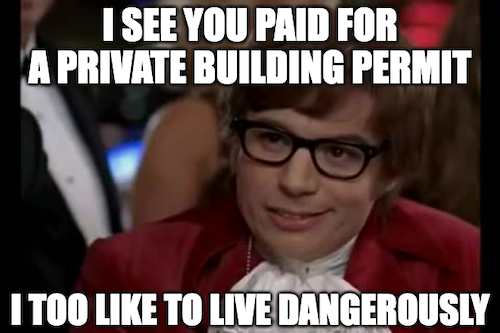
SB1241, sponsored by Shawnna Bolick (R-2), would privatize the building permit review process and ban cities and counties from rejecting private permits or charging additional fees for them. This is tailor-made for bad actors and misuse. Private companies, unlike the city, have a financial incentive to tell builders what they want to hear instead of conducting an impartial evaluation that considers key safety and building standards. The bill contains no conflict-of-interest provisions banning those with business or family relationships from conducting reviews, nor does it set any qualifications for the third parties hired to produce permits. Scheduled for Senate Regulatory Affairs and Government Efficiency Committee, Wednesday. OPPOSE.
SB1280, sponsored by David Farnsworth (R-10), would ban Arizona Game and Fish from transporting Mexican gray wolf puppies into Arizona or using public resources for that transportation. Mexican gray wolves are a protected species, the most endangered wolf subspecies in the world, and belong in our ecosystem. The transport of puppies helps support genetic diversity and recover the species. Why should imperiled native wildlife have to make way for private profit? Scheduled for Senate Natural Resources Committee, Tuesday. OPPOSE.
SB1288, sponsored by Tim Dunn (R-25), is a copy of a failed bill from last year that would allow developers to claim a 100-year water supply based on outdated models (some over 20 years old) and to build in areas with insufficient water. Arizona has less water now than it did 20 years ago. It's time developers accepted that fact instead of trying to destroy important consumer protections in the Groundwater Management Act and pump more water than they're entitled to. Scheduled for Senate Natural Resources Committee, Tuesday. OPPOSE.
SB1439, sponsored by Jake Hoffman (R-15), is subject to a striker that would create a special license plate for Charlie Kirk. Arizona already has a whopping 109 special plates. The horrific way Kirk was killed does not excuse the combative, incendiary, racist and sexist behavior around which he constructed his public work. Each plate sold generates $17 to financially benefit a group; it's likely this one would fund Turning Point USA. Scheduled for Senate Government Committee, Wednesday. OPPOSE.
HB2167, HB2168, and HB2169, sponsored by Lupe Diaz (R-19), are related bills that would stop Arizona's attorney general from filing a “public nuisance action” or penalize her for doing so. Benson residents are suing to stop an aluminum smelting plant from being built in the middle of their community and have asked AG Mayes to intervene; she says nuisance law (which she famously used against Saudi company Fondomonte) is the strongest tool she has to help them. Diaz supports the smelting plant. All three bills are scheduled for House Land, Agriculture & Rural Affairs Committee, Monday. OPPOSE.
HB2331, sponsored by David Marshall (R-7), is subject to a striker that would require 85% of the state's public power generation to be from fossil fuels. The Sierra Club warns, "This also appears to infringe on the constitutional authority of the Arizona Corporation Commission as it affects ratemaking." Scheduled for House Natural Resources, Energy & Water Committee, Tuesday. OPPOSE.
HB2388, sponsored by Teresa Martinez (R-16), would dedicate an unspecified amount of state tax money for a study on "the economic benefits of small modular reactors and data centers in Arizona" — a biased premise that by definition would promote nuclear-powered data centers. Arizonans of all political affiliations are pushing back hard against more data centers in our communities, not just because they use so much energy, but also for their excessive land and water usage. Scheduled for House Rural Economic Development Committee, Thursday. OPPOSE.
HB2389, sponsored by Teresa Martinez (R-16), would let a power company replace or add to a power plant without examining the environmental impact of their plans. Scheduled for House Natural Resources, Energy & Water Committee, Tuesday. OPPOSE.
HB2400, sponsored by Julie Willoughby (R-13), would create a summer "fuel tax holiday," directly harming our roads. When the legislature tried to suspend fuel taxes in 2022, ADOT said doing so would drain $540 million a year from road infrastructure projects. Arizona has some of the lowest gas taxes in the nation, and for decades, the legislature has been raiding them to pay its other bills. Arizona has the third-worst maintained highways in the nation with only 35% of our pavement in good condition. The buying power of Arizona’s gas tax (which hasn't gone up in decades) has dropped by 48%, and repairing our roads to last another 25 years would require a jaw-dropping $30 billion. Scheduled for House Natural Resources, Energy & Water Committee, Tuesday. OPPOSE.
 Joanna Allhands, The Arizona Republic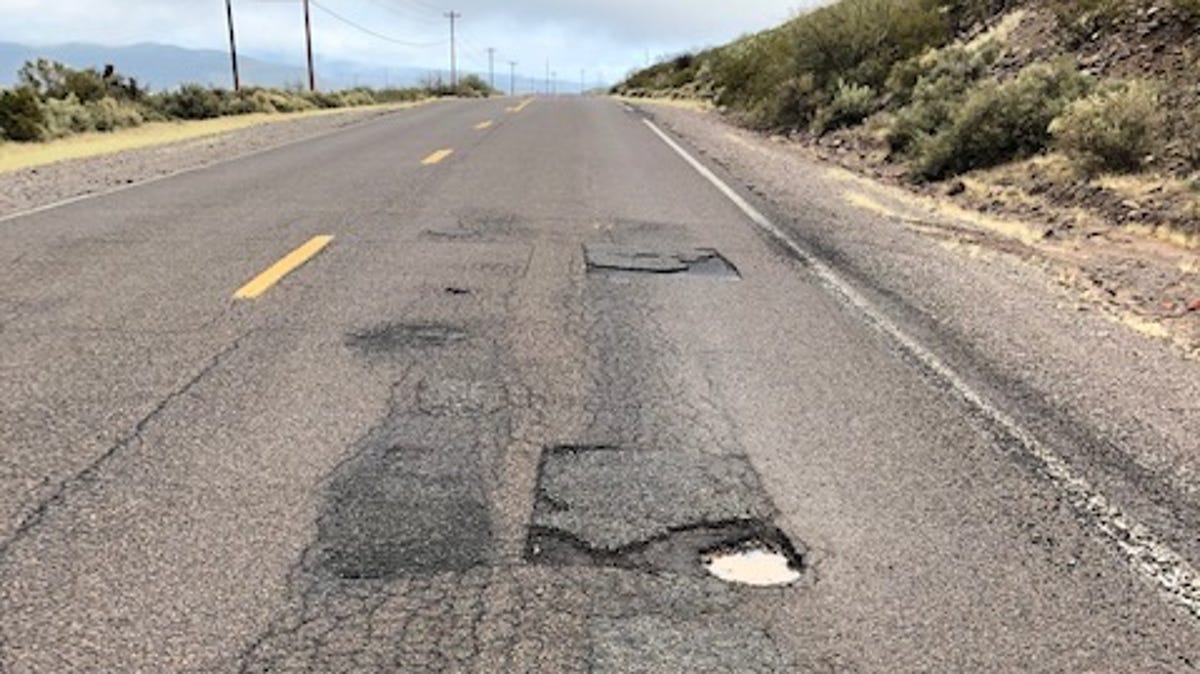
HB2452, sponsored by Justin Wilmeth (R-2), would require counties with a population of 125,000+ to designate sufficient land for the construction and operation of data centers, data center facilities and small modular reactors — presumably on the premise of peppering our state with nuclear-powered data centers. Arizonans of all political affiliations are pushing back hard against more data centers in our communities due to their excessive land, energy and water usage. This bill flies in the face of voter wishes. Scheduled for House Artificial Intelligence & Innovation Committee, Thursday. OPPOSE.
HB2494, sponsored by James Taylor (R-29) would ban counties from regulating whether solar, wind, gas and nuclear power generating plants are built if the state has already studied their environmental impact. Why are our state lawmakers against oversight? Scheduled for House Natural Resources, Energy & Water Committee, Tuesday. OPPOSE.
HB2696, sponsored by Julie Willoughby (R-13), would require the Arizona Commerce Authority to use "all available resources" to reduce gas prices. Our state lawmakers have been busy attacking light rail, obstructing solar power, and doing everything they can to artificially prop up gas cars and block other forms of transportation. This myopic hyperfocus on gasoline will not only increase air pollution and worsen public health, but it willfully ignores the fact that we could choose to make transportation affordable if we actually wanted to. Scheduled for House Natural Resources, Energy & Water Committee, Tuesday. OPPOSE.
HB2592, sponsored by Justin Wilmeth (R-2), would require every state agency to try to incorporate AI into its everyday operations. Agencies wouldn't be allowed to regulate its use without the legislature's express permission. Blindly trusting AI in this way carries serious risk. In just the past year, AI has made racist and anti-semitic remarks, wiped out a corporate database and lied about it, helped plan a politically motivated assault, and offered to write a teen's suicide note. These are just a few examples. We shouldn't be using AI without some serious oversight, and we definitely shouldn't be using it to replace state employees. Scheduled for House Artificial Intelligence & Innovation Committee, Thursday, 1/29 (previously held). OPPOSE.

HB2795, sponsored by Michael Carbone (R-25), would ban counties from regulating the siting of small modular nuclear reactors in any way if the reactors have been federally approved. We're sure we don't have to explain why blindly trusting our current federal government to site nuclear reactors in our communities is an unwise idea! Scheduled for House Natural Resources, Energy & Water Committee, Tuesday. OPPOSE.
HB2903, sponsored by Steve Montenegro (R-29), would ban the state from requiring banks to consider social or environmental values when lending. This is something that Arizona is not requiring. The idea appears driven by a panic that society will hold extremists accountable for their actions. See our explainer on ESG. Scheduled for House Commerce Committee, Tuesday. OPPOSE.
HB2955, sponsored by Julie Willoughby (R-13), would waive Arizona's requirement for clean-burning fuel in summer. State law currently requires a special summer blend of gasoline to help control ozone and other air pollutants in metro Phoenix, which consistently ranks among the regions with the worst air quality in the country. Scheduled for House Natural Resources, Energy & Water Committee, Tuesday. OPPOSE.
Public Safety
🐟 SB1065, sponsored by Wendy Rogers (R-7), would add $3.64 million in state dollars to the existing hyperbaric oxygen therapy fund for military veterans, currently comprised of private donations and grants. Hyperbaric oxygen therapy is mostly used to treat decompression sickness from scuba diving, but is sometimes used for serious infections. It's also very expensive, making it attractive to fraudsters. In 2018, a Florida-based company was forced to repay over $20 million to the federal government for medically unnecessary and unreasonable hyperbaric oxygen therapy billed to Medicare. In 2022, lawmakers wrapped an identical provision into the state budget; then-Gov. Ducey used his first-ever line-item veto on it. Scheduled for Senate Appropriations, Transportation and Technology Committee, Tuesday (previously passed Senate Military Affairs & Border Security Committee). OPPOSE.
HB2369, sponsored by Teresa Martinez (R-16), would require photo radar tickets to be signed by a judge. This is not currently required (it's the ticketed person's responsibility to prove they are not the one in the photo). Nobody likes a ticket, but Arizona has had speed cameras since 1987 for good reason. This attack on photo radar would mean more dangerous roads and more collisions. Scheduled for House Transportation & Infrastructure Committee, Wednesday. OPPOSE.
HB2773, sponsored by Khyl Powell (R-14), would ban Arizona and its cities and counties from assisting the International Criminal Court. This court is narrowly focused on four offenses: genocide, crimes against humanity (including murder, rape, enforced disappearances, torture and deportation), war crimes, and aggression against another country. It is a court of last resort, meant to complement, not replace, national courts. This bill may be intended to shield ICE from any future responsibility for its actions; its abuses are well documented, and some are already saying they constitute crimes against humanity. Scheduled for House Government Committee, Wednesday. OPPOSE.
HB2811, sponsored by John Gillette (R-30), would criminalize attempts to “obstruct” ICE officers’ arrests. The bill is so vague as to be potentially unconstitutional; speaking loudly, yelling, or following ICE agents as they drive around could suddenly land peaceful protesters a minimum sentence of 6 months in prison. Meanwhile, the racial profiling by ICE agents, both in Arizona and across the country, is well documented. ICE has detained hundreds of US citizens and has killed at least 9 people so far in 2026. Scheduled for House Public Safety & Law Enforcement Committee, Monday. OPPOSE.
Voting Rights, Elections & Direct Democracy
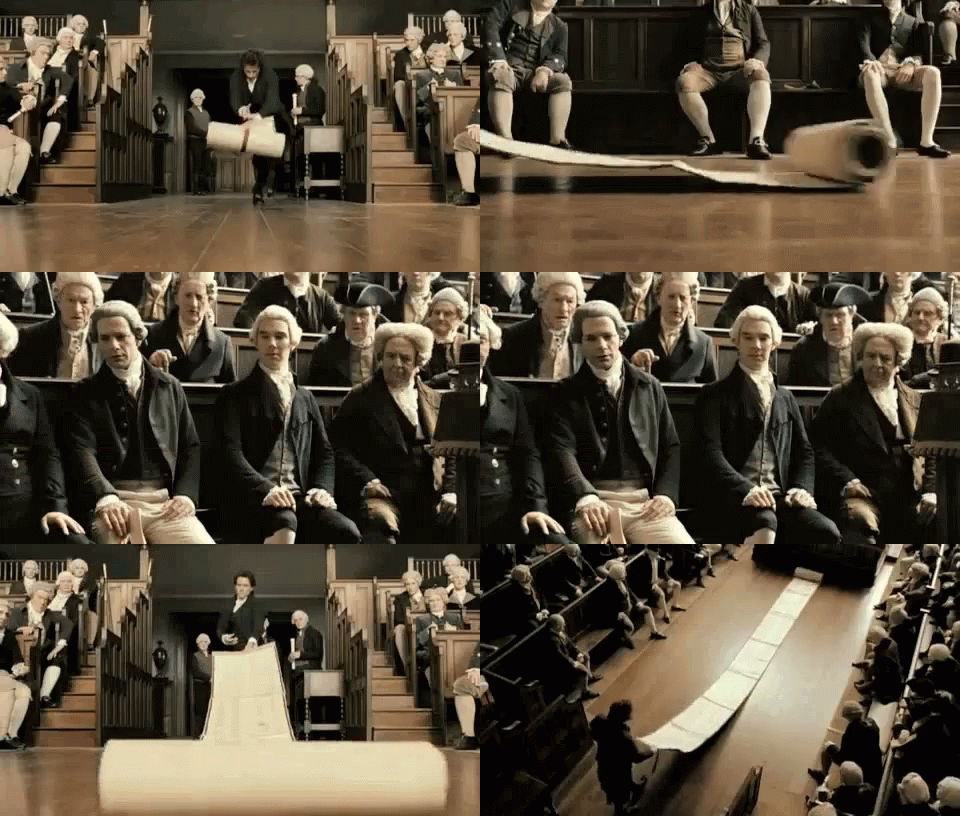
SCR1011, sponsored by JD Mesnard (R-13), is a copy of a failed bill from last year that would add Arizona’s name to a list of states asking Congress to call an Article V constitutional convention to amend the US Constitution and create Congressional term limits. This is dangerous; the Constitution sets absolutely no rules for an Article V convention, and there's no way to limit one to any stated intent. Just as the 1787 convention went far beyond its stated purposes, this bill could result in a "runaway convention" and a whole new form of government — a terrifying prospect given our current federal regime. This would not go to the governor or the voters for approval, but would be transmitted directly to Congress. Scheduled for Senate Regulatory Affairs and Government Efficiency Committee, Wednesday. OPPOSE.
🐟 HB2745, sponsored by Tony Rivero (R-27), is a copy of a bill vetoed last year that would allow the legislature to arrest anyone who refuses to comply with a subpoena they issued — including another elected official — and physically haul them before a committee. In 2024, some far-right legislators convened a committee hearing to call for the impeachment of Attorney General Kris Mayes for protecting Arizonans from legislative overreach, which Mayes refused to attend, saying it made "a mockery of real legislative oversight." Scheduled for House Government Committee, Wednesday. OPPOSE.
HB2805, sponsored by John Gillette (R-30), would require the state to allow online signatures via E-Qual for nomination petitions for local candidates for various boards, including school board, community college board, and water conservation district board. Scheduled for House Federalism, Military Affairs & Elections Committee, Wednesday. SUPPORT.

2026 Session Timeline
Monday 2/2: Senate bill introduction deadline
Monday 2/9: House bill introduction deadline
Friday 2/20: Last day for a bill to get out of committees in its originating house
Monday 2/23: Crossover Week begins (most committee hearings are suspended)
Friday 3/27: Last day for a bill to get out of committees in its crossover house
(and the last day to use RTS until a budget drops)
Tuesday 4/21: 100th Day of Session (the stated end goal; can be changed)
Tuesday 6/30: Last day to pass a constitutionally mandated state budget
Committees & Contacts
Here's a handy, freshly updated list of lawmaker contact info, committee chairs and assignments.
CEBV Action Linktree
Want other ways to take action? Need to stay informed? Looking for our social media, inspiration, or self-care tips? Look no further than our Linktree.


Congratulations, you made it to the end! 🎉 We invite you to join us in setting down the horror and overwhelm of the world for just a moment. Take a deep breath with us, and know you are not alone.

Comments ()