
January 26, 2026
A tsunami of bills is headed our way. But we've got you: here's what you can do.

This week's report is long, and the horrors of our world are ever-present, so we'll keep this part short.
It seems our Republican-controlled legislature is taking a page from an age-old authoritarian playbook, trying to "flood the zone" with horrific chaos and overwhelm the common-sense majority. We're tracking 55 bills in committees this week, and they're almost universally awful.

We are here to help you make sense of their chaos. We believe the public holds real power on the local level — including the ability to stop these attempts to force our state toward authoritarianism — and we're committed to working toward a government that serves all of us. See "What Can I Do?" below for concrete actions you can take to help shove our state back onto the rails.
The volume here will be heavy for the next few weeks, but it won't be forever: these committee hearings stop at the end of March. After that, our advocacy will shift to more direct, targeted outreach. We can do this!

⏰ If you have 5 minutes: Contact your own senator and representatives directly to OPPOSE voting rights attack ballot measures SCR1001 and HCR2001. We expect these duplicate bills to receive votes in the full House and Senate early in the week, after which the measure would bypass the governor and go directly to our November ballot.
⏰⏰ If you have 10 minutes: Use Request to Speak to OPPOSE SB1138. See "Spotlight" below for more details.
⏰⏰⏰ If you have 15 minutes: Also use Request to Speak to OPPOSE the other ballot measures moving this week: SCR1003, SCR1006, and HCR2016. See "Ballot Referrals" below for more information.
⏰⏰⏰⏰ If you have 20 minutes: Also use Request to Speak to SUPPORT the single good bill moving this week, HB2641. Search this Weekly for the bill number to find more info.
⏰⏰⏰⏰⏰ If you have 50 minutes: Use Request to Speak on all other bills being heard in committees this week.
⏰⏰⏰⏰⏰⏰ If you have 60 minutes: Join us on Zoom for our CEBV Happy Hour conversation, packed with political analysis, conversation and community. Happy Hour meets every Sunday at 4 PM through the end of legislative session. We're looking forward to seeing you! Sign up in advance here.

Stop AI License Plate Readers
If you drive a car, as so many Arizonans do, you're subject to the scourge that is automated license plate reader (ALPR) technology. Paid for by our tax dollars, these black pole-mounted cameras lurk at intersections to track us without our consent, snapping photos as we drive by. ALPR company Flock uses data from these cameras to create an enormous law enforcement surveillance database without our consent or any judicial warrant. The cameras are also known to be illegally monitored by ICE, even when ICE doesn't get permission from cities or police departments.
 Kevin Collier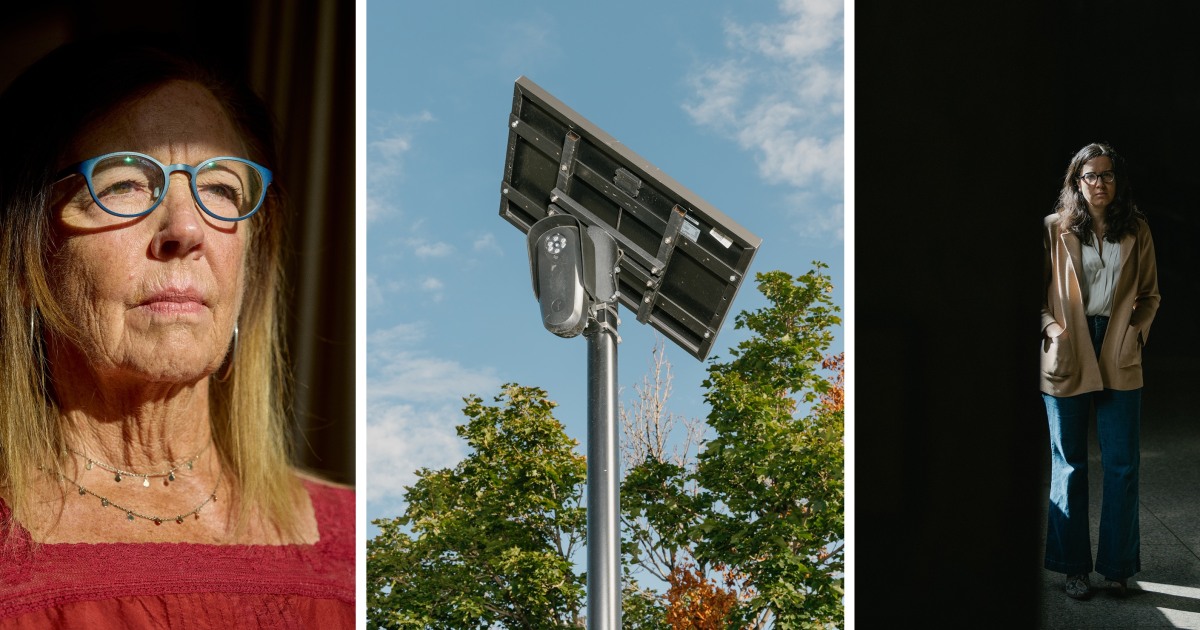
SB1138, up for consideration in a legislative committee this week, would cement this misuse into state law by granting blanket statewide permission for agencies to use ALPR information without a judicial warrant. Its vagueness fails to regulate who can access these cameras, how long the data is kept, and whether ICE needs a judicial warrant to access it so these cameras don't open the door to greater misuse.
Arizonans have been demanding regulation of the blatant privacy violations of ALPR, and cities are beginning to wake up. In October, Sedona voted unanimously to cancel its contract with Flock; in December, Flagstaff unanimously followed suit. But over 65 law enforcement agencies in Arizona still use ALPR, including Arizona DPS; the cities of Phoenix, Tucson, Scottsdale, Prescott and Casa Grande; four county sheriff's offices, Maricopa, Pima, Yavapai and Navajo; and the University of Arizona. By allowing the continued use of ALPRs without any due process, SB1138 puts Arizonans at risk.

This bill would allow cities and police to continue selling our privacy to a company that is sacrificing honesty and integrity in service of the almighty dollar. Other states are passing ALPR laws that protect our privacy, and Arizonans regardless of political affiliation overwhelmingly want ALPRs out of our state. Lawmakers must roundly reject SB1138.
SB1138 will be heard in the Senate Appropriations, Transportation and Technology Committee on Tuesday. Contact the members of the committee as below to OPPOSE the bill. We recommend making phone calls. You'll almost certainly get a polite assistant who will efficiently take your information. If you can't bring yourself to call, a bulk email is fine, though not as effective. (Note the bill's sponsor, Mark Finchem, sits on this committee.)
David Farnsworth (R-10), Chair • dfarnsworth@azleg.gov • 602-926-3387
John Kavanagh (R-3), Vice Chair • jkavanagh@azleg.gov • 602-926-5170
Hildy Angius (R-30) • hangius@azleg.gov • 602-926-5051
Mark Finchem (R-1) • mfinchem@azleg.gov • 602-926-3631
Vince Leach (R-17) • vleach@azleg.gov • 602-926-3694
Carine Werner (R-4) • cwerner@azleg.gov • 602-926-3673
Lela Alston (D-5), Ranking Member • lalston@azleg.gov • 602-926-5829
Mitzi Epstein (D-12) • mepstein@azleg.gov • 602-926-4870
Brian Fernandez (D-23) • bfernandez@azleg.gov • 602-926-3098
Lauren Kuby (D-8) • lkuby@azleg.gov • 602-926-4124

Lawmakers are advancing these measures through committees this week, with the ultimate goal of placing them on our November ballot. Unlike regular bills, these cannot be vetoed.
SCR1003, sponsored by Wendy Rogers (R-7), would exempt "virtual currency" from property taxation. Cryptocurrency is an environmentally destructive bubble; even the Wall Street Journal has said it should be banned, calling it “a gambling contract with a nearly 100% edge for the house.” Scheduled for Senate Finance Committee, Monday. OPPOSE.
SCR1006, sponsored by John Kavanagh (R-3), is an anti-LGBTQ+, anti-student "bathroom ban" and "pronoun ban" that would go directly to our ballot. The bill would ban teachers from using a student’s chosen pronouns without written parental permission if they differ from the student's biological sex, and would ban trans kids from using the school bathrooms, changing facilities and “sleeping quarters” that align with their gender identities. Trans kids wouldn’t be able to use any school facilities at all without undue scrutiny of their bodies, which the bill calls a "reasonable accommodation." Anyone who “encounters” a trans person in a bathroom could file suit against public schools. These Republican-led bills are worsening LGBTQ+ Arizonans’ struggle to simply exist by creating discrimination, legal red tape, and mental and emotional distress. The governor has previously vetoed these concepts. Scheduled for Senate Government Committee, Wednesday. OPPOSE.
HCR2016, sponsored by Rachel Keshel (R-17), is a copy of a failed bill from last year that would ban voting centers in Arizona and return the state to precinct-based voting, requiring under 1,000 registered voters at each precinct. Every voter would be assigned a neighborhood polling location; the ballots of voters who go to the wrong polling place would be thrown out. Before Arizona's shift to our current voting center model, our elections were plagued by long lines and technology issues, and tens of thousands of people's votes were never counted for being cast at the wrong location. This ridiculous, deeply flawed proposal would return Arizona's elections to those days. Scheduled for House Federalism, Military Affairs & Elections Committee, Wednesday. OPPOSE.

Use RTS to weigh in, and refer to the information, links and talking points we include here to craft your own comments to lawmakers.
If you see this little fish next to a bill, it indicates a failed or previously vetoed idea — something intended as "bait" to artificially drive up the governor's veto count and bolster stinky talking points.
"Any man who puts his intelligence up against a fish and loses had it coming." — John Steinbeck
Affordability
🐟 SB1042, sponsored by Wendy Rogers (R-7), is a copy of a vetoed bill from last year that would allow the state treasurer and state retirement systems to invest up to 10% of their public monies in "virtual currency." The volatility and risk of cryptocurrency makes it a terrible retirement investment. Crypto is speculative, has no intrinsic value, and is not backed by any regulatory mechanism. It's 5 to 10 times as volatile as the US stock market; even the most aggressive investment advisors recommend it make up less than 10% of a portfolio. This bill would gamble with our tax dollars and Arizonans’ lifetime savings. Scheduled for Senate Finance Committee, Monday. OPPOSE.
🐟 SB1043, sponsored by Wendy Rogers (R-7), is a copy of a vetoed bill from last year that would allow the state to accept cryptocurrency as a method of payment. Crypto is highly financially risky, 5 to 10 times as volatile as the US stock market. This move would put state government at risk of massive financial losses. Scheduled for Senate Finance Committee, Monday. OPPOSE.
🐟 SB1044, sponsored by Wendy Rogers (R-7), would exempt "virtual currency" from property taxation. Cryptocurrency is an environmentally destructive bubble and a playground for the mega-rich. Even the Wall Street Journal has said crypto should be banned, calling it “a gambling contract with a nearly 100% edge for the house.” Scheduled for Senate Finance Committee, Monday. OPPOSE.

SB1050, sponsored by Wendy Rogers (R-7), would require Arizona State Parks to give free lifetime state park passes to veterans. The state currently offers a 50% discount for active-duty and retired military, free admission for disabled veterans, and free admission for veterans on Veterans Day. The cost to the parks system for mandating this much more expansive discount is unknown at present, but last year, the legislature cut the State Parks budget by $1.6 million, roughly 10% of the agency's budget. Also last year, State Parks raised their fees; the cost of the cheapest annual pass jumped from $75 to $200. Free year-round admission for some is nice, but our state parks system should remain accessible for everyone. As the parks have already been forced to raise admissions due to lack of funds, giving preferential freebies to any group will penalize us all. Scheduled for Senate Government Committee, Wednesday. OPPOSE.
SB1115, sponsored by Carine Werner (R-4), would ban employees of Arizona's Medicaid system, AHCCCS, from working remotely. This ban would cost the state additional money and could be very difficult to implement. Four in 10 state employees now work remotely either full-time or hybrid, saving the state $32 million annually in rent (as it sells or demolishes excess office space) and an additional $58.6 million in deferred maintenance since 2021. Scheduled for Senate Health & Human Services Committee, Wednesday. OPPOSE.
SB1142, sponsored by Shawnna Bolick (R-2), would make Arizona one of the first states in the nation to irresponsibly sign up for Trump’s federal voucher scam. This is designed as a tax giveaway for the rich; like Arizona’s vouchers, it's designed to benefit wealthier students already in private schools. The federal voucher program has no cap, meaning it could funnel billions of dollars a year to private schools already receiving state tax dollars via state vouchers, with zero accountability to taxpayers. Scheduled for Senate Finance Committee, Monday. OPPOSE.
SB1221, sponsored by JD Mesnard (R-13), would require the Arizona Department of Revenue to notify the chairs of the Senate Finance Committee and the House Ways and Means Committee before creating tax forms that "adversely affect taxpayers prospectively" and to testify at any committee hearing on the topic. This is politically motivated sour grapes. In November, Gov. Hobbs issued an executive order directing ADOR to prepare tax forms early, enabling quick action if lawmakers approved her tax plan. Last week Hobbs vetoed a more expensive tax plan authored by the sponsor (who also chairs the Senate Finance Committee), who made no secret of his hurt feelings. Scheduled for Senate Finance Committee, Monday. OPPOSE.
🐟 SB1236, sponsored by John Kavanagh (R-3), and HB2796, sponsored by Michael Carbone (R-25), are copies of a vetoed bill from last year that would require the staff of Arizona's Medicaid program, AHCCCS, to regularly check to see if recipients had recent lottery or gambling winnings. The bill would also make it more difficult for recent hospital patients to qualify for AHCCCS. Arizona's AHCCCS eligibility process already has perfectly adequate income checks. Our state does not need this ridiculous piece of legislation that assumes all Medicaid recipients are out gambling and do not deserve to have health care. SB1236 is scheduled for Senate Health & Human Services Committee, Wednesday. HB2796 is scheduled for House Health & Human Services Committee, Monday. OPPOSE.
HB2165, sponsored by Lupe Diaz (R-19), would make all Arizona state parks free for military and their guests. The state currently offers a 50% discount for active-duty and retired military, free admission for disabled veterans, and free admission for veterans on Veterans Day. The cost to the parks system for mandating this much more expansive discount is unknown at present, but last year, the legislature cut the State Parks budget by $1.6 million, roughly 10% of the agency's budget. Also last year, State Parks raised their fees; the cost of the cheapest annual pass jumped from $75 to $200. Free year-round admission for some is nice, but our state parks system should remain accessible for everyone. Scheduled for House Federalism, Military Affairs & Elections Committee, Wednesday. OPPOSE.
HB2786, sponsored by Justin Olson (R-10), would exempt the leasing or renting of textbooks from sales tax, at an as-yet unknown cost to the state. Republican lawmakers have for decades systematically slashed state revenues, increasing tax carve-outs from $16 billion in 2014 to over $30 billion in 2025. These tax cuts hurt Arizona’s ability to properly fund state services. Our budget is in the bottom 5 states in per capita spending nationally, and our schools are funded at 48th in the country. Scheduled for House Ways & Means Committee, Wednesday. OPPOSE.

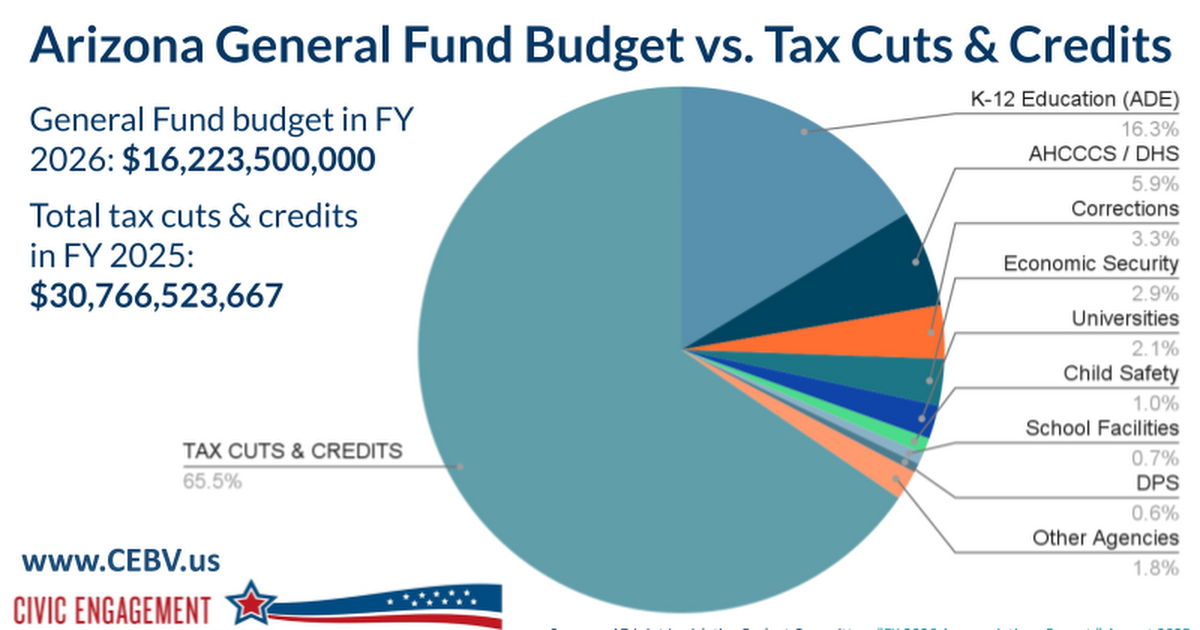
🐟 HB2792, sponsored by Michael Carbone (R-25), would exempt some veterans and their spouses from state property taxes. Using a revolving cast of sympathetic recipients, Republican lawmakers have for decades systematically slashed state revenues, increasing tax carve-outs from $16 billion in 2014 to over $30 billion in 2025. These tax cuts hurt our ability to properly fund state services, especially because of a built-in one-way ratchet: the legislature can reduce taxes with a simple majority but needs a two-thirds supermajority to raise them. As a result, our budget is one of the smallest per capita in the US, and our public schools are funded at 48th in the country. We cannot afford to hand out tax cuts like candy. Scheduled for House Ways & Means Committee, Wednesday. OPPOSE.
Discrimination
🐟 SB1018, sponsored by Janae Shamp (R-29), would add "Sharia law" to a list of legal systems banned in Arizona. This hysteria is largely the work of anti-Muslim hate groups and is intended to demonize the Islamic faith. Such a ban serves no legal purpose; its only purpose is to scapegoat and ostracize our Muslim neighbors. Attacks like this bill, along with others from our Islamophobic federal administration, are already placing our Muslim neighbors in grave danger: discrimination and attacks in the US against Muslims are soaring to record numbers. Scheduled for Senate Federalism Committee, Monday. OPPOSE.
🐟 SB1051, sponsored by Wendy Rogers (R-7), and HB2689, sponsored by Ralph Heap (R-10), are copies of a vetoed bill from last year that would require Arizona hospitals to ask if patients are legally in the country. This would turn hospitals into border checkpoints and doctors into immigration police, and demonize anyone who "looks like an immigrant" (i.e., has brown skin). Besides lacking basic human decency, the bill could scare citizens and immigrants alike away from seeking treatment, putting lives and public health at risk. Studies show immigrants have lower health care costs than citizens. Undocumented immigrants are also ineligible for Medicare, Medicaid and the Affordable Care Act, even though they subsidize health care for citizens by paying taxes to support those systems. SB1051 is scheduled for Senate Health & Human Services Committee, Wednesday. HB2689 is scheduled for House Health & Human Services Committee, Monday. OPPOSE.
As Arizona’s top law enforcement officer, I want to remind all federal agents of my expectations: respect the law, do not mask, deescalate violence when possible and stay OUT of schools, hospitals, and churches.
— AZ Attorney General Kris Mayes (@azagmayes.bsky.social) 2026-01-22T20:11:01.046Z
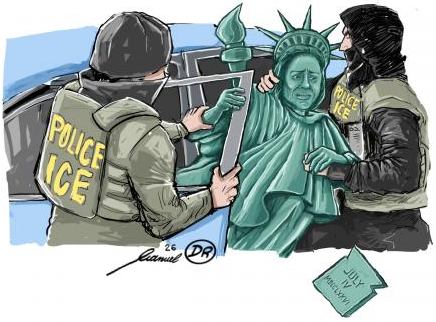
🐟 SB1055, sponsored by Wendy Rogers (R-7), is a vetoed idea from last year that would require local law enforcement to "immediately" notify ICE when an undocumented immigrant is arrested in a routine interaction like a traffic stop or jail booking, even if the charges against them haven’t been proven. Many local communities are currently pushing to curtail ICE partnerships with local police due to the glut of untrained, undisciplined federal agents who are terrorizing communities through illegal and excessive uses of force, often against US citizens. By empowering a lawless agency, this bill would make the public less safe. It could also make local police officers less safe: the public increasingly holds a negative view of ICE (a recent poll has 61% saying ICE operations are "too tough" in their conduct), which could be transferred to local officers. Scheduled for Senate Military Affairs & Border Security Committee, Monday. OPPOSE.
🐟 SB1075, sponsored by Mark Finchem (R-1), is a copy of a vetoed bill from last year that would ban the sale of public or private land in Arizona to a "hostile foreign entity" without majority approval of both chambers of the legislature. Last year's measure raised concerns about racial profiling, and the legislature's nonpartisan rules attorney warned lawmakers that it could violate the US Constitution. The sponsor, who is linked to hate groups, routinely spouts conspiracy theories and anti-semitic, xenophobic and racist views. Scheduled for Senate Federalism Committee, Monday. OPPOSE.
🐟 SB1095, sponsored by Mark Finchem (R-1), would ban gender-affirming surgeries or procedures, puberty blockers and hormone therapy for minors, making them acts of unprofessional conduct (which means doctors would lose their licenses). It would also ban referrals, which means a doctor could not even send their patient outside the state for needed care. A similar bill from 2023 did not even receive a hearing. Scheduled for Senate Judiciary and Elections Committee, Wednesday. OPPOSE.
🐟 SB1368, sponsored by Janae Shamp (R-29), is a vetoed concept from last year that would ban people from using food stamp funds on soda, energy drinks, candy, snack foods of "minimal nutritional value," and prepared hot foods intended for immediate consumption. In addition to harming people who are unhoused or can’t prepare food for themselves, this bill ostracizes the poor. People should be allowed to buy a Coke on the way home from their crappy job, or treat their child to a candy bar or pack of gum to celebrate getting an A on a test. Poor people should enjoy simple luxuries too and not be turned into a new underclass of grocery shoppers. Last year's vetoed bill included only soda. Scheduled for Senate Health & Human Services Committee, Wednesday. OPPOSE.
HB2060, sponsored by Rachel Keshel (R-17), would ban district and charter schools, community colleges and state universities, and their employees acting in an official capacity — but not voucher-funded private schools — from "encouraging or facilitating abortions." This is something that just does not happen. This ridiculous bill is a solution in search of a problem, demonizes educators, and wastes time and taxpayer dollars. Scheduled for House Government Committee, Wednesday. OPPOSE.

HB2112, sponsored by Teresa Martinez (R-16), would create a specialty license plate to fund Turning Point USA. Arizona already has a whopping 109 special plates, with a portion of each purchase funding a different group. Not only does having so many plates create difficulties for law enforcement, but some plates raise money for biased political groups, such as the hate group Alliance Defending Freedom and the anti-abortion Arizona Life Coalition. Turning Point would be no exception. This hard-right organization exploits teens with the intention of dragging our society backwards into authoritarian, patriarchal Christian supremacy. The already well-funded organization would make $17 off each plate sold. If people want to donate money directly to this kind of group, that's one thing, but the state shouldn't be enabling it. Scheduled for House Transportation & Infrastructure Committee, Wednesday. OPPOSE.
🐟 HB2135, sponsored by Michael Way (R-15), would allow anyone to sue if public schools violate a state or federal law banning diversity, equity and inclusion. This would lead to endless frivolous claims of “reverse racism.” Though the Trump administration has dropped its anti-DEI executive order after it was enjoined by the courts, our current state Supt. Horne says he will continue to push schools to dump DEI regardless of whether federal funding is on the line. Scheduled for House Judiciary Committee, Wednesday. OPPOSE.
🐟 HB2364, sponsored by Rachel Keshel (R-17), would make it a felony to order or sell abortion drugs. These drugs have a better safety record than penicillin or Viagra; they’re safe and effective. Banning them would pose an undue burden on women, violating the recently voter-approved Prop 139, which cuckoos like the sponsor are hell-bent on undoing any way they can. Scheduled for House Judiciary Committee, Wednesday. OPPOSE.
HB2443, sponsored by Chris Lopez (R-16), would require commercial driver license applicants to speak English. Studies show no correlation between English proficiency and accidents involving commercial truck drivers; meanwhile, nearly 1 in 5 truck drivers is Latino, making them critical to the industry. This xenophobic bill will pull drivers off the highways, raising prices on all goods transported by truck in Arizona. (If you're wondering why groceries are so expensive, it doesn't help that a similar federal policy has pulled 6,000 truckers off the road nationwide.) Scheduled for House Transportation & Infrastructure Committee, Wednesday. OPPOSE.
HB2446, sponsored by Chris Lopez (R-16), would require commercial truck drivers to speak English, and roadside inspections to be conducted in English only without interpreters. Studies show no correlation between English proficiency and accidents involving commercial truck drivers; meanwhile, nearly 1 in 5 truck drivers is Latino, making them critical to the industry. This xenophobic bill will lead to unfair targeting of Latinos by law enforcement officers, and pulling drivers off the highways will raise prices on all goods transported by truck in Arizona. (If you're wondering why groceries are so expensive, it doesn't help that a similar federal policy has pulled 6,000 truckers off the road nationwide.) Scheduled for House Transportation & Infrastructure Committee, Wednesday. OPPOSE.
HB2532, sponsored by Matt Gress (R-4), would strip money from the Housing Trust Fund, which is meant to help promote solutions for affordable housing, and spend it on a performance audit of the state and local programs and services in Arizona that help individuals experiencing homelessness. Experts say our state's homelessness crisis is about to surge again thanks to federal defunding of successful programs. The sponsor has a history of pushing hostile bills that make it a lot harder to be homeless, including trying to stop cities from housing homeless people in hotels. Scheduled for House Appropriations Committee, Wednesday. OPPOSE.
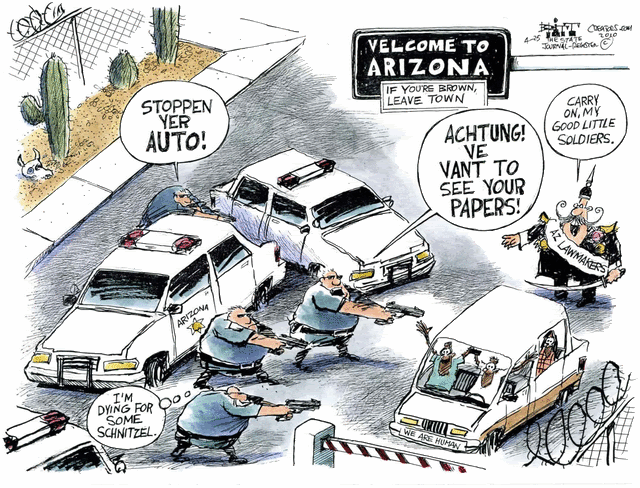
HB2806, sponsored by John Gillette (R-30), is a wide-ranging anti-immigrant bill that would require Arizona to verify citizenship using a flawed federal system for everything from voter registration to health care and driver licenses. The bill's effects range from unnecessary (the state already requires proof of citizenship for getting a driver license) to actively harmful (using this system increases the risk of erroneous purges, disenfranchising eligible voters). The sponsor has a history of shocking racist, xenophobic comments, including calling for the execution of a Democratic congresswoman (who happens to be brown) and calling Muslims "f***ing savages" and "terrorists" from "sh*t hole" countries. Scheduled for House Federalism, Military Affairs & Elections Committee, Wednesday. OPPOSE.
Energy, Water & Climate
🐟 SB1176, sponsored by Warren Petersen (R-14), is a copy of a failed bill from last year that would allow the storage of storm water to be used for replenishment credits. This gives credits for water that generally would be recharged anyway, and would likely result in a net increase in pumping. Scheduled for Senate Natural Resources Committee, Tuesday. OPPOSE.
🐟 SB1197, sponsored by Tim Dunn (R-25), is a copy of a vetoed bill from last year that would allow irrigated grandfather rights in a subsequent active management area like Douglas or Willcox to be sold or transferred, leading to more groundwater pumping. Like many other rural basins, Douglas relies solely on groundwater. It pumps out 3 times as much water as it returns to the basin, and its prospects for finding additional water resources are slim. Increasing pumping in this area is a recipe for disaster. Scheduled for Senate Natural Resources Committee, Tuesday. OPPOSE.
HB2055, sponsored by Gail Griffin (R-19), would dedicate state money to brackish groundwater recovery projects. Though Arizona has plenty of reasons to want new water — prolonged drought, the drying Colorado River, increased demand, and human-caused climate change — more groundwater pumping is not the answer, particularly not when that water sits nearly a quarter-mile below the surface and produces toxic brine as a byproduct. Brackish groundwater is still groundwater, and at this depth is essentially non-renewable. Scheduled for House Natural Resources, Energy & Water Committee, Tuesday. OPPOSE.
HB2056, sponsored by Gail Griffin (R-19), would require the state to spend time and money studying whether it can desalinate brackish groundwater. Water experts call the use of brackish groundwater "a mirage," pointing out the laundry list of environmental, physical, financial, technical, regulatory and legal barriers to its use. This bill is a waste of taxpayer dollars and a distraction from real solutions. Scheduled for House Natural Resources, Energy & Water Committee, Tuesday and House Appropriations Committee, Wednesday. OPPOSE.
HB2094, sponsored by Gail Griffin (R-19), appears to be a version of a failed bill from last year exempting specific proposed housing developments in Queen Creek and Buckeye from a building moratorium by citing 20-year-old groundwater supply models. This would benefit developers and could result in excessive groundwater pumping. The water that would be used for required replenishment of any water pumped as a result of this bill would come almost exclusively from the Colorado River, which is likely to face steep cuts in the near future. Scheduled for House Natural Resources, Energy & Water Committee, Tuesday. OPPOSE.
HB2328, sponsored by David Marshall (R-7), would force the City of Tucson to stop charging unincorporated customers more than those who live inside city boundaries. Tucson recently implemented higher rates for those outside city limits, at an average of an additional $6 per month. Serving these extended areas requires more infrastructure and costlier operations and maintenance, so it's reasonable to charge those customers more, even if a few rural residents who use large amounts of water don't think they should have to pay. Scheduled for House Natural Resources, Energy & Water Committee, Tuesday. OPPOSE.
HB2758, sponsored by Gail Griffin (R-19), would allow private water companies to transfer groundwater away from the area where Saudi company Fondomonte grows water-guzzling alfalfa for their cattle overseas. The bill comes in direct opposition to a county supervisor's pleas for more state regulation to protect groundwater. By removing the ban on groundwater transportation, this bill destroys the only state law that protects groundwater for the people, communities and industries in La Paz County that rely on it. Scheduled for House Natural Resources, Energy & Water Committee, Tuesday. OPPOSE.
HB2791, sponsored by Lupe Diaz (R-19), would make Arizona the first state in the nation to ban lab-grown meat. Other states simply require that the products be clearly labeled, but this bill would make the sale of lab-grown meat a class 5 felony, which carries a prison sentence of 18 months. The bill's supporters claim it is needed because it negatively affects cattle ranchers, and that billionaire Bill Gates and the World Economic Forum "have openly declared war on our ranching.'' The US Department of Agriculture and the Food and Drug Administration approved the sale of lab-grown chicken in 2023. Scheduled for House Land, Agriculture & Rural Affairs Committee, Monday. OPPOSE.
Public Safety
SB1019, sponsored by Janae Shamp (R-29), would ban cities from fluoridating their water. This defies decades of research and would cause tooth decay to rise, worsening public health. A real-world example: in 2011, Calgary, Canada eliminated fluoride from its water for cost reasons, but after tooth decay spiked, they reintroduced it last year. The sponsor says fluoridation "forces every Arizonan to ingest a chemical" and "amounts to mass medication," which is patently ridiculous. (Asked about chlorine, a toxic chemical that in low levels kills germs, being added to city water, she said that was "off topic.") Scheduled for Senate Government Committee, Wednesday. OPPOSE.
SB1054, sponsored by Wendy Rogers (R-7), would allow any Arizona resident or business to sue to try to void a city or county law passed with an emergency clause. These are already very difficult to pass; state law specifies emergency measures must be "necessary for the immediate preservation of the peace, health or safety of the city," and they require a three-quarters supermajority vote and mayoral approval. This bill would gut the ability of our communities to respond to a true emergency, a time when we cannot afford to entertain lawsuits. The sponsor has a long history of attacks on local control. Scheduled for Senate Government Committee, Wednesday. OPPOSE.
🐟 SB1065, sponsored by Wendy Rogers (R-7), would add $3.64 million in state dollars to the existing hyperbaric oxygen therapy fund for military veterans, currently comprised of private donations and grants. Hyperbaric oxygen therapy is mostly used to treat decompression sickness from scuba diving, but is sometimes used for serious infections. It's also very expensive, making it attractive to fraudsters. In 2018, a Florida-based company was forced to repay over $20 million to the federal government for medically unnecessary and unreasonable hyperbaric oxygen therapy billed to Medicare. In 2022, lawmakers wrapped an identical bill into the state budget; Ducey used his first-ever line-item veto on it. Scheduled for Senate Military Affairs & Border Security Committee, Monday. OPPOSE.
SB1138, sponsored by Mark Finchem (R-1), would essentially cement the misuse of automated license plate reader (ALPR) technology into state law, granting blanket statewide permission for federal agencies to use ALPR information without a judicial warrant. The bill's vagueness fails to regulate who can access these cameras, how long the data is kept, and whether ICE must have a judicial warrant to access it, opening the door to greater misuse. The ALPR company Flock uses data from these cameras to create an enormous surveillance database which law enforcement can access without our consent or any judicial warrant, and the data is known to be monitored by ICE, even when they don't have permission from cities or police departments. By partnering with ALPRs, cities and police are selling our privacy to a company that will sacrifice honesty and integrity for profit. Scheduled for Senate Appropriations, Transportation and Technology Committee, Tuesday. OPPOSE.

HB2003, sponsored by Nick Kupper (R-25), would drop the minimum age for getting a driver's permit to 15. Data from the Insurance Institute for Highway Safety shows this would increase both fatal crashes and accidents overall; the institute recommends a minimum permit age of 16 as a best practice. Teen drivers have crashes at nearly 4 times the rates of drivers ages 20+. Scheduled for House Transportation & Infrastructure Committee, Wednesday. OPPOSE.
🐟 HB2076, sponsored by Selina Bliss (R-1), is a copy of a failed bill from last year that would allow K-12 public and private schools to allow employees to carry firearms on school grounds. The school would have to notify law enforcement of how many (but not which) employees are carrying, ensure the employees have a certification from an ADE-approved list of training programs, and keep their names confidential, including from parents at the school. The bill also gives these employees immunity from any liability if they are "acting in good faith during active threat events." Polls regularly find that the public does not support arming teachers. The bill was written by the Arizona Citizens Defense League, an extremist pro-gun group. Scheduled for House Judiciary Committee, Wednesday.
🐟 HB2086, sponsored by Khyl Powell (R-14), would ban the state, its cities and counties, and district public (but not charter or voucher-funded) schools from requiring any vaccines. It would also ban masks, except for "long-standing workplace safety and infection control measures unrelated to COVID-19." Amazingly, it would also ban private businesses from requiring masks or vaccinations as a condition of entry or employment, subject to the same workplace safety exception. Scheduled for House Regulatory Oversight Committee, Tuesday. OPPOSE.
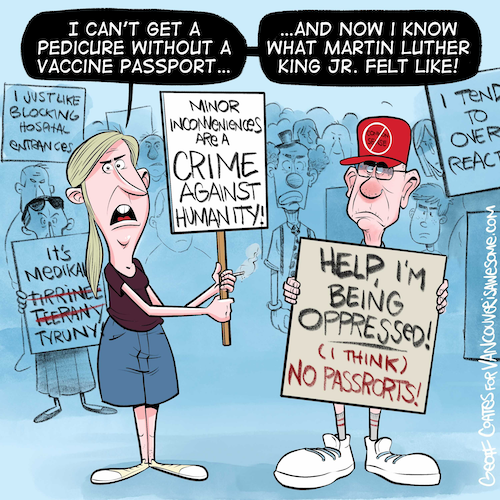
HB2248, sponsored by Lisa Fink (R-27), would ban private businesses from refusing employment or service based on whether a person is vaccinated. The bill specifically bans ticket issuers from denying access to entertainment events based on a ticket holder’s vaccination status. It would also ban the state, its cities and counties, and all schools from requiring any vaccines, mentioning such wide-ranging circumstances as public transportation or entry to buildings, as well as higher salaries for vaccinated people. The only thing more ridiculous than this bill is that it is being given a hearing. Scheduled for House Regulatory Oversight Committee, Tuesday. OPPOSE.
HB2417, sponsored by Quang Nguyen (R-1), would allow some Arizona drivers to have a speed inhibitor installed in their cars instead of seeing their license revoked or suspended. The technology uses GPS data to cap the speed of the car based on the speed limit in the area. The devices can’t slow a vehicle, meaning the drivers could still speed through school zones or construction areas; the devices would also come with a 1-minute driver override period. Excessive speed is the second leading cause of traffic fatalities in Arizona, just behind DUIs. Other states are trying this experiment, like Virginia (where the law takes effect this July) and Washington (taking effect no later than 2029). We'd rather see some proven success in other states before Arizona puts our own drivers and roads at risk. Scheduled for House Judiciary Committee, Wednesday. OPPOSE.
HB2592, sponsored by Justin Wilmeth (R-2), would require every state agency to try to incorporate AI into its everyday operations. Agencies wouldn't be allowed to regulate its use without the legislature's express permission. Blindly trusting AI carries serious risk: in just the past year, AI has made racist and anti-semitic remarks, wiped out a corporate database and lied about it, helped plan a politically motivated assault, and offered to write a teen's suicide note. These are just a few examples. We shouldn't be using AI without some serious oversight, and we definitely shouldn't be using it to replace state employees. Scheduled for House Artificial Intelligence & Innovation Committee, Thursday. OPPOSE.
 Cory Doctorow
HB2641, sponsored by Sarah Liguori (D-5), would ban PFAs from being used in firefighting foam. Studies have found high levels of these "forever chemicals" in the blood of firefighters; they cause serious health problems like cancer, high cholesterol, depressed antibody response, and reproductive issues. Limiting PFAs would benefit public health and help protect our food and water from contamination. Scheduled for House Public Safety & Law Enforcement Committee, Monday. SUPPORT.
🐟 HB2690, sponsored by Ralph Heap (R-10), is a copy of a vetoed bill from 2023 that would force unemployment recipients to submit documentation of at least 5 work search actions each week. If someone refuses a “suitable” job offer or fails to appear for a scheduled interview, the prospective employer would be required to report them to DES. The punitive bill leaves no room for correcting misinformation or determining what “suitable” means, instead carrying automatic criminal penalties. At a weekly maximum of just $320, Arizona ranks in the bottom 5 nationally for unemployment benefits. Currently people must lose their job through no fault of their own or a compelling personal reason in order to be eligible for unemployment. Scheduled for House Commerce Committee, Tuesday. OPPOSE.
🐟 HB2688, sponsored by Ralph Heap (R-10), is a copy of a bill vetoed last year that would require our state government to eliminate any full-time positions that have been vacant for more than 150 days, regardless of whether the position is listed as essential or specialized. Just because a position is vacant doesn't mean it's unneeded, nor does it mean you can just pick a random person off the street to fill it. Because of the skill level, searching for the right employee for some of these positions can take a long time. Simply eliminating them could also mean an agency would be unable to fulfill a legally mandated job. Scheduled for House Regulatory Oversight Committee, Tuesday. OPPOSE.
HB2763, sponsored by Quang Nguyen (R-1), would require both chambers of the legislature (but not the governor) to first approve the closure of a state-owned shooting range before the state can take any action. The bill is a response to the sponsor's fear that the state will close the Ben Avery Shooting Facility in north Phoenix, something which is not planned or even being discussed. This measure would add unnecessary red tape and prevent Arizona Game & Fish from being able to perform its delegated responsibilities. Scheduled for House Judiciary Committee, Wednesday. OPPOSE.
Voting Rights, Elections & Direct Democracy
SB1237, sponsored by John Kavanagh (R-3), would require Arizona's secretary of state to consult with county recorders and the chairs and ranking members of the legislature's elections committees before creating Arizona's election procedures manual. Published every two years, the manual details procedures for county elections officials and carries the force of law. It must be approved by the governor and attorney general, both currently Democrats. This politically motivated bill is spurred by Republican sour grapes over Arizona voters electing Democrats as our top statewide officials, and comes after two years of failed lawsuits in which Republicans tried and failed to impose their own views on the manual. Scheduled for Senate Judiciary and Elections Committee, Wednesday. OPPOSE.
SB1283, sponsored by Mark Finchem (R-1), would eliminate Division Two of the Arizona Court of Appeals and reorganize the court as a single statewide court. This is Republicans' latest effort to push the political balance of the Court of Appeals further to the right, after their 2022 push to pack the court with more Republicans and last year's attempt to blow up retention elections both failed. Scheduled for Senate Judiciary and Elections Committee, Wednesday. OPPOSE.
🐟 HB2902, sponsored by Steve Montenegro (R-29), is a copy of a bill vetoed in 2023 and 2025 that would affirm the legislature’s belief in the importance of the Electoral College for presidential elections. We disagree. The Electoral College is no longer a constructive force in American politics. It has handed victory to the loser of the popular vote twice in the past two decades, and only 35% of Americans support keeping it. It’s time to move to direct popular election of presidents. Scheduled for House Federalism, Military Affairs & Elections Committee, Wednesday. OPPOSE.

2026 Session Timeline
Monday 2/2: Senate bill introduction deadline
Monday 2/9: House bill introduction deadline
Friday 2/20: Last day for a bill to get out of committees in its originating house
Monday 2/23: Crossover Week begins (most committee hearings are suspended)
Friday 3/27: Last day for a bill to get out of committees in its crossover house
(and the last day to use RTS until a budget drops)
Tuesday 4/21: 100th Day of Session (the stated end goal; can be changed)
Tuesday 6/30: Last day to pass a constitutionally mandated state budget
Committees & Contacts
Here's a handy, freshly updated list of lawmaker contact info, committee chairs and assignments.
CEBV Action Linktree
Want other ways to take action? Need to stay informed? Looking for our social media, inspiration, or self-care tips? Look no further than our Linktree.


Congratulations, you made it to the end! 🎉 We invite you to join us in setting down the horror and overwhelm of the world for just a moment. Take a deep breath with us, and know you are not alone.
This is Maya. She hopes you find something you love even half as much as she loves sledding. 14/10 (IG: mayamoo_golden)
— WeRateDogs (@weratedogs.com) 2026-01-22T18:36:29.631Z

Comments ()