
2026 Session Preview
Setting the stage for #AZLeg 2026, exploring the top issues, and previewing the first crop of bills.
Welcome back to another session of our Arizona Legislature! It's CEBV's tenth year (!) helping you make sense of the fast-moving, messy, opaque and often perplexing events at our state Capitol. We work hard to put events and issues in perspective and in context; to highlight genuinely concerning bills so you can take action; and to give insight into our lawmakers' actions and the intent behind them.
As always, your involvement is vital. 2026 is going to be a big year. Welcome to the ride!

Top Issues
No money for anything. This predicament underpins every other issue on the board for 2026. Lawmakers have been making bad fiscal decisions for years, and there is finally no escaping the consequences. The cumulative impacts of massive tax cuts (former Gov. Ducey’s 2021 “flat tax”) and wasteful spending (looking at you, universal ESA vouchers) have Arizona backed into a "subsistence budgeting" corner.
In October, state budget analysts gave lawmakers a bleak forecast: increasing costs and insufficient funds will leave the state only $67 million this coming year that isn't already earmarked. To put that number in perspective, last June's budget contained $580 million in "one-time projects," from road construction and public school funding to corrections officer pay. "One-time projects" are often only so on paper, categorized that way due to the nature of different types of state money. It's complex, but in a nutshell, many of these spending priorities were meant to continue, and all of them are now at risk.
Expect another funding shortfall for the Division of Developmental Disabilities, too. As you'll remember, a $122 million gap in DDD funds prompted a fierce battle last year. This time around, with cuts looming, all DDD-funded services could be impacted.

Tax cut throwdown. As if that’s not bad enough, those same analysts say aligning Arizona's state tax code with the huge federal cuts in Trump’s 2025 budget would lose us another $461 million for the coming budget year alone. Every year, lawmakers must choose whether to "conform" with federal tax changes; the passage of this bill is generally a given. This year, though, it's different. As the Arizona Agenda puts it, “if Arizona’s General Fund were a bucket of water, HR 1 drills holes in the bottom while tax cuts shut off the hose meant to refill it.”
Not surprisingly, there's a fight brewing over these cuts. Gov. Hobbs wants a smaller tax-cut package focused on the middle class. Republican lawmakers are insisting on full conformity, complete with giveaways for corporations and the rich. Both parties are dug in and calling for a special session. Hobbs wants her tax package to be the first bill lawmakers send to her desk and has threatened to veto any tax bills that don't align with her plan. Republican lawmakers have introduced their plan in mirror bills (a method often used to "fast-track" legislation through committee hearings and pass it quickly) and have already scheduled a rare joint committee hearing for them on Wednesday. A floor vote won't be far behind: these bills could be on Hobbs' desk by Thursday. We need to speak out quickly, and we need to be loud. See the "RTS On These Bills" section below for what to do — and if you're an early tax filer, we recommend waiting for lawmakers to resolve this issue before submitting your return.
Moving our primary (again). Changes in federal law are spurring discussion of Arizona permanently moving up its primary from August to July. (Longtime Weekly readers will remember that this happened as a temporary change in 2024.) Because our counties run elections in Arizona, this change needs buy-in from the powerful Arizona Association of Counties. AACo says it plans to have the Republican chairs of the House and Senate Election Committees run approved mirror bills. Perennial elections conspiracy crackpot and Secretary of State candidate Alex Kolodin (R-3) is trying to shoehorn his own ideas into the discussion, though Gov. Hobbs vetoed them last year. We may need to get involved to keep this issue from being used as a bargaining chip to diminish our voting freedoms.
Water woes. Arizona's water future has continued to generate alarming headlines. The stalemate on the renegotiation of the Colorado River Water Compact (which supplies one-third of our state's water) is ongoing. Last year's only major water legislation was the controversial, developer-driven "ag-to-urban" program, and with legislative Republicans keeping water policy "grim reaper" Gail Griffin (R-19) in charge, progress this year is unlikely. Meanwhile, our long-term "mega" drought shows no sign of abating, and the legislature and Gov. Hobbs have set aside $500,000 for Colorado water litigation, something many see as nearly inevitable. One bright spot: Arizonans' fierce opposition to water-guzzling data centers (and our budget woes) could drive an early end to our state's very generous tax incentive for data centers.
Attacks on Hobbs. Republican lawmakers want a Republican in the governor's office who will sign their worst bills instead of vetoing them, so they plan to do everything they can to put Gov. Hobbs in the most difficult positions possible. Hobbs is ahead in the polls, but remains vulnerable, and may feel she needs to sign some of the majority's distasteful bills (as she did with last year's anti-LGBTQ+ censorship bill) to display "moderate, bipartisan compromise." This is where we come in. As political analyst Anat Shenker-Osorio points out, poll after poll shows “voters are hungry for people to actually stand up for them — or get caught trying.” It will be our job to remind her that voters respect a politician who holds firm on the values they were elected to represent far more than one who bends and compromises them away.
Ok, and in the meantime pound sand… https://t.co/vfuJfiDXmd pic.twitter.com/7I7O4vaf24
— Arizona Secretary of State (@AZSecretary) January 6, 2026
Adding to our ballots. Don't doubt that Republican lawmakers will vote measures onto the ballot to get around Gov. Hobbs' veto stamp. They can do that with a simple majority (only Republican votes) and without her signature. The question is, how many will they advance? Lawmakers have introduced quite a few "red meat"-style measures already, like voting rights attacks, a "show me your genitals" bathroom bill, and a ban on trans girls playing girls' sports. Measures less likely to sully our ballots include a ban on photo radar, lawmaker pay raises, and a bill that requires the legislature to gavel out for good by April 30 of each year.
Not all legislative ballot referrals are bad. Lawmakers also have actual work to get done that requires a referral: namely, renewing Prop 123. Until its expiration last June, this measure directed proceeds from Arizona’s state land trust toward our district public schools. These funds are the required result of a lawsuit settlement, but when lawmakers couldn’t agree on how to construct a renewal, they had to backfill $380 million from the state general fund. This year, lawmakers say they’re “hopeful” that they’ll be able to reach agreement, which makes sense; there's likely nothing quite as motivating as the thought of reclaiming that $380 million for other projects.
The impending election. Our hyper-polarized political landscape and widespread voter fury are driving a fierce fight over Arizona's political control. This year, the margins seem tighter than ever. Despite outward bravado, both sides are worried they will lose power: Republicans could lose one or both chambers of the legislature, and Democrats could lose the governor's veto stamp. Just as with our budget woes, this creates a host of invisible currents swirling under the surface, and it will influence everything.


New Focus Areas for 2026
After hearing from many of you that our focus areas for 2025 didn't quite cover what you needed, CEBV has reassessed, and we're pleased to announce we've retooled them for 2026. This year, we'll cover five major topics, all broadly popular ones that reach across political boundaries:
1️⃣ Affordability. This is THE issue of 2026, and it touches nearly everything: budgets and taxation, housing, utilities, health care, child care, price gouging, the wealth gap, systemic issues, and so much more. The Republican majority's relentless defunding of our state has left Arizona without the resources to fully support all Arizonans — even as politicians from both parties are pledging to make affordability their central issue, too. We'll highlight bills that would worsen the crisis, and lift up those that would actually improve lives.
2️⃣ Democracy & Voting Rights. This is a core facet of civic engagement. We will oppose every attack on Arizonans' right to free and fair voting; shine a bright light on the measures headed for our ballot; and share opportunities for you to take action.
3️⃣ Discrimination. MAGA's bread and butter is the targeting and dehumanizing of marginalized groups like LGBTQ+ people, immigrants, women, the disabled community, and people of color. These attempts to scapegoat and divide Arizonans are wholly unacceptable. We'll bring them to your attention (especially the sneaky ones) so you can help fight them.
4️⃣ Energy, Water & Climate. This topic is a critical, inescapable facet of our lives in Arizona. From bills that affect our increasingly scarce Colorado River water and groundwater, to energy- and water-guzzling data centers, to policies that make Arizona more survivable, we'll help you weigh in.
5️⃣ Public Safety. This means the daily survival and security of our families and neighbors, and like our first topic, it touches a lot: speeding, prison conditions, laws to govern police behavior or attack our rights, the survival of rural hospitals, and more. It also includes public health issues: vaccines, hospital infrastructure, food regulation, social safety net systems like SNAP and TANF, and so on.
🚌 For all news about education, subscribe to Save Our Schools Arizona's Weekly Education Report!
The Return of Zombie Bills, Part II
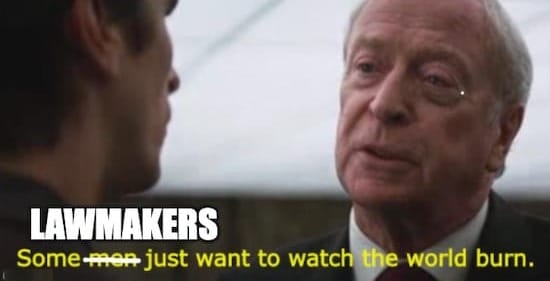
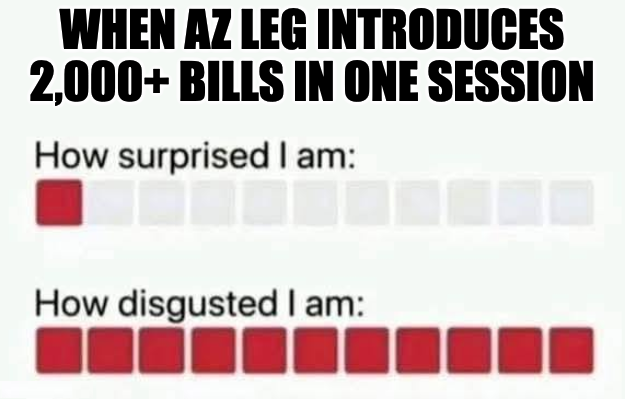
As of this writing, lawmakers have introduced just 381 of the 1700+ bills we expect to see this session. So far, most are Republican-sponsored "statement bills" that push manufactured, divisive ideas. You'll likely recognize a lot of them from 2024 and 2025. Reintroducing and advancing bills that have already been vetoed appears to be part of a strategy to increase Hobbs' veto count, which gives the extremists (who aim to replace her with an extremist) an excuse to call her an "obstructionist."
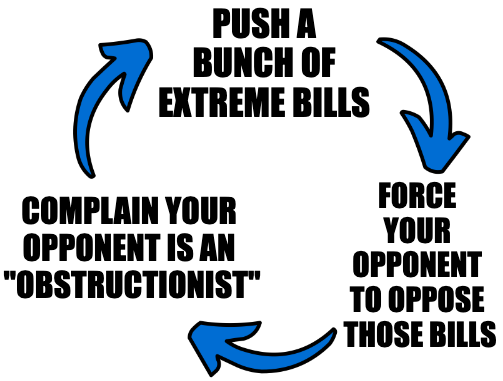
Of course these bills can't pass: none of us wants our beloved home state to devolve into a fascist wet dream. As Hobbs vetoes them, it's crucial that she be able to demonstrate that the public supports her decision. This means we must act.
As longtime readers know, CEBV makes it a practice not to waste time on outrageous "statement bills" that will go nowhere. Unfortunately, our legislative majority is now so extreme that fewer outrageous bills than ever before are truly "bills that will go nowhere." We still won't bring the truly bonkers bills to you, the ones that have no chance of passing. As always, we'll focus on the areas where we can make the most difference. But that looks different this year, and we hope you'll act accordingly!

A few committees are meeting this first week, and CEBV is tracking some of the bills being heard. Use RTS to weigh in, and refer to the information, links and talking points we include here to craft your own comments to lawmakers.
Affordability
HB2153 and SB1106, sponsored by Rep. Justin Olson (R-10) and Sen. JD Mesnard (R-13), would fully align Arizona's tax code with last year's sweeping federal budget bill, adopting its pricey tax cuts for the rich and opting Arizona in to the Project 2025-style federal school voucher program. Both bills are scheduled for joint House Ways & Means and Senate Finance Committees, Wednesday. OPPOSE.
Discrimination
HB2043, sponsored by Selina Bliss (R-1), would add "causing the death of an unborn child at any stage of development" to the definition of first-degree murder if someone is already committing another crime. This is part of the anti-scientific strategy of “fetal personhood,” which gives fetuses the same legal rights as people (to the detriment of women). Scheduled for House Judiciary Committee, Wednesday. OPPOSE.
Energy, Water & Climate
HB2097, sponsored by Gail Griffin (R-19), would cement existing overpumping on land that has insufficient groundwater by raising the limit to 6 acre-feet per acre per year. To understand how much water that is, look at last year's controversial, developer-supported "ag-to-urban" law, which limits pumping from former farms to 1.5 acre-feet per acre per year in Phoenix and 1 acre-foot per year in Pinal. Farms in those areas (that are being encouraged to quit pumping) currently pump about three times that much, an amount that's been deemed dangerous — and this "limit" is higher. This bill basically authorizes sticking a straw in the ground and draining everything out. Scheduled for House Natural Resources, Energy & Water Committee, Tuesday. OPPOSE.
Public Safety
SB1053, sponsored by Wendy Rogers (R-7), would create new concealed weapons permit fees for Arizona residents and set them at just 10% of the fee for non-residents. This would not only irresponsibly reduce funding for the Department of Public Safety, but would likely increase the number of concealed weapons in Arizona. Guns carried in public pose a danger to public safety. Scheduled for Senate Judiciary & Elections Committee, Wednesday. OPPOSE.
SB1068, sponsored by Wendy Rogers (R-7), is an exact copy of a vetoed bill from last year that would prohibit universities and community colleges from banning anyone with a concealed weapons permit — not just students — from possessing, storing or transporting guns on campus. College campuses and guns are a deadly combination, increasing the risks of suicide, homicide and sexual assault. Even our founding fathers believed guns had no place on college campuses. Scheduled for Senate Judiciary & Elections Committee, Wednesday. OPPOSE.
SB1069, sponsored by Wendy Rogers (R-7), is an exact copy of a vetoed bill from last year that would legalize silencers. This dangerous bill would make it harder for bystanders and law enforcement to identify and react quickly to gunshots. Scheduled for Senate Judiciary & Elections Committee, Wednesday. OPPOSE.
HB2108, sponsored by Teresa Martinez (R-16), toughens penalties for someone who flees from a pursuing law enforcement vehicle and "recklessly endangers" the life of another person in the process. We can't help but think of 37-year-old mother Renee Nicole Good, shot this past week by ICE (which, despite its behavior, is not a police force and does not have the same powers as police), and the feds' attempt to label her a domestic terrorist who "recklessly endangered" the life of an ICE officer, despite clear evidence to the contrary. It's easy to see how such a bill could be misused and weaponized as retaliation against dissent. Scheduled for House Judiciary Committee, Wednesday. OPPOSE.
HB2132, sponsored by Quang Nguyen (R-1), lowers the threshold for mandatory sentencing of people who sell fentanyl to 100 grams, down from 200. These people would be required to serve 5 to 15 years in prison, 10 to 20 years for repeat offenders. Tougher mandatory sentences won't do anything to curb the fentanyl crisis (which is trending downward as it is), and Arizona already has the seventh-highest incarceration rate in the nation. Scheduled for House Judiciary Committee, Wednesday. OPPOSE.
Voting Rights, Elections & Direct Democracy
SB1003, sponsored by John Kavanagh (R-3), would allow county supervisors and the other elections officials who are supposed to certify election returns to instead "acknowledge the results without prejudice." This would give elected officials a free pass to spread misinformation and stoke conspiracy theories about elections with no legal consequences for their behavior. Scheduled for Senate Judiciary & Elections Committee, Wednesday. OPPOSE.
SB1006, sponsored by John Kavanagh (R-3), is a copy of a vetoed bill from 2023 that would allow people who make a political contribution below $200 to remain anonymous, rather than be named in campaign finance reports. (The current threshold is $100.) This would make money in Arizona politics less transparent. The sponsor's argument for the bill, that transparency has a "chilling effect" on donations and money equals protected speech, resembles the argument right-wing political operatives are making in their lawsuits to try to invalidate the Voters Right to Know Act, a dark-money disclosure law which voters overwhelmingly approved in 2022. Scheduled for Senate Judiciary & Elections Committee, Wednesday. OPPOSE.
SB1037, sponsored by Mark Finchem (R-1), is a copy of a vetoed bill from last year that would require voting equipment to meet "Department of Homeland Security standards." Many of the security measures in the bill, like prohibiting remote access and Internet access, are already covered by Arizona law. Multiple elections officials have testified over multiple years that other provisions of the bill are either unneeded or actively harmful. The sponsor, who was at the US Capitol on the day of the January 6 insurrection attempt, has repeatedly claimed without evidence that election machines were remotely hacked in 2020 and 2022. Scheduled for Senate Judiciary & Elections Committee, Wednesday. OPPOSE.
SB1038, sponsored by Mark Finchem (R-1), would make the “cast vote record” (a receipt of everything scanned by a voting machine) a public record, violating Arizonans' constitutionally mandated voter privacy. Gov. Hobbs has vetoed the idea twice. This year's version of the bill requires county recorders to publish the massive record within one hour after polls close, which is laughably ridiculous. Election deniers insist baselessly that this tedious and routine document will somehow detect fraudulent voting patterns; it’s just another example of conspiracy theorists’ endless, fruitless quest for election wrongdoing. Scheduled for Senate Judiciary & Elections Committee, Wednesday. OPPOSE.
SB1040, sponsored by Mark Finchem (R-1), is a copy of a bill vetoed last year that would force county recorders to let anyone download voter registration rolls for free. Creating public, no-cost access to voter rolls enables spam and harassment, and allows bad actors to easily generate fake purge lists. This threatens the integrity of our elections. Scheduled for Senate Judiciary & Elections Committee, Wednesday. OPPOSE.
SB1057, sponsored by Mark Finchem (R-1), is an exact copy of a bill vetoed last year that would require ballot paper to include specific "anti-fraud countermeasures." This not only adds unnecessary complexity and expense to our elections, it's corruption in action. The bill is written so narrowly that only one vendor is qualified: Authentix, a company with ties to Finchem. As one critic says, this “reeks of being a shady backroom deal.” Scheduled for Senate Judiciary & Elections Committee, Wednesday. OPPOSE.
SB1060, sponsored by Wendy Rogers (R-7), is an exact copy of a bill vetoed last year that would ban US citizens from registering to vote in Arizona if they have a parent who is a US citizen and who is registered to vote in Arizona, but they themselves have never lived in the US. Banning citizens from voting is clearly unconstitutional. This is part of a national Republican push to disenfranchise voters in the name of “election integrity.” Scheduled for Senate Judiciary & Elections Committee, Wednesday. OPPOSE.

Request to Speak. Sign up for an account if you don’t have one, dust off your password if you do. Sign up for our virtual RTS trainings for beginners or brush-up, and be sure to attend our weekly Sunday afternoon virtual Happy Hour.
Why use Request to Speak?
RTS helps us register our support or opposition for key bills. It's important because:
👉 People on every side of an issue use RTS; it’s critical to show we’re watching and we’re numerous
👉 Legislators review RTS, sometimes even changing their votes based on the names and quantity of “votes”
👉 Media watches RTS to gauge the “heat” of an issue and how public opinion is registering
👉 Lawmakers often read RTS comments in committees or on the floor during debate; it’s important to get them into the record
Use our website. Civic Engagement Beyond Voting’s website features tons of resources, including a RTS training video that’s 5 minutes well spent.
Attend our Happy Hours. Join us on Zoom for our first CEBV Happy Hour conversation of 2026! We'll offer political analysis, conversation and community, with a focus on the legislative session that's about to begin. Happy Hour meets every Sunday at 4 PM through the end of legislative session. Sign up in advance here.
Watch our Mobilize. Pop in for one of our weekly Request to Speak trainings (every Monday night through March), then keep watching for trainings and presentations on every topic imaginable: state and local government, judges, ballot measures, messaging, media literacy, and so much more.
Pick up the phone. If a state lawmaker gets 20 calls a day on one topic, their phone is ringing off the hook. By contrast, emails are easy to ignore: each lawmaker gets hundreds every day. When you call, be polite and introduce yourself by name. If you’re a constituent, say so. And consider calling less-friendly lawmakers, to avoid clogging the works for the ones who share our values. Lawmakers’ admins are almost always friendly and happy to pass along messages.
Keep it up. We’ll be back every Sunday with a fresh update. Check back weekly for actions to take, or simply enter your email address in the box below to have the entire text of these updates emailed to you. (If you're already subscribed, this box won't show, so don't worry!)

2026 Session Timeline
Monday 1/12: Session begins
Thursday 1/15: House introduction limit of 7 bills per lawmaker begins
Monday 2/2: Senate bill introduction deadline
Monday 2/9: House bill introduction deadline
Friday 2/20: Last day for a bill to get out of committees in its originating house
Monday 2/23: Crossover Week begins (most committee hearings are suspended)
Friday 3/27: Last day for a bill to get out of committees in its crossover house
(and the last day to use RTS until a budget drops)
Tuesday 4/21: 100th Day of Session (the stated end goal; can be changed)
Tuesday 6/30: Last day to pass a constitutionally mandated state budget
Committees & Contacts
Here's a handy, freshly updated list of lawmaker contact info, committee chairs and assignments:
CEBV Action Linktree
Want other ways to take action? Need to stay informed? Looking for our social media, inspiration, or self-care tips? Look no further than our Linktree.



Comments ()